


Targeting Wnt signaling in colorectal cancer. A Review in the Theme: Cell Signaling: Proteins, Pathways and Mechanisms
- PMID: 26289750
- PMCID: PMC4609654
- DOI: 10.1152/ajpcell.00117.2015
Targeting Wnt signaling in colorectal cancer. A Review in the Theme: Cell Signaling: Proteins, Pathways and Mechanisms
Abstract
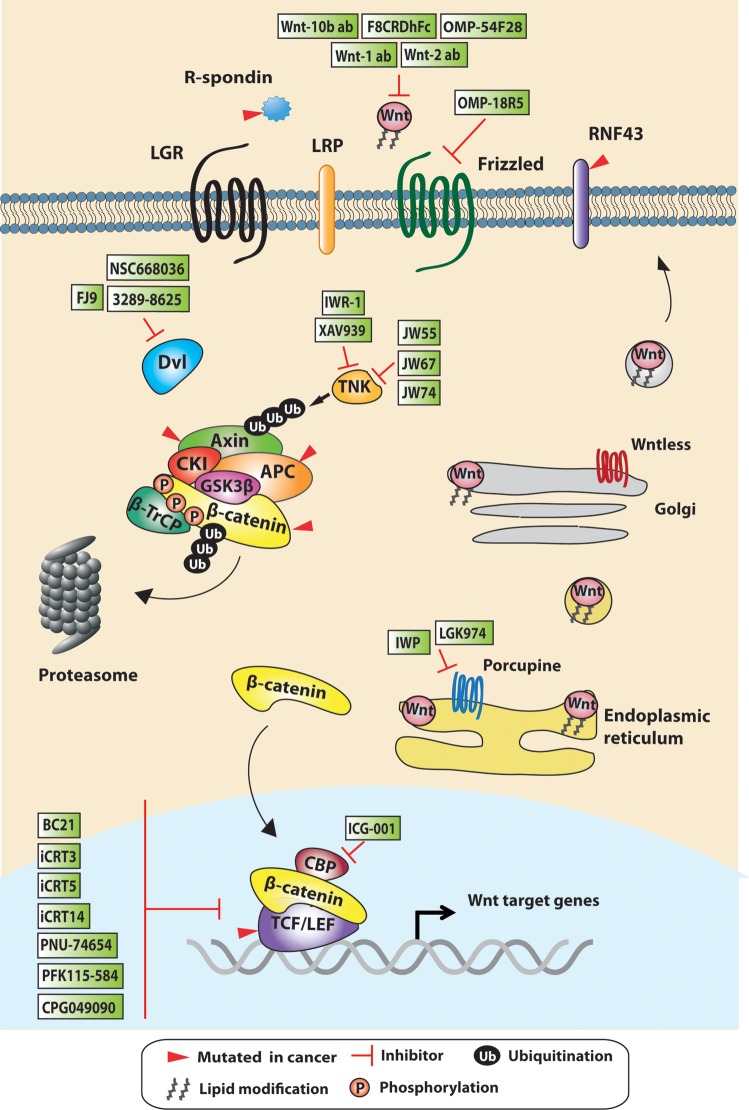
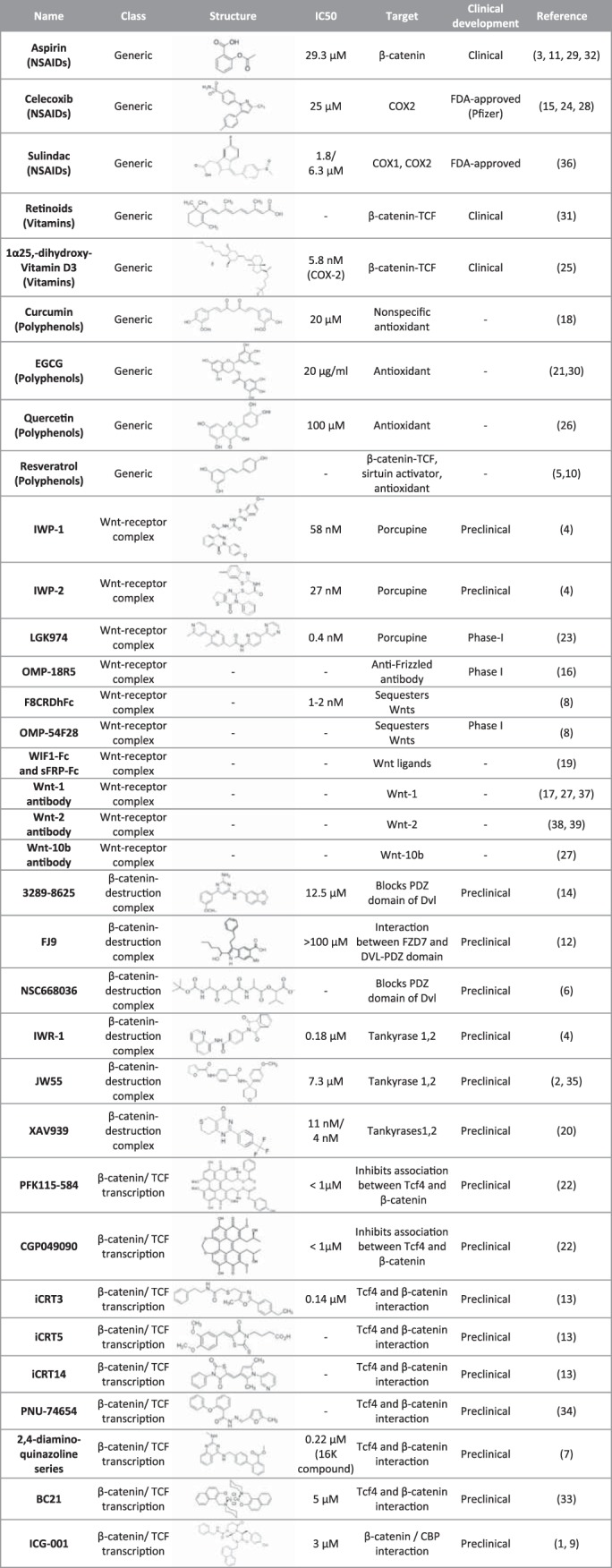
The evolutionarily conserved Wnt signaling pathway plays essential roles during embryonic development and tissue homeostasis. Notably, comprehensive genetic studies in Drosophila and mice in the past decades have demonstrated the crucial role of Wnt signaling in intestinal stem cell maintenance by regulating proliferation, differentiation, and cell-fate decisions. Wnt signaling has also been implicated in a variety of cancers and other diseases. Loss of the Wnt pathway negative regulator adenomatous polyposis coli (APC) is the hallmark of human colorectal cancers (CRC). Recent advances in high-throughput sequencing further reveal many novel recurrent Wnt pathway mutations in addition to the well-characterized APC and β-catenin mutations in CRC. Despite attractive strategies to develop drugs for Wnt signaling, major hurdles in therapeutic intervention of the pathway persist. Here we discuss the Wnt-activating mechanisms in CRC and review the current advances and challenges in drug discovery.
Keywords: Wnt signaling pathway; adenomatous polyposis coli; colorectal cancer; drug targeting; small molecules; β-catenin.
Copyright © 2015 the American Physiological Society.
Figures
References
-
- Akhter J, Chen X, Bowrey P, Bolton EJ, Morris DL. Vitamin D3 analog, EB1089, inhibits growth of subcutaneous xenografts of the human colon cancer cell line, LoVo, in a nude mouse model. Dis Colon Rectum 40: 317–321, 1997. - PubMed
-
- Avizienyte E, Roth S, Loukola A, Hemminki A, Lothe RA, Stenwig AE, Fossa SD, Salovaara R, Aaltonen LA. Somatic mutations in LKB1 are rare in sporadic colorectal and testicular tumors. Cancer Res 58: 2087–2090, 1998. - PubMed
-
- Azzolin L, Panciera T, Soligo S, Enzo E, Bicciato S, Dupont S, Bresolin S, Frasson C, Basso G, Guzzardo V, Fassina A, Cordenonsi M, Piccolo S. YAP/TAZ incorporation in the beta-catenin destruction complex orchestrates the Wnt response. Cell 158: 157–170, 2014. - PubMed
Publication types
MeSH terms
Substances
Grants and funding
LinkOut - more resources
Full Text Sources
Other Literature Sources
Medical
Miscellaneous
