


Aging, Fitness, and Marathon Times in a 91 Year-old Man Who Competed in 627 Marathons
- PMID: 26290832
- PMCID: PMC4538980
- DOI: 10.9734/BJMMR/2015/17946
Aging, Fitness, and Marathon Times in a 91 Year-old Man Who Competed in 627 Marathons
Abstract
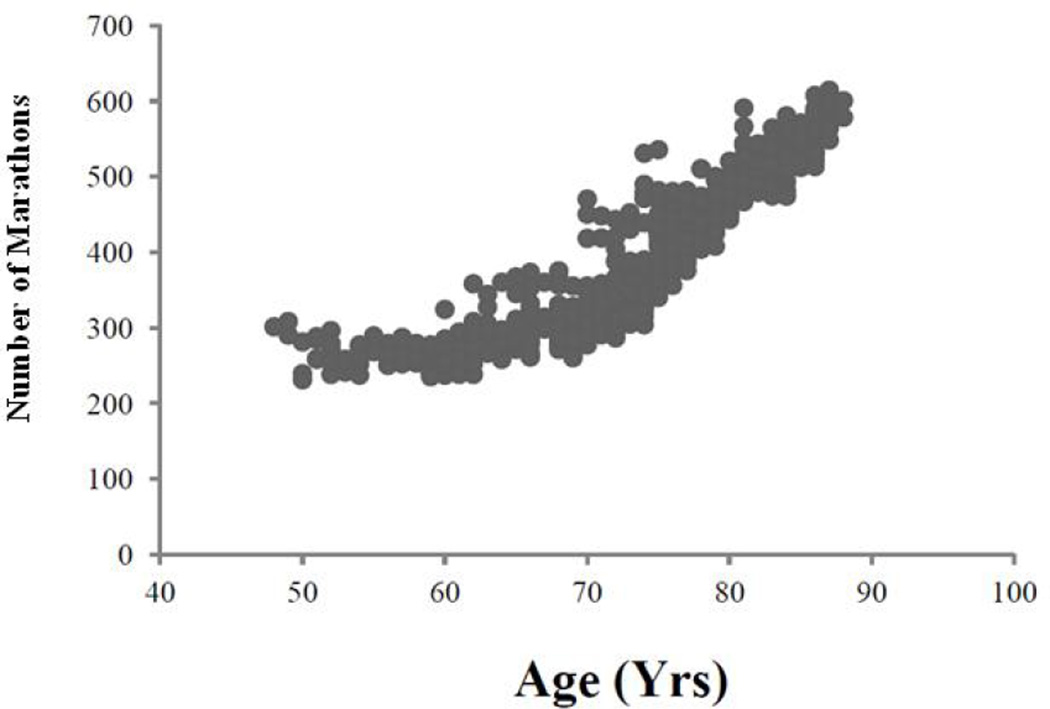
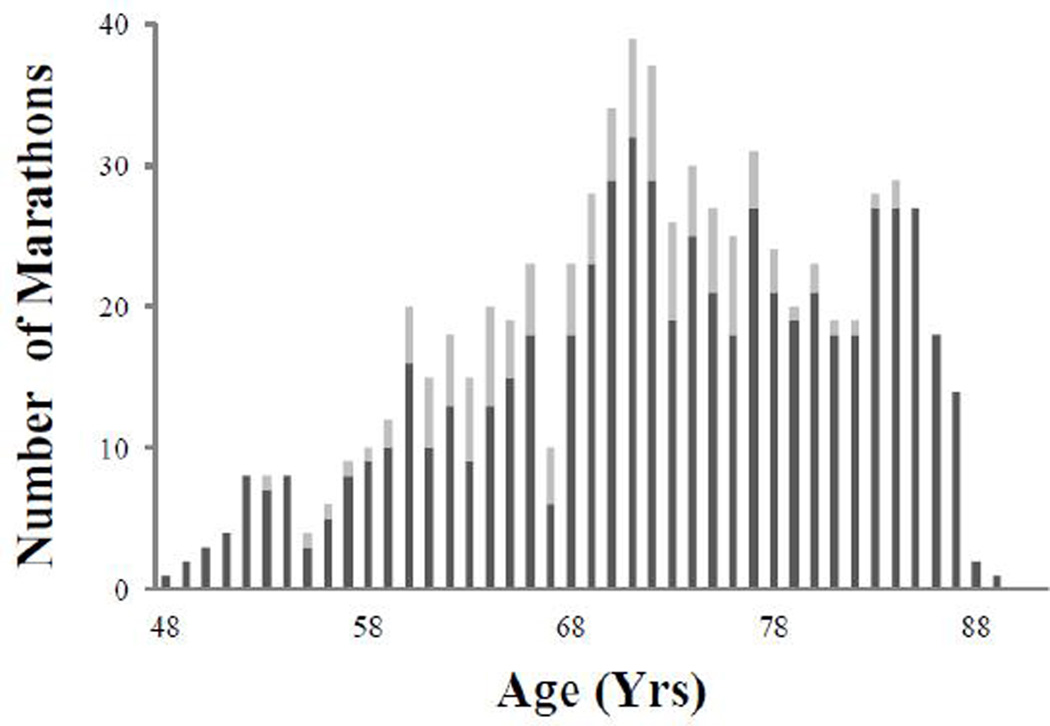
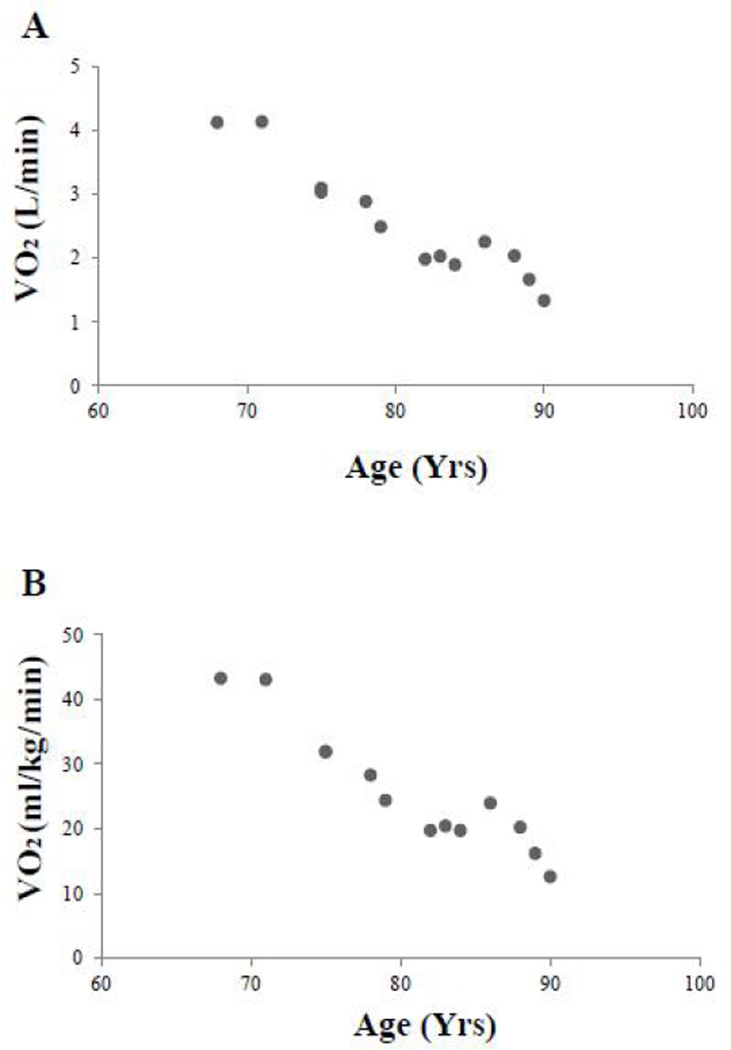
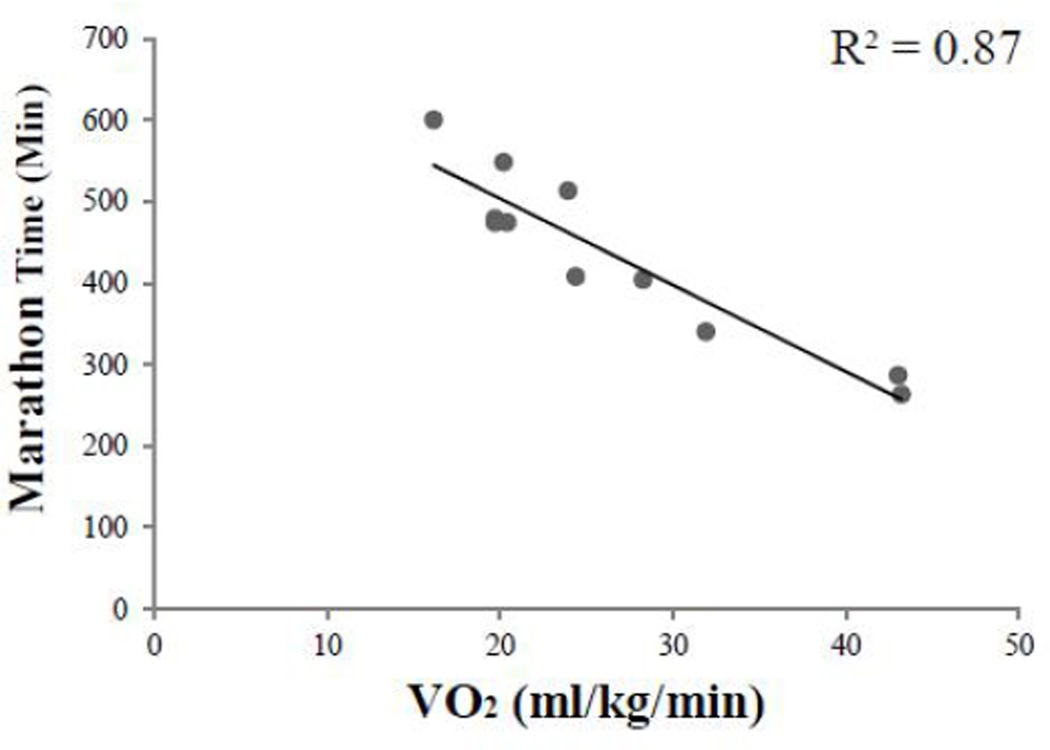
Aging is associated with a decline in maximal aerobic capacity (VO2max) that may be attenuated by chronic endurance exercise. This case study chronicles the changes in marathon times in a 91 year old man who completed 627 marathons and 117 ultramarathons over 42 years. He began running marathons at age 48. His yearly best times remained fairly constant at ~240 minutes from age 50 - 64 years and then gradually rose to about 260 minutes in his early seventies followed by a curvilinear deterioration as he approached his ninth decade. His times plateaued at ~ 600 minutes in his late eighties. Between ages 68 and 89 his VO2max declined from 43 to 20 ml/kg/min. His marathon times were highly correlated with his VO2max (r2=0.87). The decline in marathons times and VO2max may reflect the contributions of biological aging, changes in exercise training volume and intensity, injuries, and comorbid disease.
Keywords: Maximal aerobic capacity; athlete; exercise; longitudinal.
Figures
References
-
- Buskirk ER, Hodgson JL. Age and aerobic power: the rate of change in men and women. Fed Proc. 1987;46(5):1824–1829. - PubMed
-
- Fitzgerald MD, Tanaka H, Tran ZV, Seals DR. Age-related declines in maximal aerobic capacity in regularly exercising vs. sedentary women: A meta-analysis. J Appl Physiol. 1997;83(1):160–165. - PubMed
-
- Hawkins S, Wiswell R. Rate and mechanism of maximal oxygen consumption decline with aging: Implications for exercise training. Sports Med. 2003;33(12):877–888. - PubMed
-
- Lemura LM, Von Duvillard SP, Mookerjee S. The effects of physical training of functional capacity in adults. Ages 46 to 90: a meta-analysis. J Sports Med Phys Fitness. 2000;40(1):1–10. - PubMed
-
- Blair SN, Kohl HW, 3rd, Barlow CE, Paffenbarger RS, Jr, Gibbons LW, Macera CA. Changes in physical fitness and allcause mortality. A prospective study of healthy and unhealthy men. JAMA. 1995;273(14):1093–1098. - PubMed
Grants and funding
LinkOut - more resources
Full Text Sources