


Risk of Developing Depressive Disorders following Hepatocellular Carcinoma: A Nationwide Population-Based Study
- PMID: 26295711
- PMCID: PMC4546687
- DOI: 10.1371/journal.pone.0135417
Risk of Developing Depressive Disorders following Hepatocellular Carcinoma: A Nationwide Population-Based Study
Abstract
Background & aims: To evaluate the risk of depressive disorders among patients with Hepatocellular Carcinoma (HCC) using the National Health Insurance Research Database (NHIRD) in Taiwan.
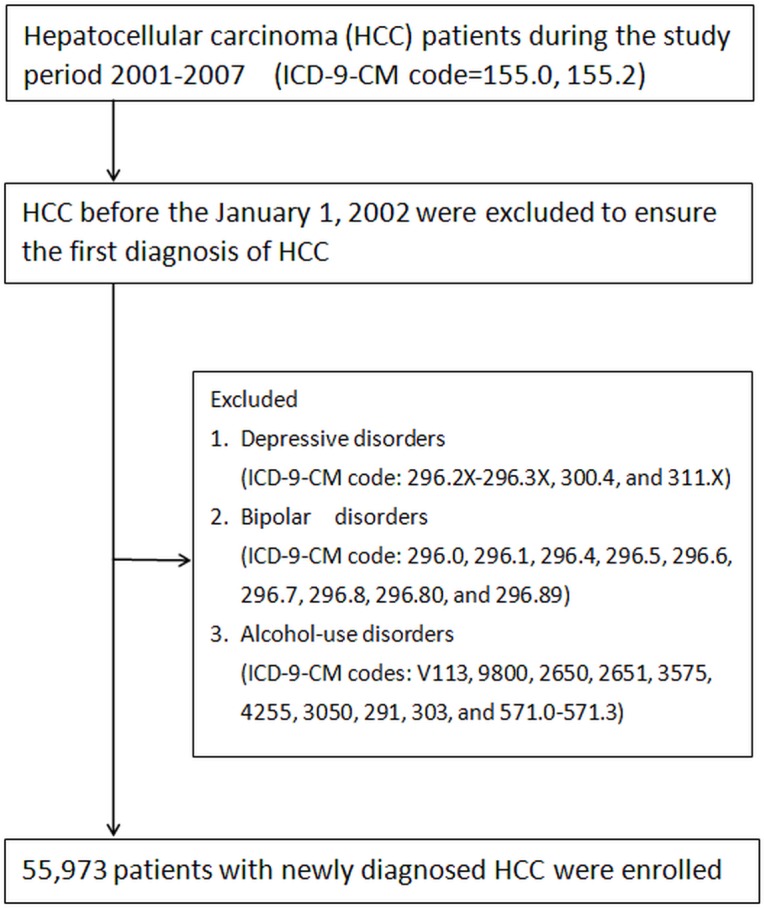
Methods: We conducted a retrospective study of a newly diagnosed HCC cohort of 55,973 participants who were selected from the NHIRD. Patients were observed for a maximum of 6 years to determine the rates of newly onset depressive disorders, and Cox regression was used to identify the risk factors associated with depressive disorders in HCC patients.
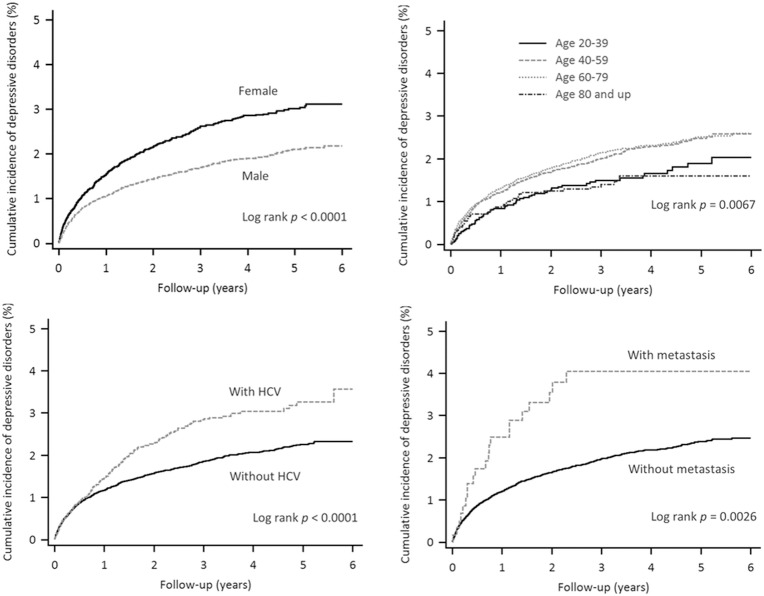
Results: Of the total 55,973 HCC patients, 1,041 patients (1.86%) were diagnosed with depressive disorders during a mean (SD) follow-up period of 1.1 (1.2) years. The Cox multivariate proportional hazards analysis showed that age of 40-59 (HR 1.376, 95% CI 1.049-1.805, p = 0.021), age of 60-79 (HR 1.341, 95% CI 1.025-1.753, p = 0.032), women (HR 1.474 95% CI 1.301-1.669, p < 0.001), metastasis (HR 1.916, 95% CI 1.243-2.953, p = 0.003), and HCV (HR 1.445, 95% CI 1.231-1.697, p < 0.001) were independent risk factors for developing depressive disorders.
Conclusions: Our study indicated a subsequent risk of depressive disorders in patients with HCC, and the risk increased for those with female gender, aged 40 to 59, aged 60 to 79, with metastasis, or with HCV. Psychological evaluation and support are two critical issues in these HCC patients with the risk factors.
Conflict of interest statement
Figures
References
-
- Lau WY, Lai EC. Hepatocellular carcinoma: current management and recent advances. Hepatobiliary & pancreatic diseases international: HBPD INT. 2008;7(3):237–57. . - PubMed
MeSH terms
LinkOut - more resources
Full Text Sources
Other Literature Sources
Medical
