


doi: 10.3389/fpls.2015.00605.
eCollection 2015.
Using the pathogen-host interactions database (PHI-base) to investigate plant pathogen genomes and genes implicated in virulence
Affiliations
- PMID: 26300902
- PMCID: PMC4526803
- DOI: 10.3389/fpls.2015.00605
Item in Clipboard
Using the pathogen-host interactions database (PHI-base) to investigate plant pathogen genomes and genes implicated in virulence
Front Plant Sci.
.
Abstract
New pathogen-host interaction mechanisms can be revealed by integrating mutant phenotype data with genetic information. PHI-base is a multi-species manually curated database combining peer-reviewed published phenotype data from plant and animal pathogens and gene/protein information in a single database.
Keywords: comparative genomics; emerging diseases; gene regulatory networks; genetic recombination; horizontal gene transfer; phytopathogens; plant diseases; protein interaction mapping.
Figures
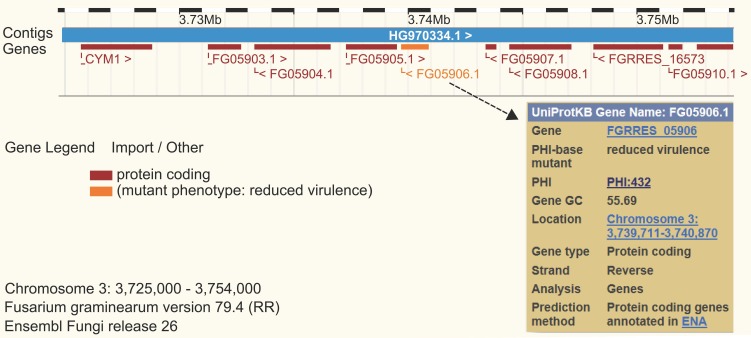
Ensembl genome browser view for Fusarium graminearum. The website at http://fungi.ensembl.org/
Fusarium_graminearum was searched for the gene id FGSG_05906 encoding the secreted lipase gene Fgfgl1. The PHI-base phenotype of the mutant is displayed and color coded in orange as “reduced virulence.”
References
Grants and funding
LinkOut - more resources
Full Text Sources
Other Literature Sources
Molecular Biology Databases
