


The 133-kDa N-terminal domain enables myosin 15 to maintain mechanotransducing stereocilia and is essential for hearing
- PMID: 26302205
- PMCID: PMC4592939
- DOI: 10.7554/eLife.08627
The 133-kDa N-terminal domain enables myosin 15 to maintain mechanotransducing stereocilia and is essential for hearing
Abstract
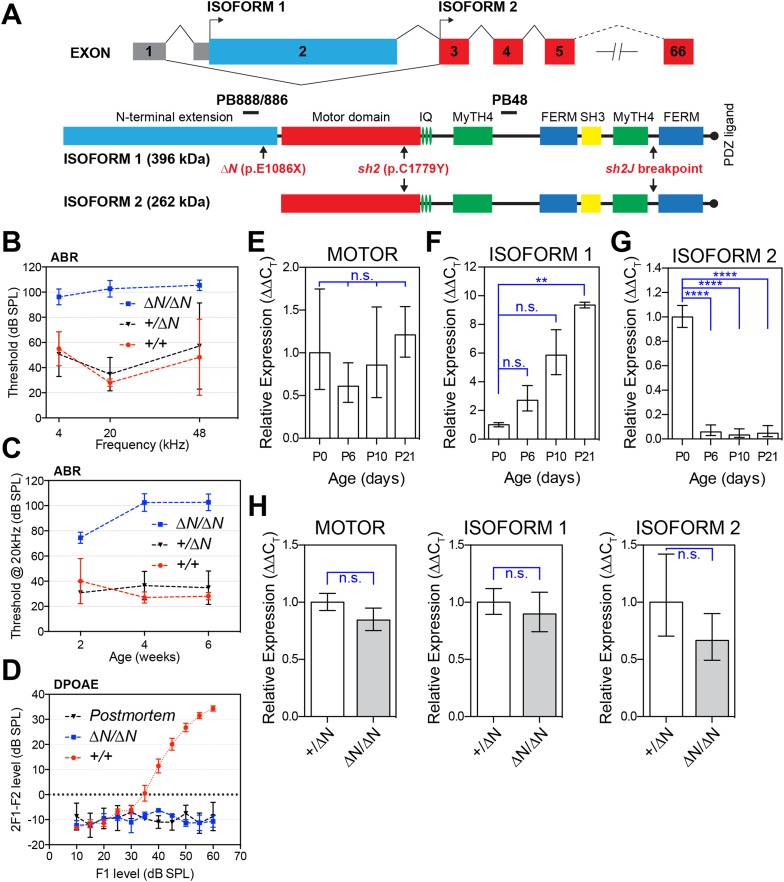
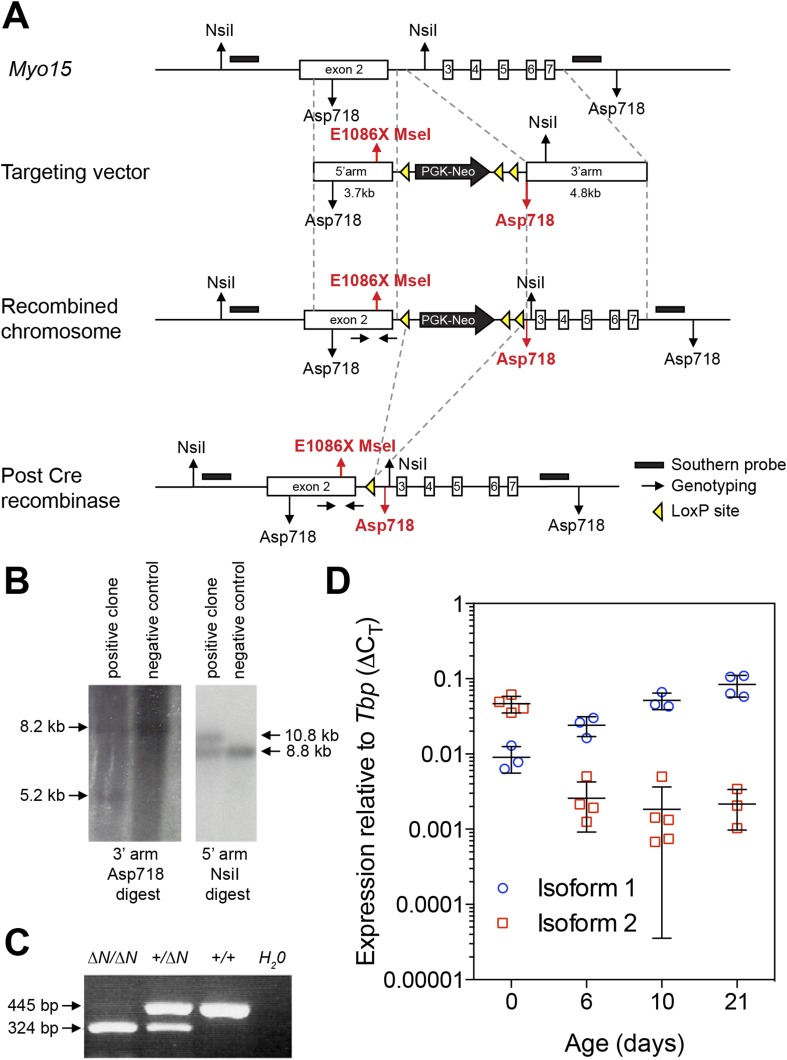
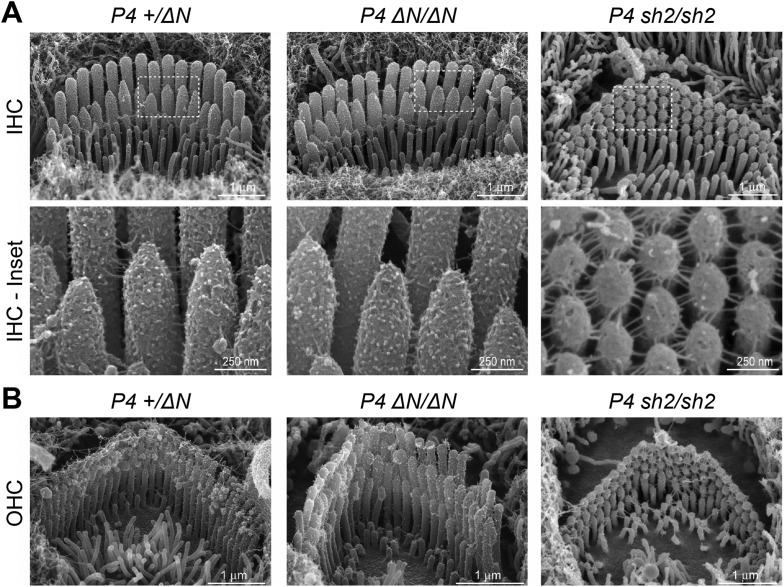
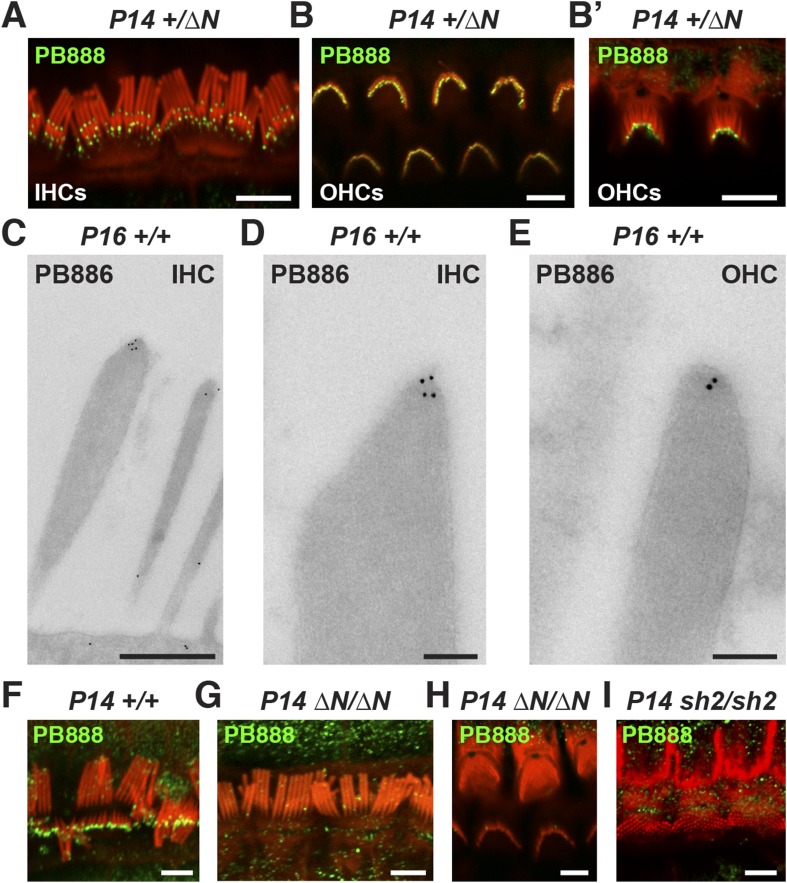
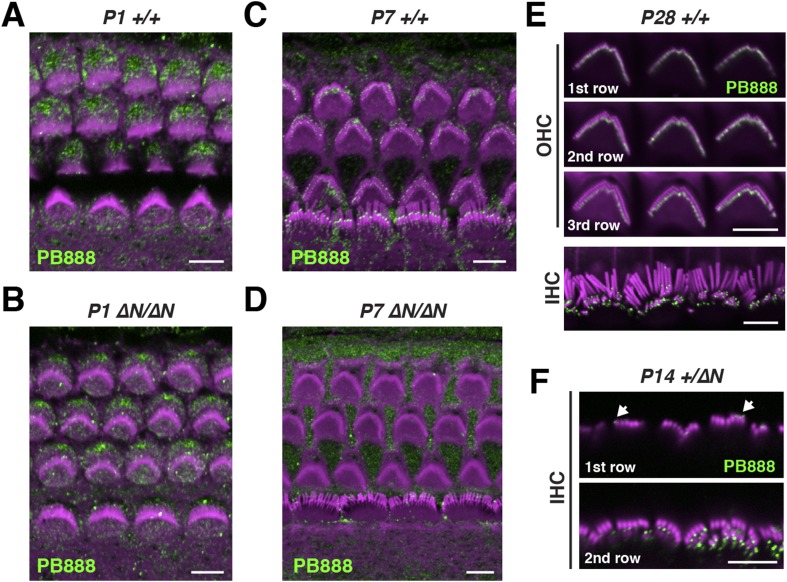
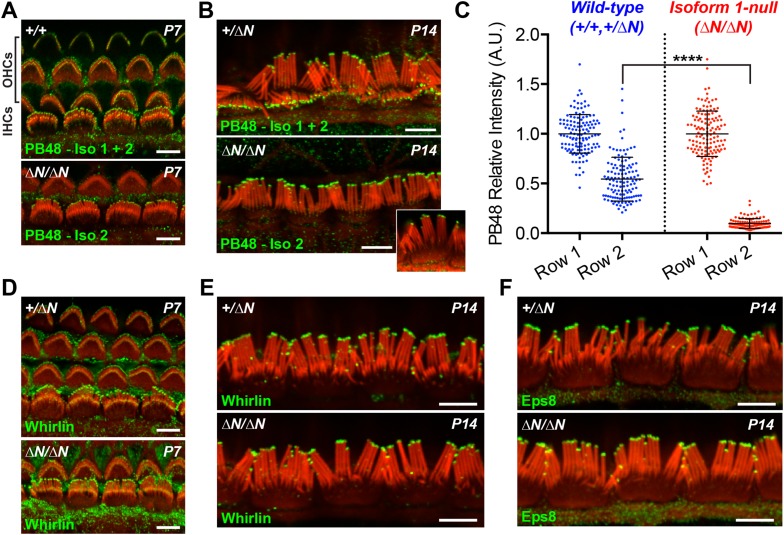
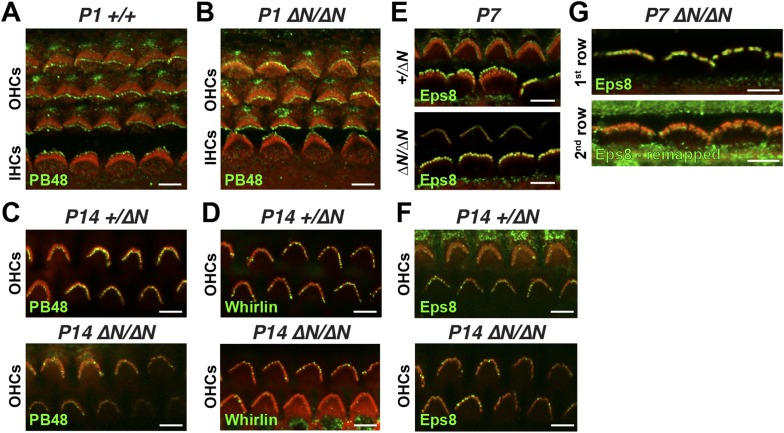
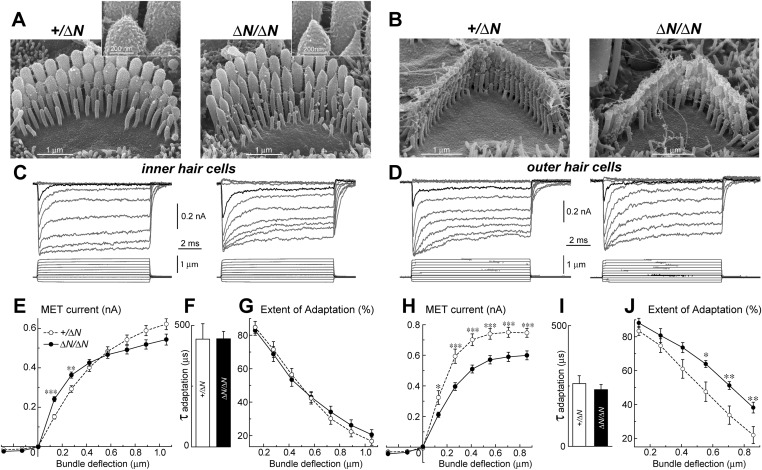
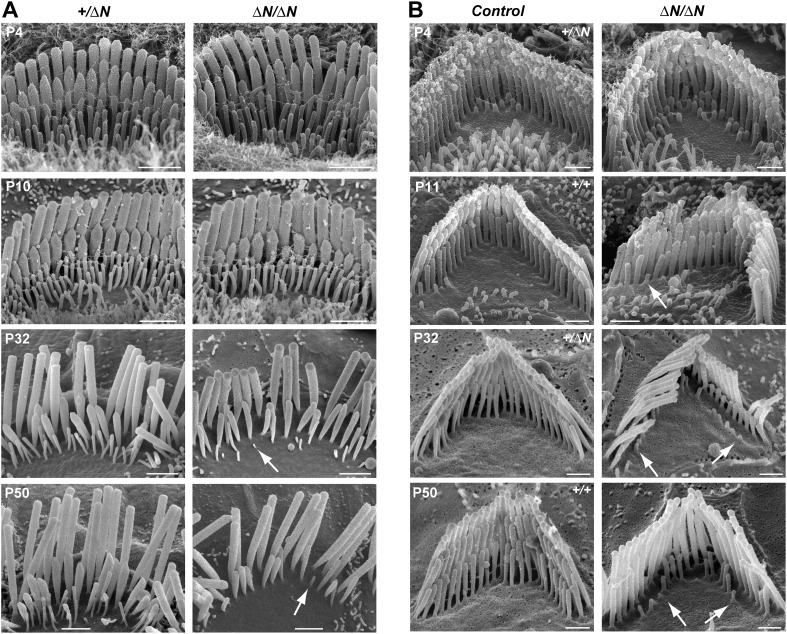
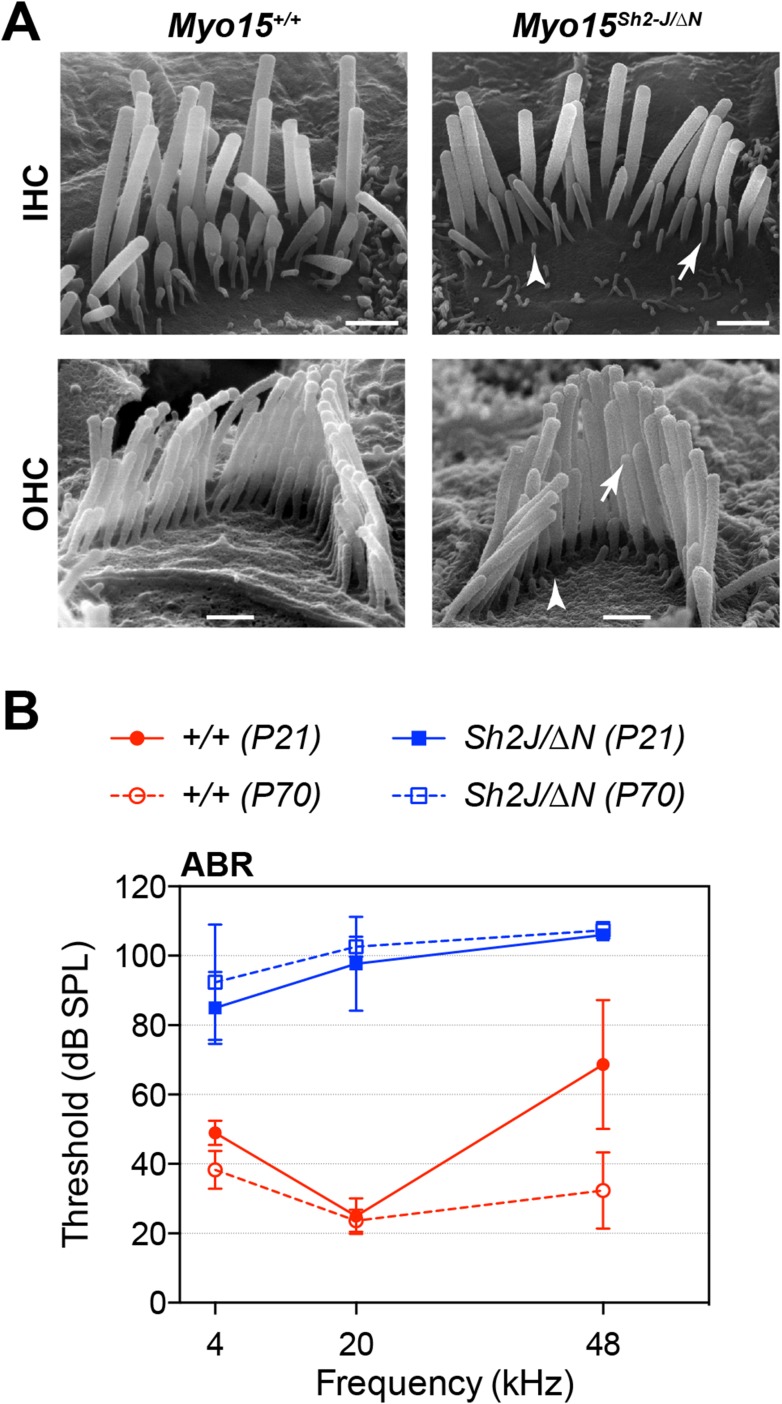
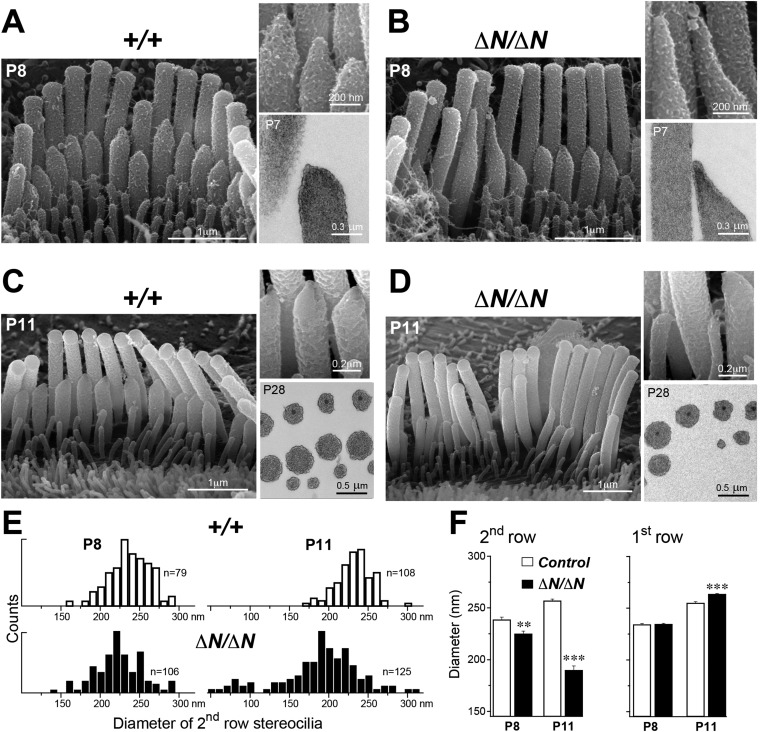
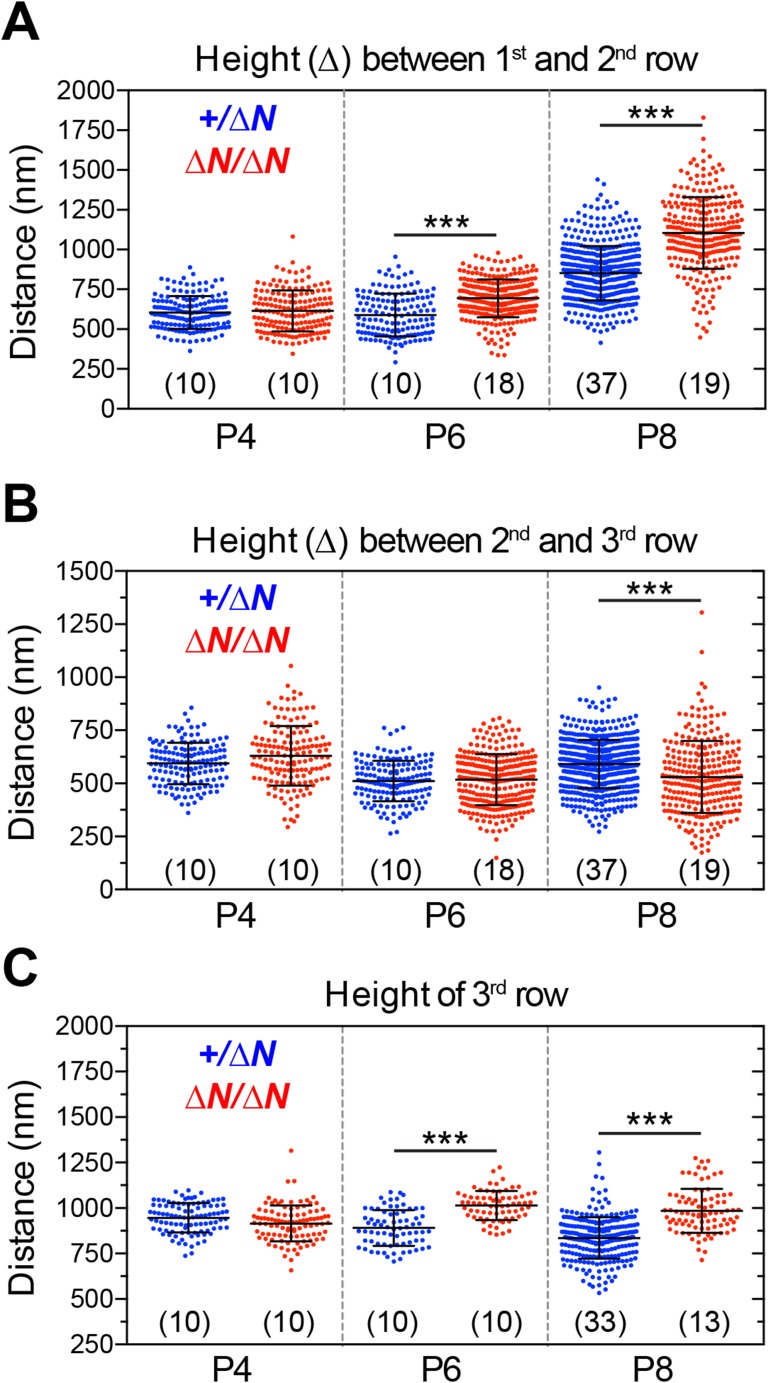
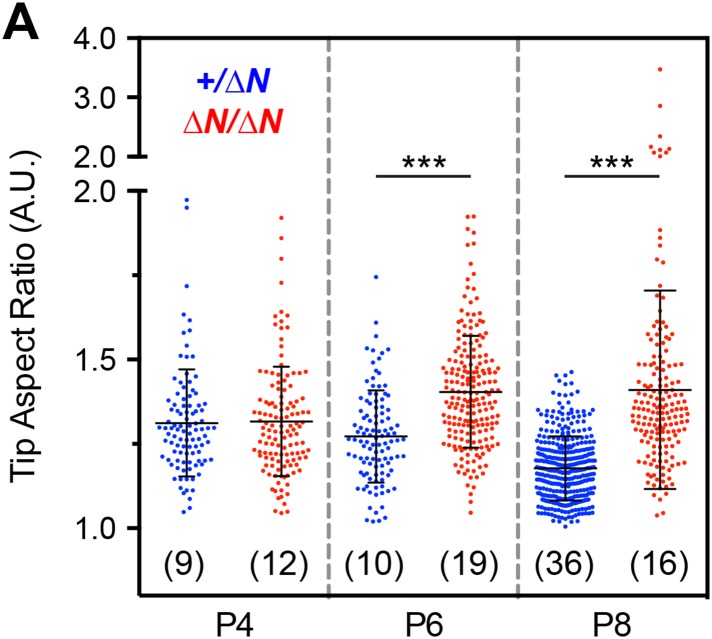
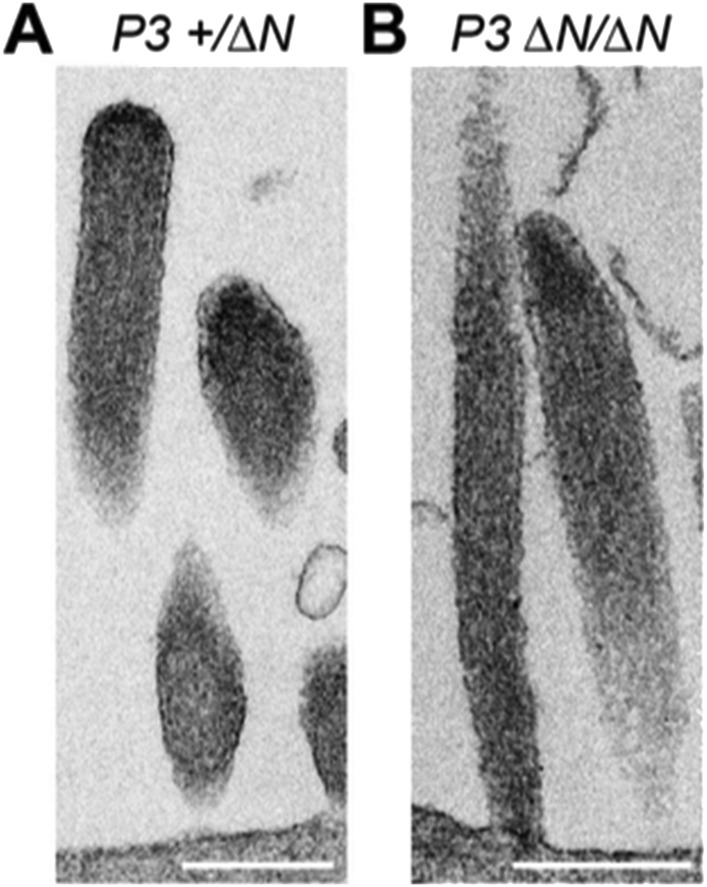
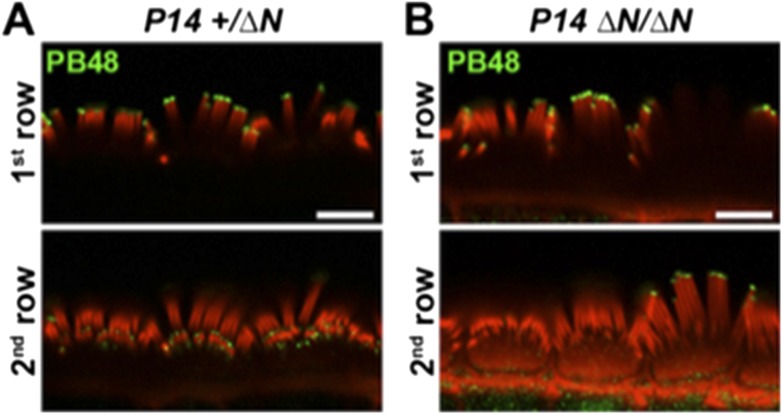
The precise assembly of inner ear hair cell stereocilia into rows of increasing height is critical for mechanotransduction and the sense of hearing. Yet, how the lengths of actin-based stereocilia are regulated remains poorly understood. Mutations of the molecular motor myosin 15 stunt stereocilia growth and cause deafness. We found that hair cells express two isoforms of myosin 15 that differ by inclusion of an 133-kDa N-terminal domain, and that these isoforms can selectively traffic to different stereocilia rows. Using an isoform-specific knockout mouse, we show that hair cells expressing only the small isoform remarkably develop normal stereocilia bundles. However, a critical subset of stereocilia with active mechanotransducer channels subsequently retracts. The larger isoform with the 133-kDa N-terminal domain traffics to these specialized stereocilia and prevents disassembly of their actin core. Our results show that myosin 15 isoforms can navigate between functionally distinct classes of stereocilia, and are independently required to assemble and then maintain the intricate hair bundle architecture.
Keywords: actin; cell biology; deafness; hearing; inner ear; mouse; myosin; neuroscience; stereocilia.
Conflict of interest statement
The authors declare that no competing interests exist.
Figures
Comment in
-
It takes two.Elife. 2015 Oct 6;4:e11399. doi: 10.7554/eLife.11399. Elife. 2015. PMID: 26439013 Free PMC article.
References
-
- Anderson DW, Probst FJ, Belyantseva IA, Fridell RA, Beyer L, Martin DM, Wu D, Kachar B, Friedman TB, Raphael Y, Camper SA. The motor and tail regions of myosin XV are critical for normal structure and function of auditory and vestibular hair cells. Human Molecular Genetics. 2000;9:1729–1738. doi: 10.1093/hmg/9.12.1729. - DOI - PubMed
Publication types
MeSH terms
Substances
Grants and funding
- R01 DC05053/DC/NIDCD NIH HHS/United States
- R01 DC008861/DC/NIDCD NIH HHS/United States
- P30 CA046592/CA/NCI NIH HHS/United States
- P30 CA46592/CA/NCI NIH HHS/United States
- R01 DC005053/DC/NIDCD NIH HHS/United States
- P30 DC005188/DC/NIDCD NIH HHS/United States
- DC000039-18/DC/NIDCD NIH HHS/United States
- T32 DC000039/DC/NIDCD NIH HHS/United States
- Z01 DC000039/ImNIH/Intramural NIH HHS/United States
- DC000048-18/DC/NIDCD NIH HHS/United States
- P30 DC05188/DC/NIDCD NIH HHS/United States
- Z01 DC000048/ImNIH/Intramural NIH HHS/United States
LinkOut - more resources
Full Text Sources
Molecular Biology Databases
