


Identifying Novel Targets for Treatment of Liver Fibrosis: What Can We Learn from Injured Tissues which Heal Without a Scar?
- PMID: 26302807
- PMCID: PMC4838187
- DOI: 10.2174/1389450116666150825111439
Identifying Novel Targets for Treatment of Liver Fibrosis: What Can We Learn from Injured Tissues which Heal Without a Scar?
Abstract
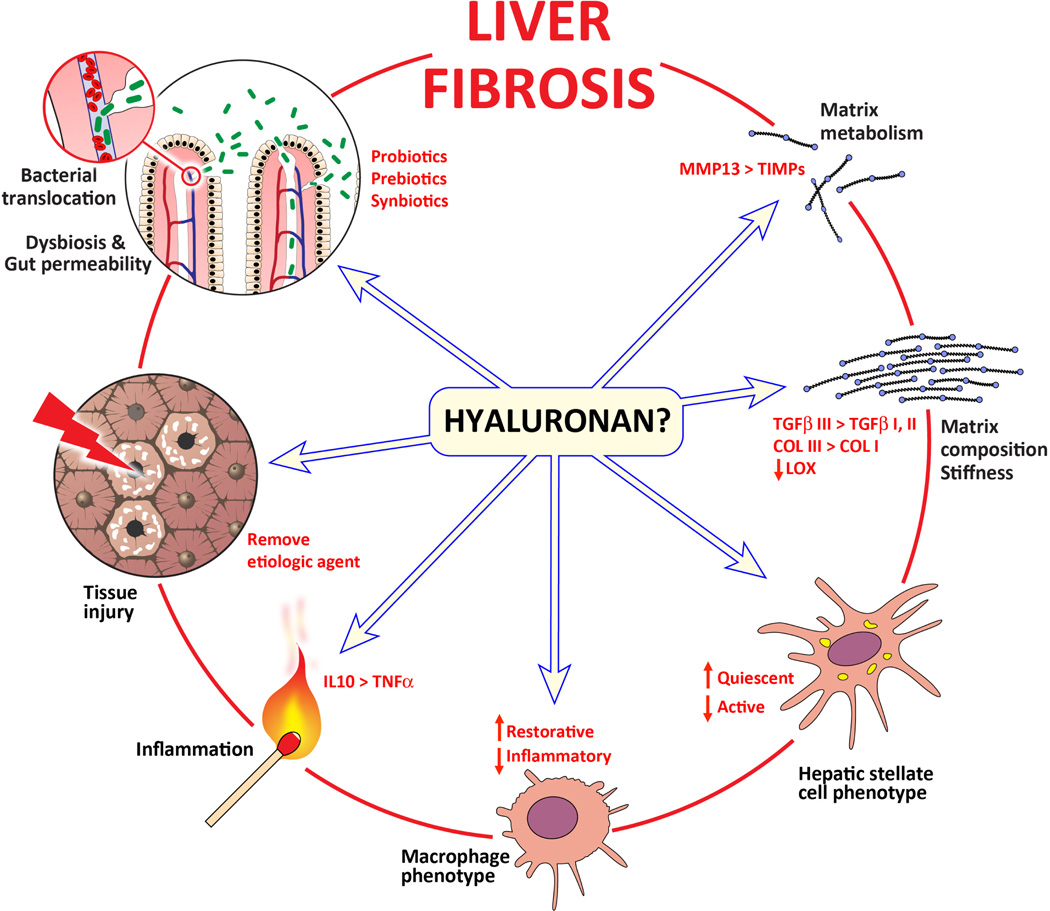
The liver is unique in that it is able to regenerate. This regeneration occurs without formation of a scar in the case of non-iterative hepatic injury. However, when the liver is exposed to chronic liver injury, the purely regenerative process fails and excessive extracellular matrix proteins are deposited in place of normal liver parenchyma. While much has been discovered in the past three decades, insights into fibrotic mechanisms have not yet lead to effective therapies; liver transplant remains the only cure for advanced liver disease. In an effort to broaden the collection of possible therapeutic targets, this review will compare and contrast the liver wound healing response to that found in two types of wound healing: scarless wound healing of fetal skin and oral mucosa and scar-forming wound healing found in adult skin. This review will examine wound healing in the liver and the skin in relation to the role of humoral and cellular factors, as well as the extracellular matrix, in this process. While several therapeutic targets are similar between fibrotic liver and adult skin wound healing, others are unique and represent novel areas for hepatic anti-fibrotic research. In particular, investigations into the role of hyaluronan in liver fibrosis and fibrosis resolution are warranted.
Conflict of interest statement
The authors confirm that this article content has no conflicts of interest.
Figures
References
-
- Bataller R, Rombouts K, Altamirano J, Marra F. Fibrosis in alcoholic and nonalcoholic steatohepatitis. Best Pract Res Clin Gastroenterol. 2011;25(2):231–244. - PubMed
-
- Masarone M, Federico A, Abenavoli L, Loguercio C, Persico M. Non alcoholic Fatty liver: epidemiology and natural history. Rev Recent Clin Trials. 2014;9(3):126–133. - PubMed
Publication types
MeSH terms
Grants and funding
LinkOut - more resources
Full Text Sources
Other Literature Sources
Medical
Miscellaneous