


DAX-1 (NR0B1) and steroidogenic factor-1 (SF-1, NR5A1) in human disease
- PMID: 26303087
- PMCID: PMC5159745
- DOI: 10.1016/j.beem.2015.07.004
DAX-1 (NR0B1) and steroidogenic factor-1 (SF-1, NR5A1) in human disease
Abstract
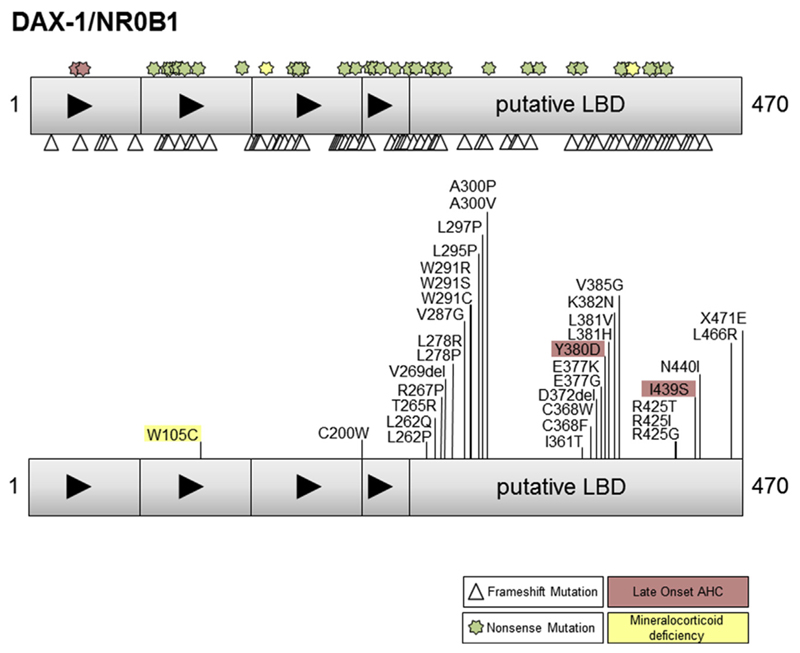
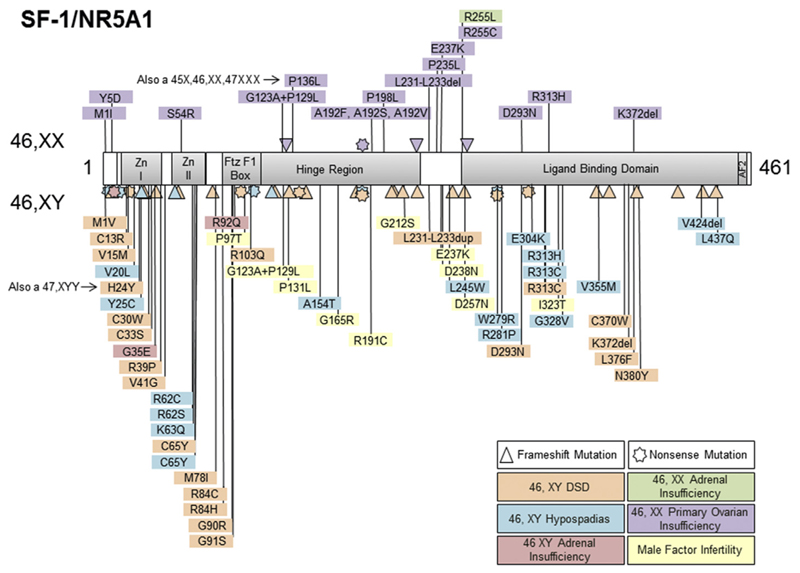
DAX-1 (NR0B1) and SF-1 (NR5A1) are two nuclear receptor transcription factors that play a key role in human adrenal and reproductive development. Loss of DAX-1 function is classically associated with X-linked adrenal hypoplasia congenita. This condition typically affects boys and presents as primary adrenal insufficiency in early infancy or childhood, hypogonadotropic hypogonadism at puberty and impaired spermatogenesis. Late onset forms of this condition and variant phenotypes are increasingly recognized. In contrast, disruption of SF-1 only rarely causes adrenal insufficiency, usually in combination with testicular dysgenesis. Variants in SF-1/NR5A1 more commonly cause a spectrum of reproductive phenotypes ranging from 46,XY DSD (partial testicular dysgenesis or reduced androgen production) and hypospadias to male factor infertility or primary ovarian insufficiency. Making a specific diagnosis of DAX-1 or SF-1 associated conditions is important for long-term monitoring of endocrine and reproductive function, appropriate genetic counselling for family members, and for providing appropriate informed support for young people.
Keywords: 46,XY disorders of sex development; Addison disease; DAX-1; SF-1; X-linked adrenal hypoplasia congenita; hypogonadotropic hypogonadism; hypospadias; infertility; primary adrenal insufficiency; primary ovarian insufficiency.
Copyright © 2015 The Authors. Published by Elsevier Ltd.. All rights reserved.
Figures
References
-
- Sikl H. Addison's disease due to congenital adrenal hypoplasia of the adrenals in an infant aged 33 days. J Pathol Bacteriol. 1948;60:323–6. - PubMed
-
- Muscatelli F, Strom TM, Walker AP, et al. Mutations in the DAX-1 gene give rise to both X-linked adrenal hypoplasia congenita and hypogonadotropic hypogonadism. Nature. 1994;372:672–6. - PubMed
-
- Bardoni B, Zanaria E, Guioli S, et al. A dosage sensitive locus at chromosome Xp21 is involved in male to female sex reversal. Nat Genet. 1994;7(4):497–501. - PubMed
-
- Zanaria E, Muscatelli F, Bardoni B, et al. An unusual member of the nuclear hormone receptor superfamily responsible for X-linked adrenal hypoplasia congenita. Nature. 1994;372:635–41. - PubMed
Publication types
MeSH terms
Substances
Grants and funding
LinkOut - more resources
Full Text Sources
Other Literature Sources
