Review
. 2016;16(7):714-31.
doi: 10.2174/1568026615666150825125857.

Histone and Non-Histone Targets of Dietary Deacetylase Inhibitors

Affiliations
Review

Histone and Non-Histone Targets of Dietary Deacetylase Inhibitors

Eunah Kim et al. Curr Top Med Chem. 2016.

Abstract

Acetylation is an important, reversible post-translational modification affecting histone and non-histone proteins with critical roles in gene transcription, DNA replication, DNA repair, and cell cycle progression. Key regulatory enzymes include histone deacetylase (HDACs) and histone acetyltransferases (HATs). Overexpressed HDACs have been identified in many human cancers, resulting in repressed chromatin states that interfere with vital tumor suppressor functions. Inhibition of HDAC activity has been pursued as a mechanism for re-activating repressed genes in cancers, with some HDAC inhibitors showing promise in the clinical setting. Dietary compounds and their metabolites also have been shown to modulate HDAC activity or expression. Out of this body of research, attention increasingly has shifted towards non-histone targets of HDACs and HATs, such as transcriptions factors, hormone receptors, DNA repair proteins, and cytoskeletal components. These aspects are covered in present review, along with the possible clinical significance. Where such data are available, examples are cited from the literature of studies with short chain fatty acids, polyphenols, isoflavones, indoles, organosulfur compounds, organoselenium compounds, sesquiterpene lactones, isoflavones, and various miscellaneous agents. By virtue of their effects on both histone and non-histone proteins, dietary chemopreventive agents modulate the cellular acetylome in ways that are only now becoming apparent. A better understanding of the molecular mechanisms will likely enhance the potential to more effectively combat diseases harboring altered epigenetic landscapes and dysregulated protein signaling.


Conflict of interest statement

The author(s) confirm no conflicts of interest associated with this review article.

Figures

Fig 1
Fig 1. Mechanisms of HDAC inhibition by dietary compounds
Dietary compounds inhibit HDAC activity and/or expression via direct or indirect mechanisms. (A) Hydroxamic acids interact with the zinc atom in the catalytic site via a bidentate ligand. In dietary compounds such as butyrate, the corresponding interaction likely involves a carboxyl moiety; whereas in garlic organosulfur compounds, it is the sulfhydryl group of AM. (B) Allosteric site binding, as predicted for the SFN-NAC metabolite in the inositol tetraphosphate (IP4) pocket that lies between HDAC3 and its corepressor partner SMRT. (C) Dissociation of co-repressor complexes due to SFN-mediated CK2 kinase recruitment and HDAC3/SMRT phosphorylation. (D) Ubiquitylation leading to HDAC3 protein turnover, triggered in cancer cells by dietary indoles.
Fig 2
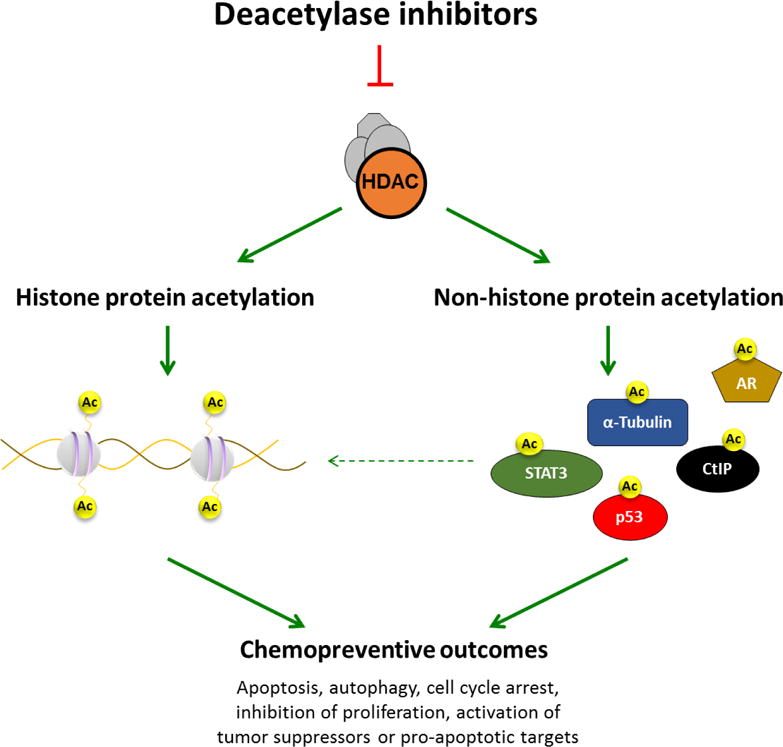
Fig 2. Dietary deacetylase inhibitors and (de)acetylation targets
Deacetylase inhibitors induce histone hyperacetylation leading to an open chromatin conformation that correlates with gene activation. Acetylation of non-histone proteins modulates their function, stability, cellular localization, and/or protein–protein interactions. Transcription factors such as STAT3 and p53 are directly acetylated by HDAC inhibitors, which can positively or negatively alter their capacity to bind DNA and modulate gene expression. Through the combined effects on histone and non-histone protein acetylation, deacetylase inhibitors exert chemopreventive outcomes ranging from inhibition of cell growth, cell cycle arrest, apoptosis, autophagy, or necrosis.

References

    1. Voss TC, Hager GL. Dynamic regulation of transcriptional states by chromatin and transcription factors. Nat Rev Genet. 2014;15(2):69–81. - PMC - PubMed
    1. Li B, Carey M, Workman JL. The role of chromatin during transcription. Cell. 2007;128(4):707–719. - PubMed
    1. Peserico A, Simone C. Physical and functional HAT/HDAC interplay regulates protein acetylation balance. J Biomed Biotechnol. 2011;2011:371832. - PMC - PubMed
    1. Zhou VW, Goren A, Bernstein BE. Charting histone modifications and the functional organization of mammalian genomes. Nat Rev Genet. 2011;12(1):7–18. - PubMed
    1. Marks PA, Xu WS. Histone deacetylase inhibitors: Potential in cancer therapy. J Cell Biochem. 2009;107(4):600–608. - PMC - PubMed

Publication types

LinkOut - more resources