


Patient and provider priorities for self-reported domains of HIV clinical care
- PMID: 26304263
- PMCID: PMC4643852
- DOI: 10.1080/09540121.2015.1050983
Patient and provider priorities for self-reported domains of HIV clinical care
Abstract
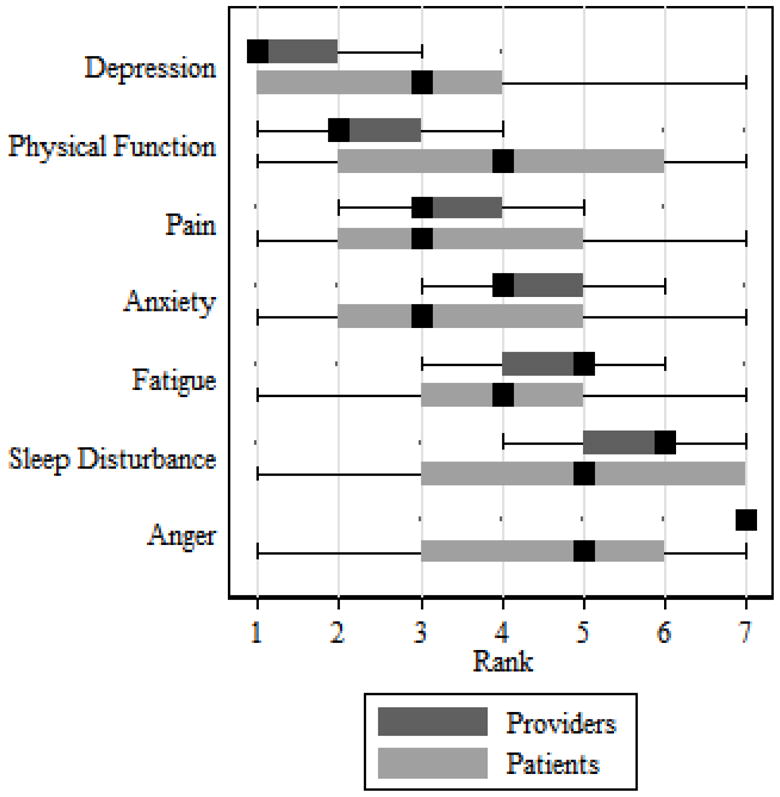
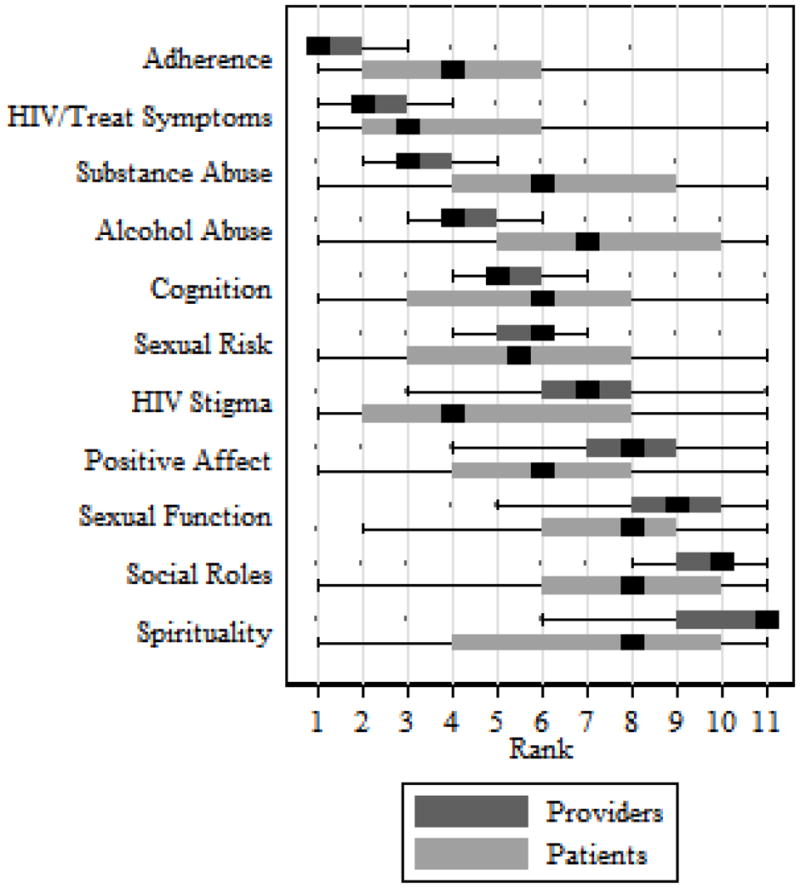
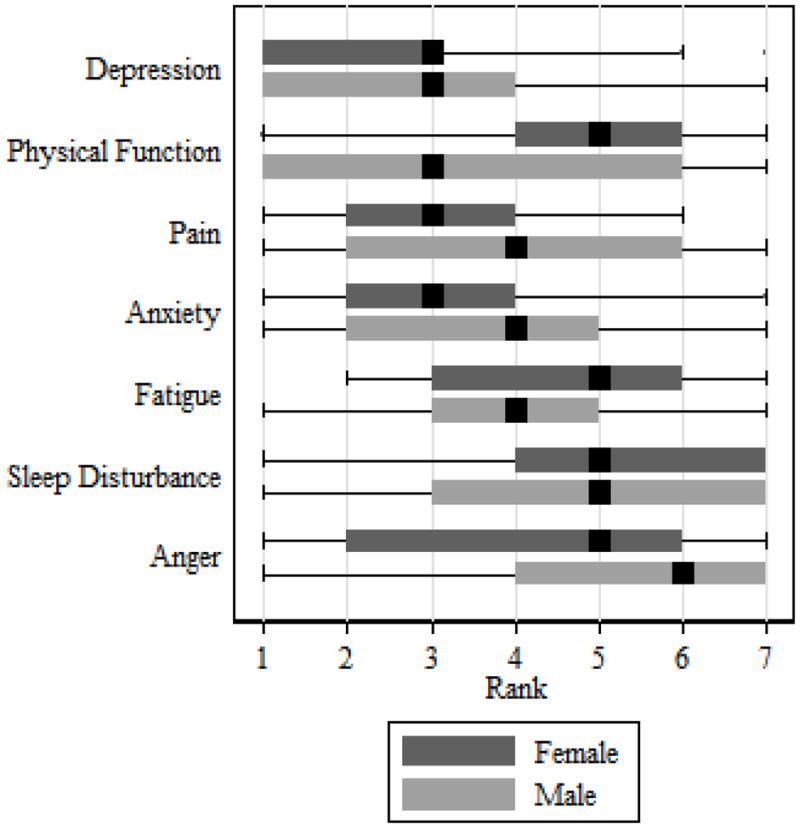
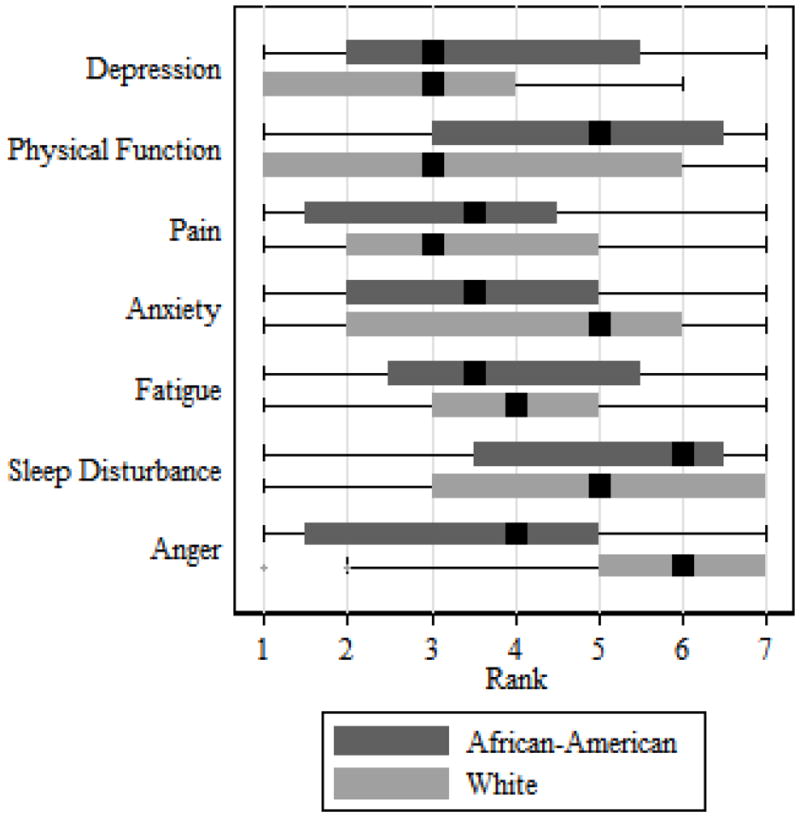
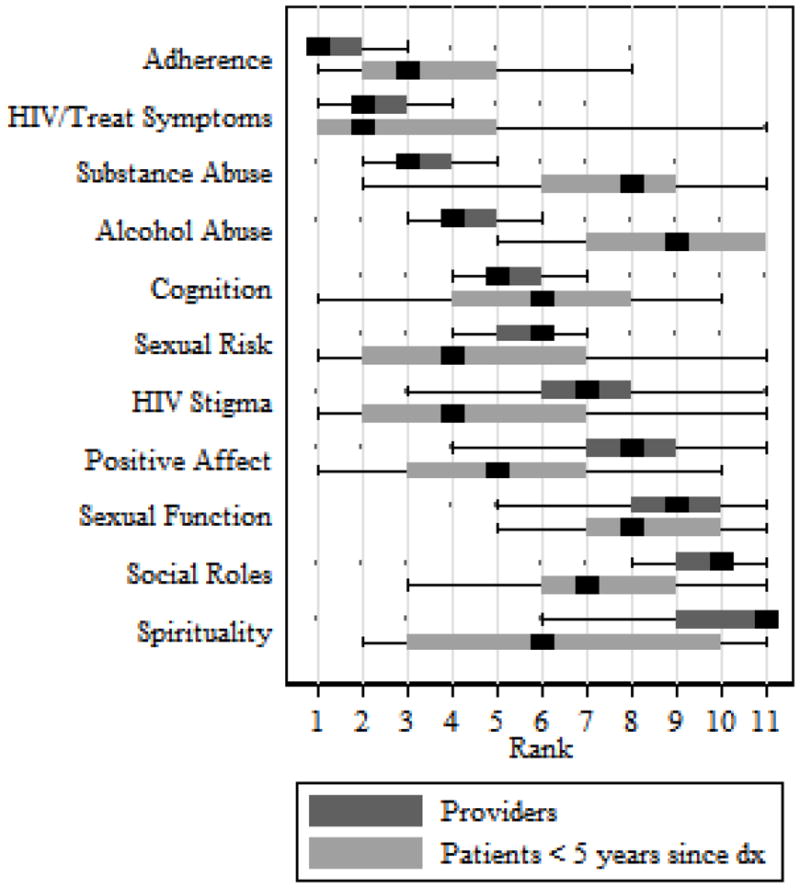
We sought to understand how HIV-infected patients, their providers, and HIV care researchers prioritize self-reported domains of clinical care. Participants rank-ordered two lists of domains. A modified Delphi process was used for providers and researchers. Approximately 25% of patients were interviewed to discuss rationale for rank order choices. List 1 included anger, anxiety, depression, fatigue, physical function, pain, and sleep disturbance. List 2 included alcohol abuse, cognitive function, HIV stigma, HIV and treatment symptoms, medication adherence, positive affect, sexual risk behavior, sexual function, social roles, spirituality/meaning of life, and substance abuse. Seventy-four providers, 80 HIV care researchers, and 66 patients participated. Patients ranked context-based domains, such as HIV stigma, more highly than providers, while health behaviors, such as drug or alcohol use, ranked lower. Patients described a need to address wider-context challenges such as HIV stigma in order to positively impact health behaviors. Divergent patient and provider priorities highlight the importance of incorporating views from all stakeholders and suggests the need for a care approach that more effectively addresses contextual barriers to adverse health behaviors.
Keywords: HIV care; HIV-infected patients; patient-based measures; patient-reported outcomes; patient–provider communication.
Conflict of interest statement
Authors claim no significant conflicting financial interests.
Figures
References
-
- Bodenheimer T, Wagner EH, Grumbach K. Improving primary care for patients with chronic illness. Jama. 2002;288(14):1775–1779. - PubMed
-
- Bounthavong M, Law AV. Identifying health-related quality of life (HRQL) domains for multiple chronic conditions (diabetes, hypertension and dyslipidemia): patient and provider perspectives. Journal Of Evaluation In Clinical Practice. 2008;14(6):1002–1011. - PubMed
-
- Detmar SB, Muller MJ, Schornagel JH, Wever LD, Aaronson NK. Health-related quality-of-life assessments and patient-physician communication: a randomized controlled trial. Jama. 2002;288(23):3027–3034. - PubMed
-
- Dobscha SK, Gerrity MS, Ward MF. Effectiveness of an intervention to improve primary care provider recognition of depression. Eff Clin Pract. 2001;4(4):163–171. - PubMed
Publication types
MeSH terms
Grants and funding
LinkOut - more resources
Full Text Sources
Other Literature Sources
Medical
