. 2015 Sep 22;6(28):26041-51.
doi: 10.18632/oncotarget.4667.

ZIP4 silencing improves bone loss in pancreatic cancer

Affiliations

ZIP4 silencing improves bone loss in pancreatic cancer

Qiang Zhang et al. Oncotarget. .

Abstract

Metabolic bone disorders are associated with several types of human cancers. Pancreatic cancer patients usually suffer from severe nutrition deficiency, muscle wasting, and loss of bone mass. We have previously found that silencing of a zinc transporter ZIP4 prolongs the survival and reduces the severity of the cachexia in vivo. However, the role of ZIP4 in the pancreatic cancer related bone loss remains unknown. In this study we investigated the effect of ZIP4 knockdown on the bone structure, composition and mechanical properties of femurs in an orthotopic xenograft mouse model. Our data showed that silencing of ZIP4 resulted in increased bone tissue mineral density, decreased bone crystallinity and restoration of bone strength through the RANK/RANKL pathway. The results further support the impact of ZIP4 on the progression of pancreatic cancer, and suggest its potential significance as a therapeutic target for treating patients with such devastating disease and cancer related disorders.

Keywords: RANK/RANKL signaling; ZIP4; bone; cachexia; pancreatic cancer.


Conflict of interest statement

CONFLICTS OF INTEREST

All the authors declare no conflict of interest.

Figures

Figure 1
Figure 1. ZIP4 knockdown relieved bone resorption
Representative 3-D Micro-CT images of trabecular bone microarchitecture above the growth plate of the distal end of the femur in SHAM A. AsPC-shV B. and AsPC-shZIP4 groups C. A volume of interest with 1.2 mm height was selected for the analysis of trabecular bone micro-architecture. All of the trabecular TMD of mice bearing pancreatic xenograft tumors of AsPC-1 cells presented an overall decrease. The femurs in the AsPC-shZIP4 group exhibited significant increase in the TMD and bone volume fraction as compared with that in the AsPC-shV group D, E. Qualitative analysis of trabecular bone revealed that silencing of ZIP4 in AsPC-1 cells (AsPC-shZIP4 group) could restore the decreased trabecular thickness, but exhibited no significant effect on the trabecular number F, G. *P < 0.05.
Figure 2
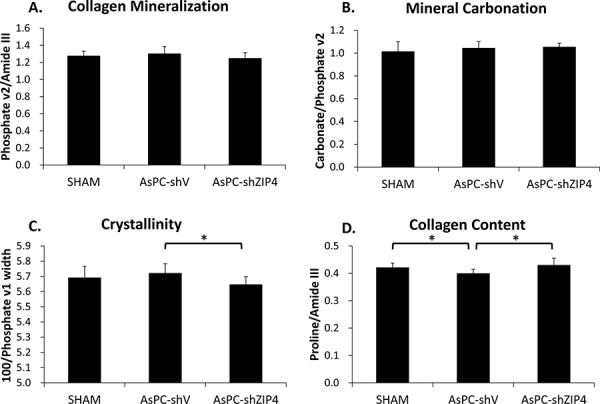
Figure 2. Bone composition analysis at distal metaphysis indicated that ZIP4 knockdown could optimize the bone composition
No significant difference was found on the mineralization A. and carbonation B. among three groups (both P > 0.05). The crystallinity of the bones C. was significantly decreased and collagen content D. was increased in AsPC-shZIP4 group, respectively. *P < 0.05
Figure 3
Figure 3. Mechanistic test results showed that ZIP4 silencing could improve mechanistic function of the bone
The elastic and plastic energy A. plastic displacement B. elastic and plastic toughness C. and plastic strain D. were significantly increased in AsPC-shZIP4 group, when compared with AsPC-shV group (all P < 0.05). *P < 0.05
Figure 4
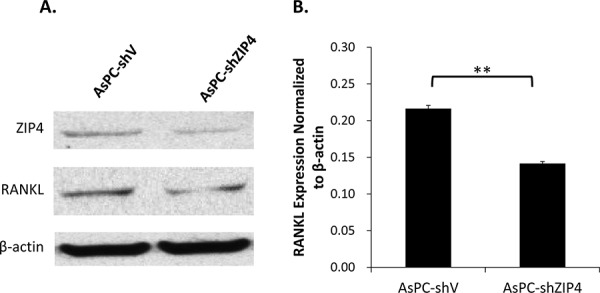
Figure 4. ZIP4 silencing down-regulated RANKL level under zinc-deficient condition
Western blot showed that the knockdown of ZIP4 could attenuate the RANKL protein level in PC cells in Chelex zinc-chelating medium A. Quantification analysis confirmed that the expression level of RANKL normalized to β-actin was significantly decreased in AsPC-shZIP4 cells B. **P < 0.001
Figure 5
Figure 5. The differentiation of RAW264.7 cells to osteoclast was enhanced when culturing in the conditioned medium from AsPC-shV cells, compared with that from AsPC-shZIP4 cells
Three dilution ratios (1:1, 1:2 and 1:5) of conditioned medium and complete medium with RANKL were examined, and further analysis were conducted under 1:2 conditioned medium. Osteoclasts were typically characterized by multinucleate, ruffled membrane and pseudopodia A. Culture in conditioned medium from AsPC-shV promoted the osteoclast differentiation (4.6 ± 1.9 vs. 1.9 ± 1.0, P < 0.001) B. 7,000 cells/well were reseeded into 24-well plate. Each treatment had four replication wells and the experiments were repeated three times. Four pictures were taken for each well and the average osteoclasts per high-power field (20X) were calculated. Treatment with conditioned medium could also regulate the level of RANK and TRAP mRNAs C, D. Exposure to AsPC-shV conditioned medium (1:2) upregulated the RANK and TRAP expressions. *P < 0.05, **P < 0.001
Figure 6
Figure 6. Diagram for ZIP4-induced bone loss in pancreatic cancer
ZIP4 knockdown in pancreatic cancer could regulate the bone metabolism and structure via the RANK/RANKL pathway.

References

    1. Siegel R, Naishadham D, Jemal A. Cancer statistics, 2012. CA: a cancer journal for clinicians. 2012;62:10–29. - PubMed
    1. Kleeff J, Michalski C, Friess H, Buchler MW. Pancreatic cancer: from bench to 5-year survival. Pancreas. 2006;33:111–8. - PubMed
    1. Kuwahara K, Nakao K. New molecular mechanisms for cardiovascular disease: transcriptional pathways and novel therapeutic targets in heart failure. Journal of pharmacological sciences. 2011;116:337–42. - PubMed
    1. Neoptolemos JP, Stocken DD, Friess H, Bassi C, Dunn JA, Hickey H, Beger H, Fernandez-Cruz L, Dervenis C, Lacaine F, Falconi M, Pederzoli P, Pap A, et al. A randomized trial of chemoradiotherapy and chemotherapy after resection of pancreatic cancer. The New England journal of medicine. 2004;350:1200–10. - PubMed
    1. Martignoni ME, Kunze P, Friess H. Cancer cachexia. Molecular Cancer. 2003;2:36. - PMC - PubMed

Publication types

MeSH terms

Substances