. 2015 Aug;29(3):188-200.
doi: 10.1055/s-0035-1556853.

Aging Asian Upper Blepharoplasty and Brow

Affiliations

Aging Asian Upper Blepharoplasty and Brow

David Daehwan Park. Semin Plast Surg. 2015 Aug.

Abstract

The preoperative comprehensive evaluation of aging Asian patients seeking an Asian upper blepharoplasty and brow lift is imperative and should be performed meticulously. There are many methods of upper Asian face rejuvenation. Among them, the proper selection of operative technique is necessary. The operative technique for an aging Asian upper blepharoplasty and brow lift should be performed based on anatomical structures and their relationship. Modifications to the procedure are correlated with the degree of periorbital aging. The height of double fold in an aging Asian upper blepharoplasty should not exceed 10 mm from the eyelid margin when the eye is closed. The preservation of orbital fat during a blepharoplasty is needed for the prevention of periorbital hollowing, which looks older. For satisfactory results in aging Asian upper blepharoplasty and brow lift, the harmonization of the position of the upper eyelid and eyebrow is important. Noninvasive rejuvenation such as botulinum toxin and filler are good options for facial rejuvenation.

Keywords: Asian blepharoplasty; aging; brow.


Figures
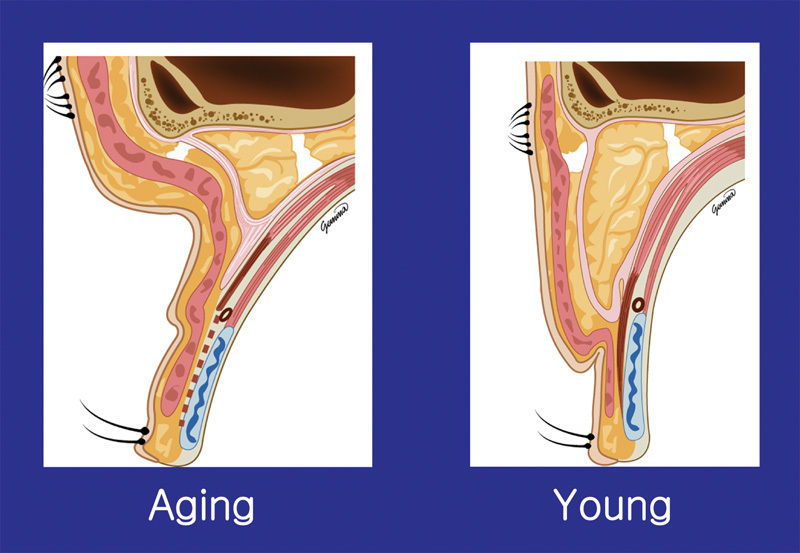
Fig. 1
Fig. 1
Difference of between the aging and young Asian upper lid.
Fig. 2
Fig. 2
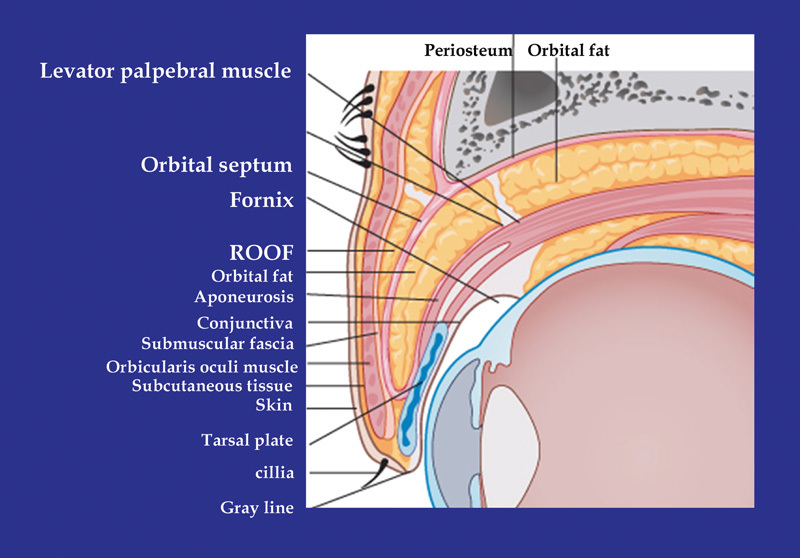
Cross-sectional view of Asian upper lid. ROOF, retro-orbicularis oculi fat.
Fig 3
Fig 3
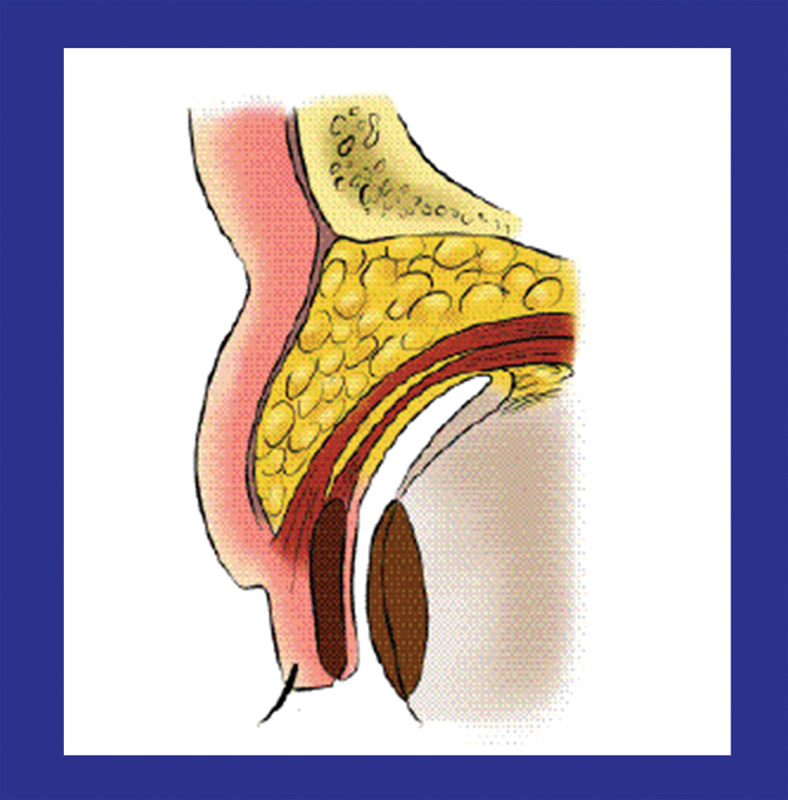
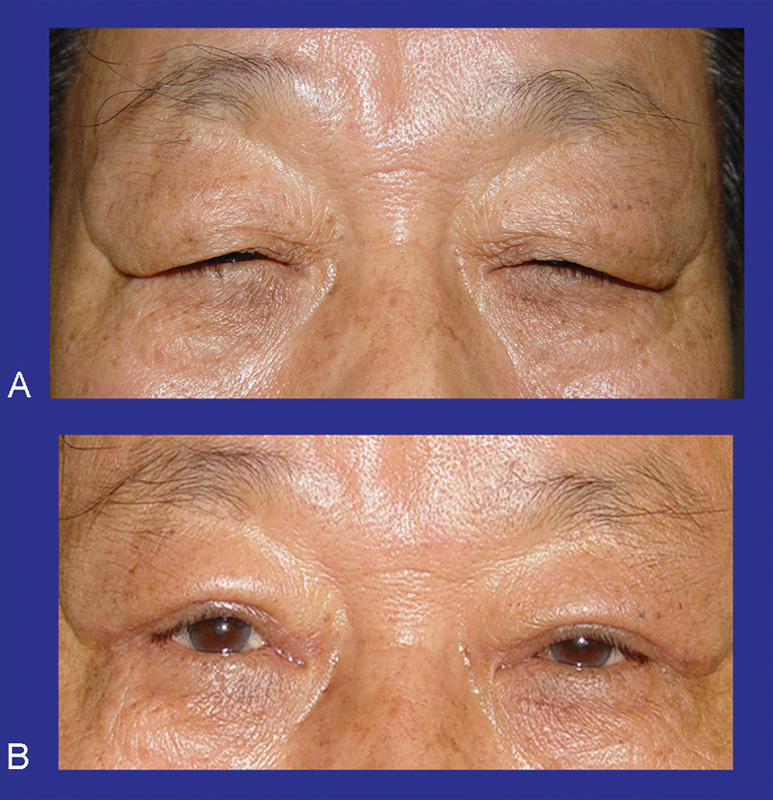
Aspect of the baggy eyelid. The orbital fat protrudes and skin loosens causing the eyelid line to be covered.
Fig. 4
Fig. 4
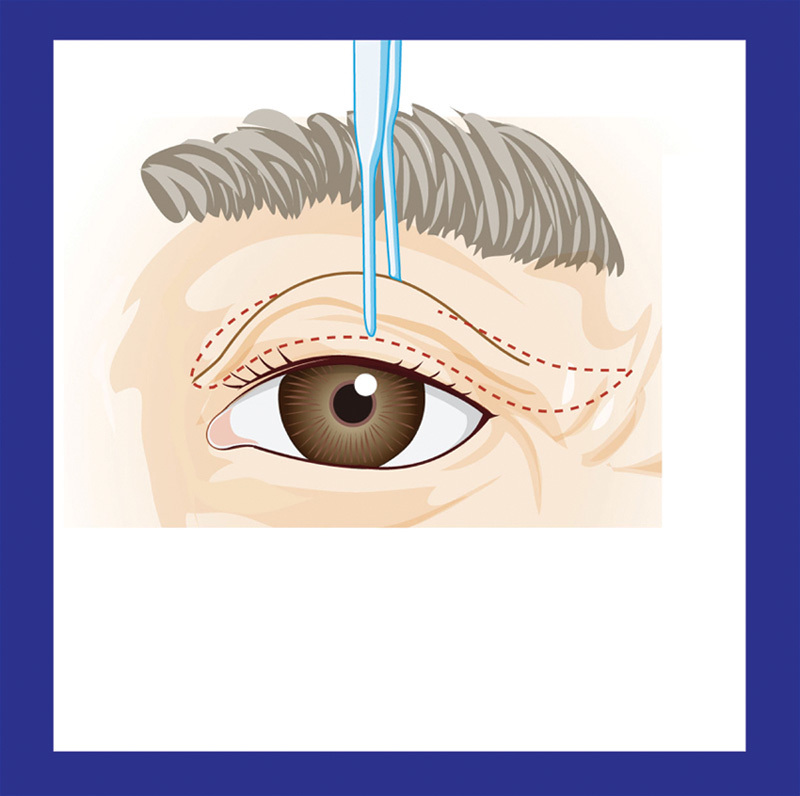
Measuring the extent of skin removal in aging Asian upper blepharoplasty is easily done with green forceps.
Fig. 5
Fig. 5
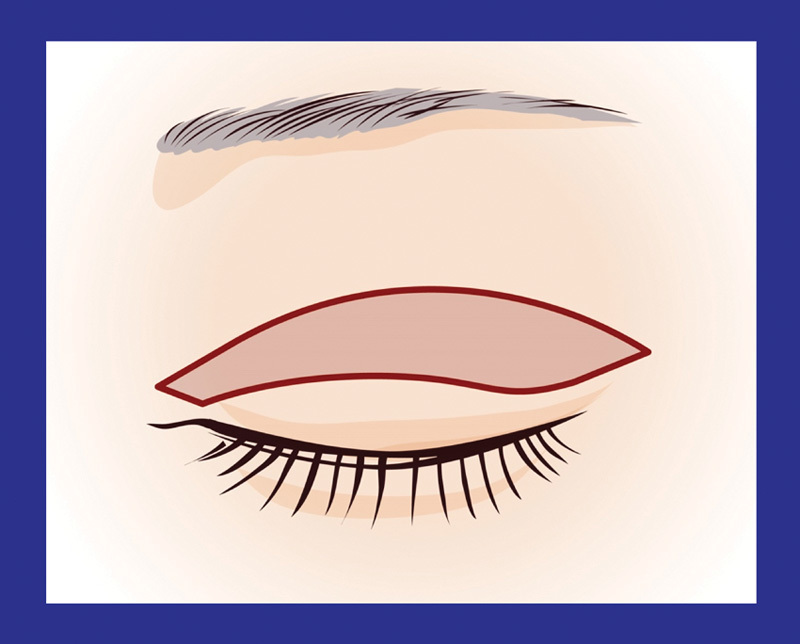
Design of an upper blepharoplasty.
Fig. 6
Fig. 6
Upper blepharoplasty with xanthelasma excision.
Fig. 7
Fig. 7
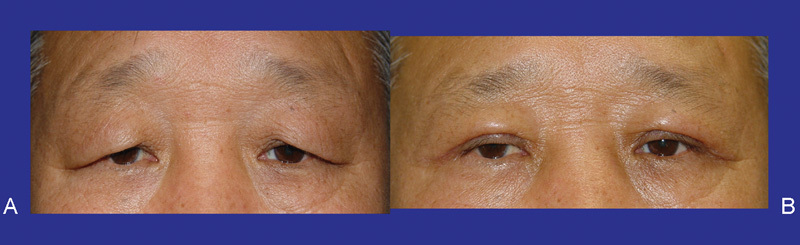
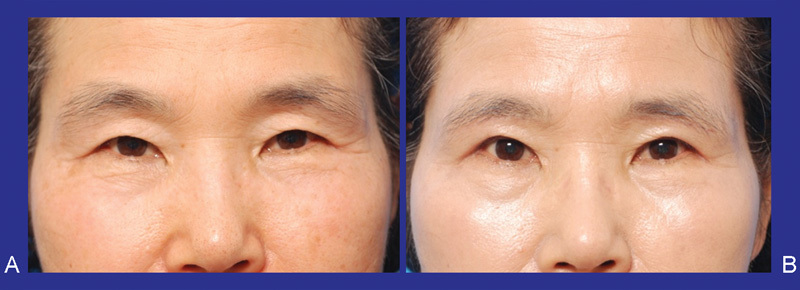
Blepharoplasty without forming a double eyelid. (A) Preoperative view. The patient had discomfort with visual disturbance caused by an upper eyelid crease, but he did not want a double eyelid line. (B) Postoperative view. Combined with a suprabrow lift.
Fig. 8
Fig. 8
Upper blepharoplasty; skin excision only. (A) Preoperative. (B) Postoperative.
Fig. 9
Fig. 9
Upper blepharoplasty with a double fold formation by nonburied skin–tarsus–skin suture with a skin excision. (A) Preoperative. (B) Postoperative.
Fig. 10
Fig. 10
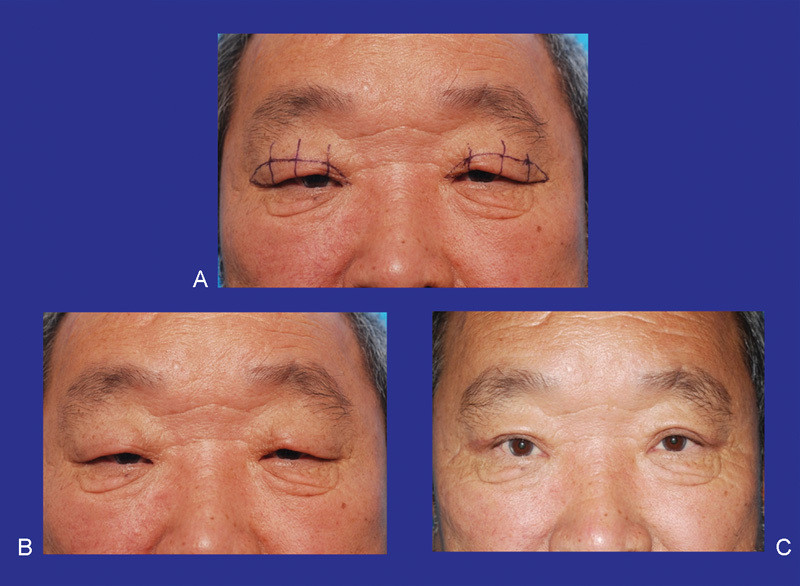
Blepharoplasty with double fold formation by buried suture on tarsal plate. (A) Design. (B) Preoperative. (C) 5 months postoperative.
Fig. 11
Fig. 11
Upper blepharoplasty with levator aponeurosis plication. (A) Preoperative. (B) Postoperative.
Fig. 12
Fig. 12
Upper blepharoplasty with ptosis correction. (A) Preoperative. (B) Postoperative.
Fig. 13
Fig. 13
Design of sub-brow excision.
Fig. 14
Fig. 14
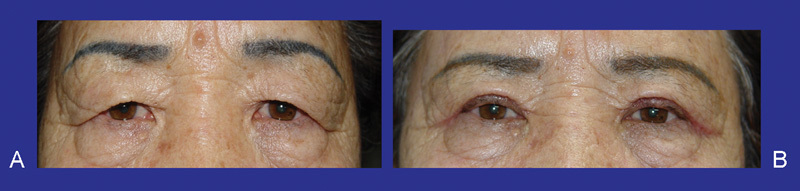
Upper blepharoplasty by sub-brow excision. (A) Preoperative view. The patient had discomfort caused by dermatochalasis of the upper eyelid. (B) Postoperative view. Excessive skin excision was done on both sub-brow areas.
Fig. 15
Fig. 15
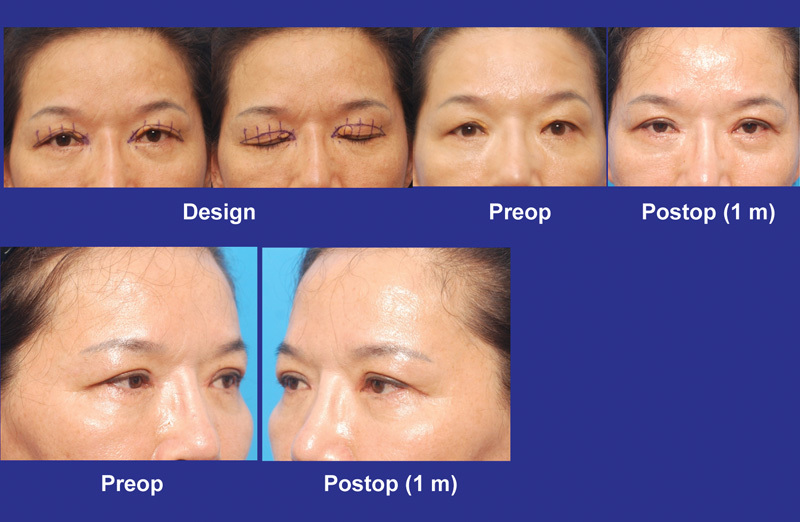
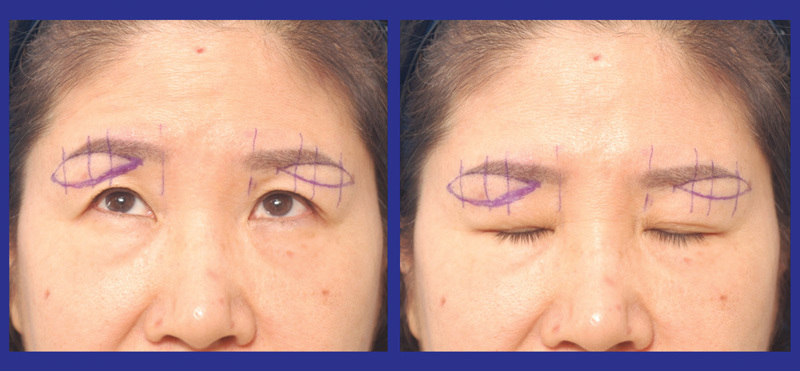
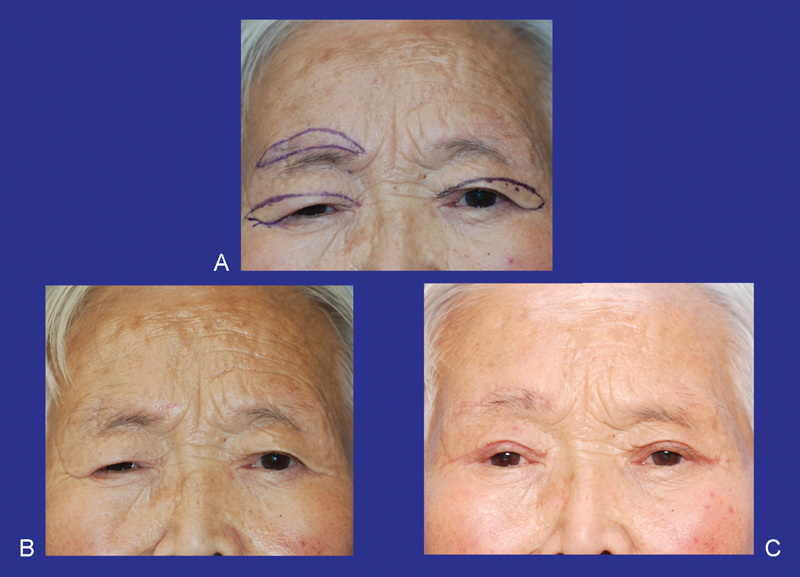
Upper blepharoplasty combined with supra-eyebrow excision. (A) Design. (B) Preoperative. (C) 1 month postoperative.
Fig. 16
Fig. 16
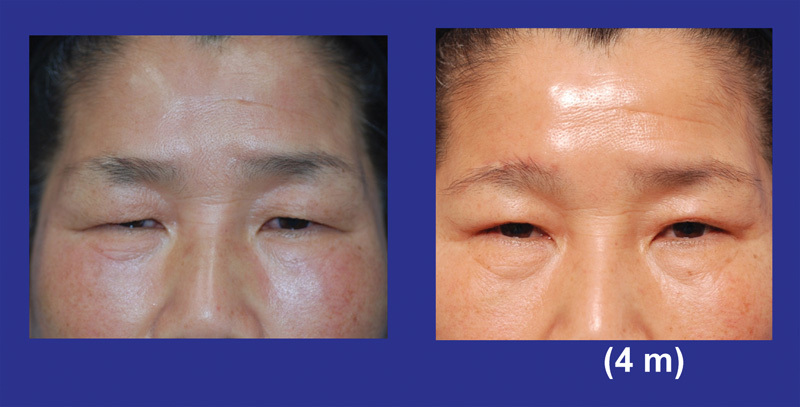
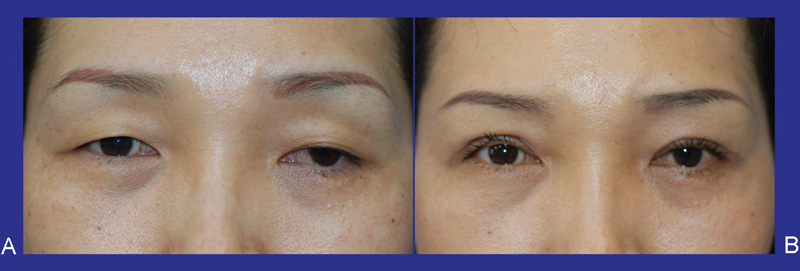
Fat graft combined with aponeurosis plication. (A) Preoperative view. She had discomfort with visual disturbance caused by left upper eyelid retraction and sunken eyelid on the right side. (B) 1 month postoperative. Combined with aponeurosis plication and fat graft.
Fig. 17
Fig. 17
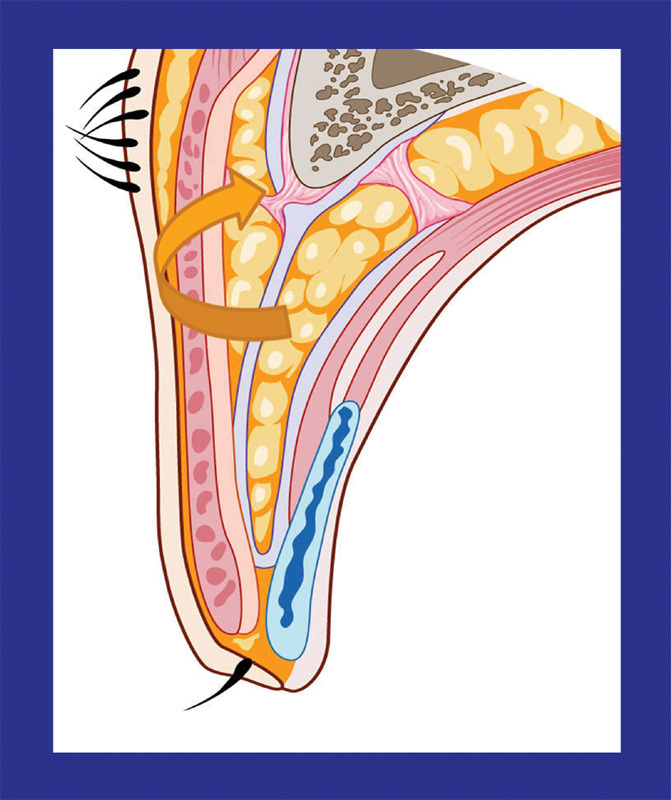
Diagram of orbital fat transposition.
Fig. 18
Fig. 18
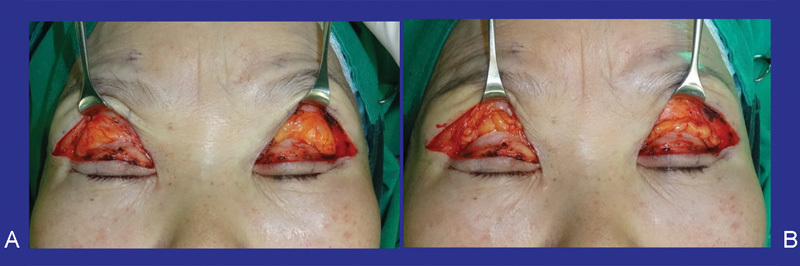
Intraoperative view of orbital fat transposition. (A) Orbital fat. (B) After fixation of orbital fat to the upper orbital margin.
Fig. 19
Fig. 19
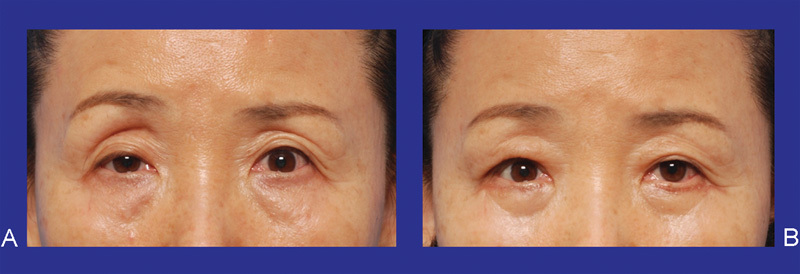
Orbital fat transposition combined with aponeurosis advancement. (A) Preoperative. (B) Postoperative.
Fig. 20
Fig. 20
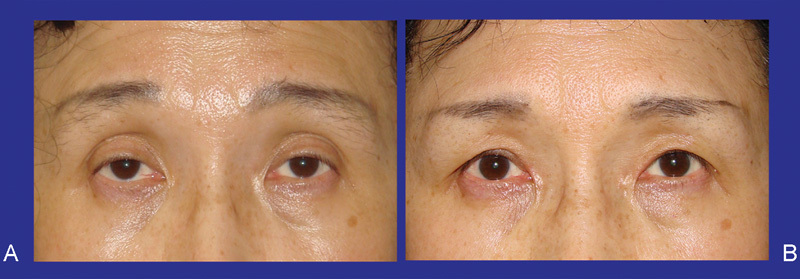
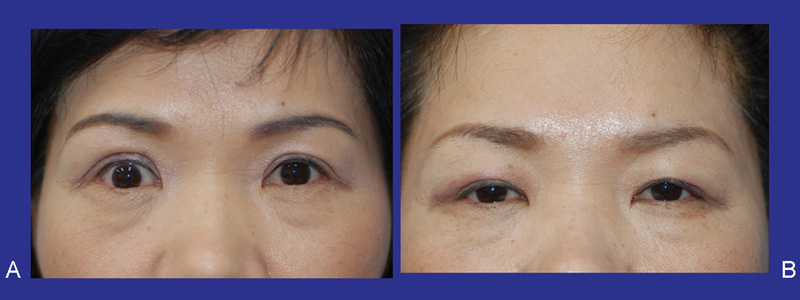
Undercorrection: Right upper eyelid and asymmetry of double fold height. (A) Preoperative. (B) 5 months postoperative.
Fig. 21
Fig. 21
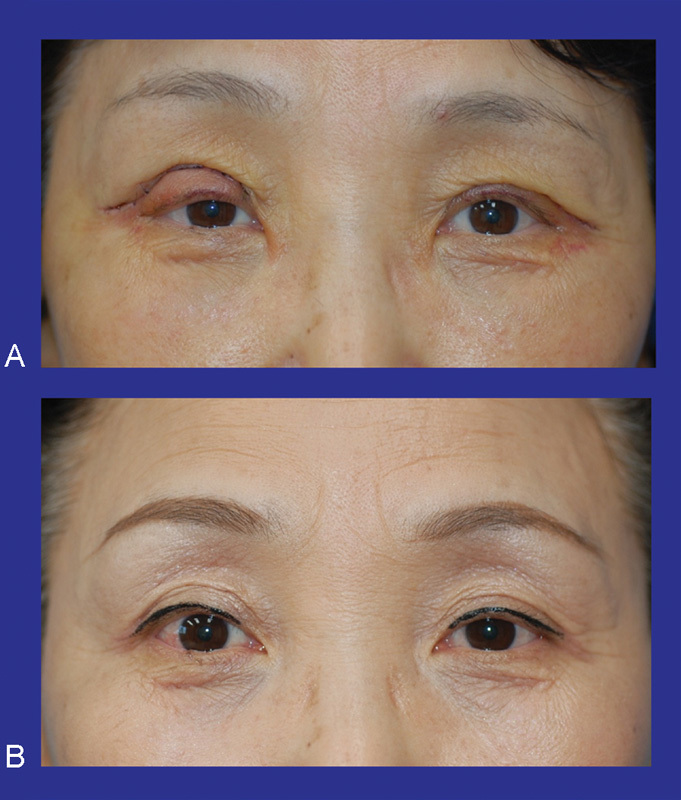
Overcorrection: Right upper eyelid. (A) Preoperative. (B) I year 4 months postoperative.

References

    1. Flowers R S, Caputy G G, Flowers S S. The biomechanics of brow and frontalis function and its effect on blepharoplasty. Clin Plast Surg. 1993;20(2):255–268. - PubMed
    1. Flowers R S. Upper blepharoplasty by eyelid invagination. Anchor blepharoplasty. Clin Plast Surg. 1993;20(2):193–207. - PubMed
    1. Dingman D L Transcoronal blepharoplasty Plast Reconstr Surg 1992905815–819., discussion 820 - PubMed
    1. McCord C D, Doxanas M T. Browplasty and browpexy: an adjunct to blepharoplasty. Plast Reconstr Surg. 1990;86(2):248–254. - PubMed
    1. Yun E S, Yun S H, Oh J W, Kim D I. Sub eyebrow skin lifts in persons with tattoos. J Korean Society Aesthet Plast Surg. 1996;2:32.