


Restrictive blood transfusion strategies and associated infection in orthopedic patients: a meta-analysis of 8 randomized controlled trials
- PMID: 26306601
- PMCID: PMC4549631
- DOI: 10.1038/srep13421
Restrictive blood transfusion strategies and associated infection in orthopedic patients: a meta-analysis of 8 randomized controlled trials
Abstract
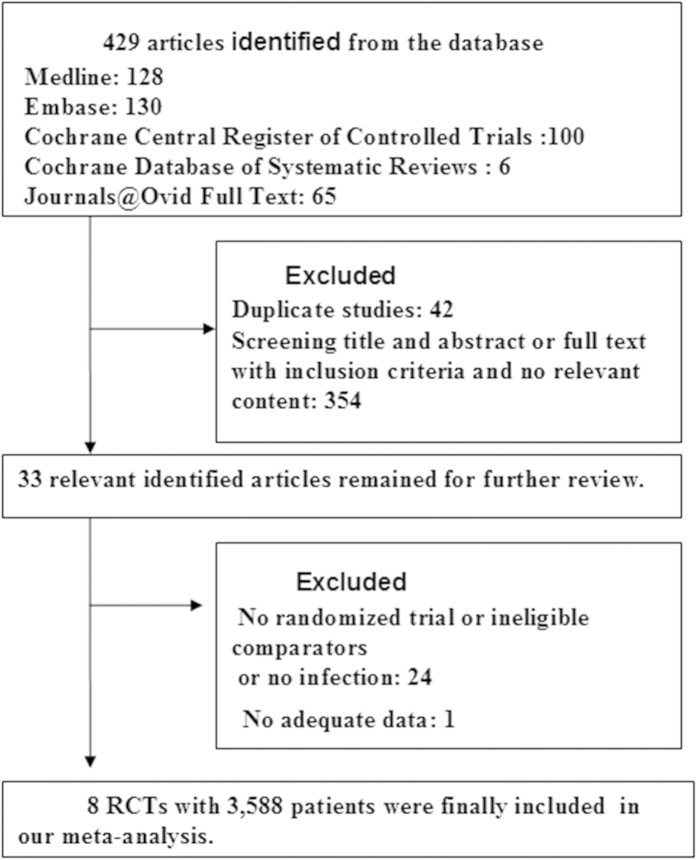
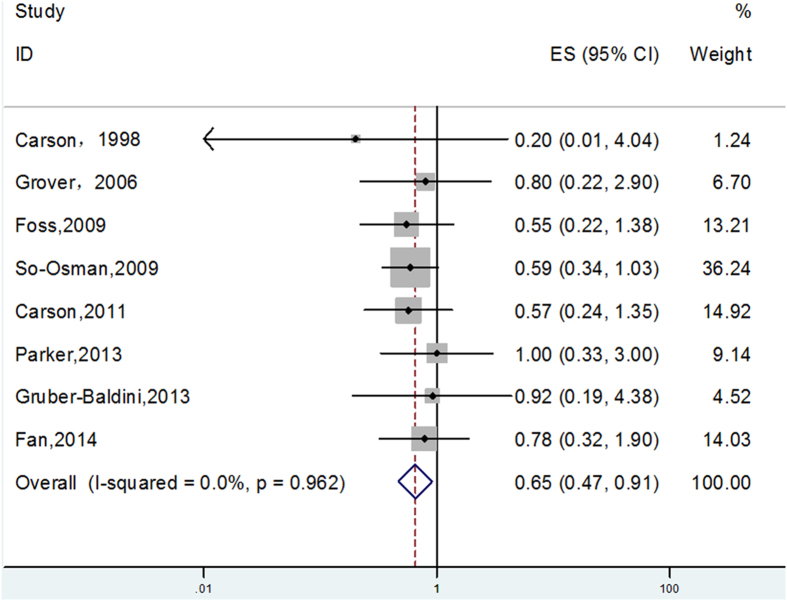
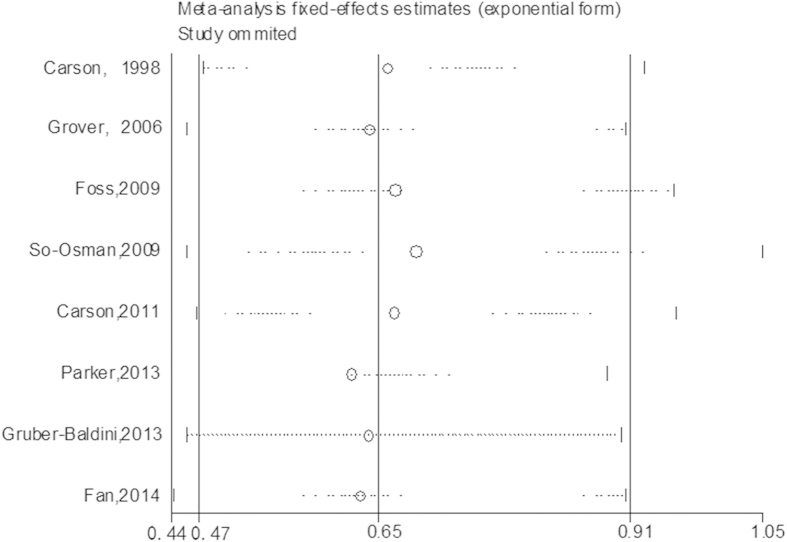
This study sought to evaluate whether restrictive blood transfusion strategies are associated with a risk of infection in orthopedic patients by conducting a meta-analysis of randomized controlled trials (RCTs). RCTs with restrictive versus liberal red blood cell (RBC) transfusion strategies were identified by searching Medline, Embase, the Cochrane Central Register of Controlled Trials and the Cochrane Database of Systematic Reviews from their inception to December 2014. Eight RCTs with infections as outcomes were included in the final analysis. According to the Jadad scale, all studies were considered to be of high quality. The pooled risk ratio [RR] for the association between transfusion strategy and infection was 0.65 (95% CI, 0.47-0.91; p = 0.012), and the number of patients needed to treat to avoid an infection using a restrictive transfusion strategy was 62. No heterogeneity was observed. The sensitivity analysis indicated unstable results, and no significant publication bias was observed. This meta-analysis of RCTs demonstrates that restrictive transfusion strategies in orthopedic patients result in a significant reduction in infections compared with more liberal strategies.
Conflict of interest statement
The authors declare no competing financial interests.
References
-
- Takei T., Amin N. A., Schmid G., Dhingra-Kumar N. & Rugg D. Progress in global blood safety for HIV. J. Acquir. Immune Defic. Syndr. 52 Suppl 2, S127–131 (2009). - PubMed
-
- US Department of Health & Human Services. The 2009 National Blood Collection and Utilization Survey Report (US Department of Health and Human Services. Office of the Assistant Secretary for Health, Washington, DC, 2011).
-
- Cobain T., Vamvakas E., Wells A. & Titlestad K. A survey of the demographics of blood use. Transfus. Med. 17, 1–15 (2007). - PubMed
-
- Williams L. A. III & Snyder E. L. Transfusion-related adverse events. in Reference Module in Biomedical Sciences (Elsevier, 2014).
Publication types
MeSH terms
LinkOut - more resources
Full Text Sources
Other Literature Sources
Medical
