


Pharmacotherapy for Status Epilepticus
- PMID: 26310189
- PMCID: PMC4559580
- DOI: 10.1007/s40265-015-0454-2
Pharmacotherapy for Status Epilepticus
Abstract
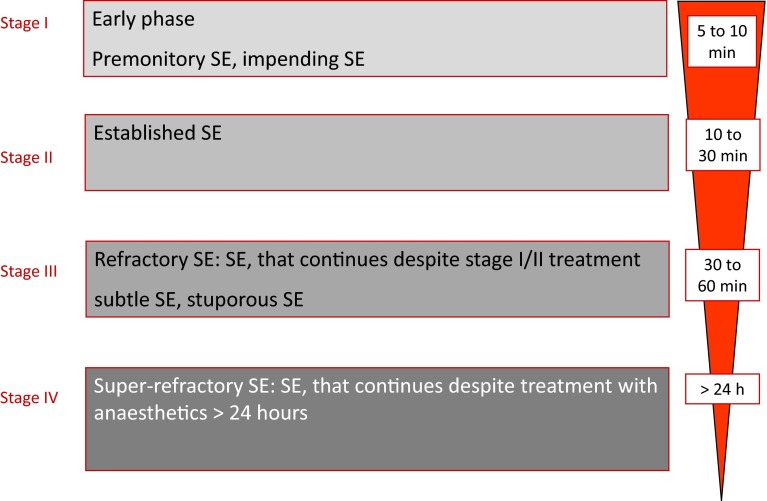
Status epilepticus (SE) represents the most severe form of epilepsy. It is one of the most common neurologic emergencies, with an incidence of up to 61 per 100,000 per year and an estimated mortality of 20 %. Clinically, tonic-clonic convulsive SE is divided into four subsequent stages: early, established, refractory, and super-refractory. Pharmacotherapy of status epilepticus, especially of its later stages, represents an "evidence-free zone," due to a lack of high-quality, controlled trials to inform clinical decisions. This comprehensive narrative review focuses on the pharmacotherapy of SE, presented according to the four-staged approach outlined above, and providing pharmacological properties and efficacy/safety data for each antiepileptic drug according to the strength of scientific evidence from the available literature. Data sources included MEDLINE and back-tracking of references in pertinent studies. Intravenous lorazepam or intramuscular midazolam effectively control early SE in approximately 63-73 % of patients. Despite a suboptimal safety profile, intravenous phenytoin or phenobarbital are widely used treatments for established SE; alternatives include valproate, levetiracetam, and lacosamide. Anesthetics are widely used in refractory and super-refractory SE, despite the current lack of trials in this field. Data on alternative treatments in the later stages are limited. Valproate and levetiracetam represent safe and effective alternatives to phenobarbital and phenytoin for treatment of established SE persisting despite first-line treatment with benzodiazepines. To date there are no class I data to support recommendations for most antiepileptic drugs for established, refractory, and super-refractory SE. Limiting the methodologic heterogeneity across studies is required and high-class randomized, controlled trials to inform clinicians about the best treatment in established and refractory status are needed.
Figures
References
-
- Trinka E, Hesdorffer D, Rossetti AO, Scheffer I, Shinnar S, Shorvon S, Lowenstein D. A definition and classification of status epilepticus - report of the task force on classification of status epilepticus. Epilepsia. 2015. doi:10.1111/epi.13121. - PubMed
Publication types
MeSH terms
Substances
LinkOut - more resources
Full Text Sources
Other Literature Sources
