


The Association of Pediatric Obesity With Nocturnal Non-Dipping on 24-Hour Ambulatory Blood Pressure Monitoring
- PMID: 26310663
- PMCID: PMC5863779
- DOI: 10.1093/ajh/hpv147
The Association of Pediatric Obesity With Nocturnal Non-Dipping on 24-Hour Ambulatory Blood Pressure Monitoring
Abstract
Background: Obesity has been linked with abnormal nocturnal dipping of blood pressure (BP) in adults, which in turn is associated with poor cardiovascular outcomes. There are few data regarding abnormal dipping status in the obese pediatric population. The goal of this study was to further describe the relationship between obesity and non-dipping status on ambulatory blood pressure monitor (ABPM) in children.
Methods: We conducted a cross-sectional study using a database of patients aged 5-21 years who had undergone 24-hour ABPM at Seattle Children's Hospital from January 2008 through May 2014. Subjects were grouped by body mass index (BMI) into lean (BMI 15th-85th percentile) and obese (BMI >95th percentile) groups.
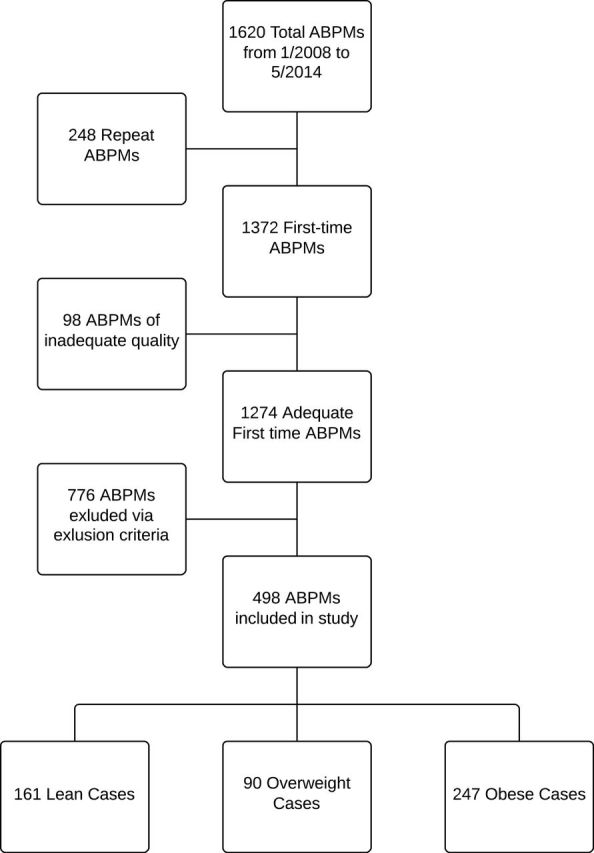
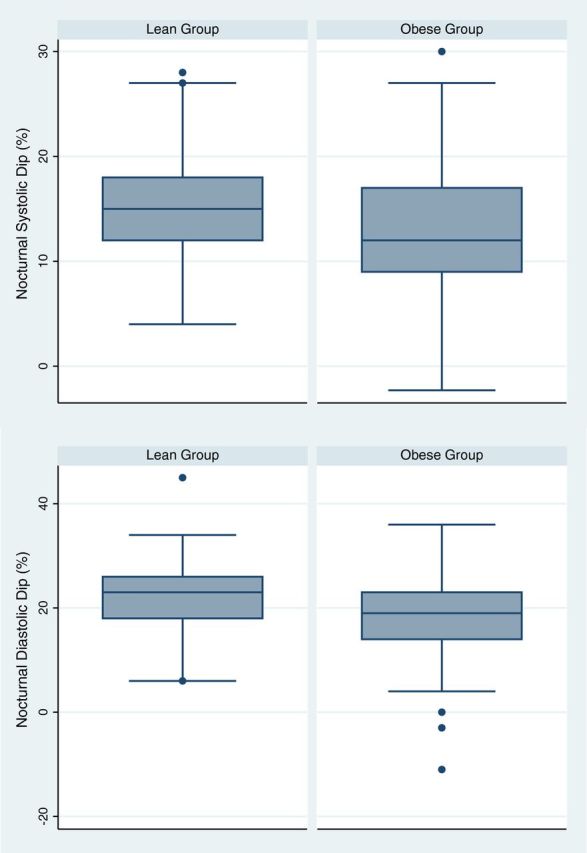
Results: Compared to lean subjects (n = 161), obese subjects (n = 247) had a prevalence ratio (PR) for non-dipping of 2.15, adjusted for race (95% confidence interval (CI) = 1.25-3.42). Increasing severity of obesity was not further associated with nocturnal non-dipping. Nocturnal non-dipping was not associated with left ventricular hypertrophy (PR = 1.01, 95% CI = 0.71-1.44).
Conclusions: These results suggest that in children, just as in adults, obesity is related to a relatively decreased dipping in nocturnal BP.
Keywords: ABPM; ambulatory blood pressure monitor; blood pressure; hypertension; nocturnal dipping; obesity; pediatrics..
© American Journal of Hypertension, Ltd 2015. All rights reserved. For Permissions, please email: journals.permissions@oup.com.
Figures
References
-
- McNiece KL, Poffenbarger TS, Turner JL, Franco KD, Sorof JM, Portman RJ . Prevalence of hypertension and pre-hypertension among adolescents . J Pediatr 2007. ; 150 : 640 – 644 .e1. - PubMed
-
- Sorof JM, Lai D, Turner J, Poffenbarger T, Portman RJ . Overweight, ethnicity, and the prevalence of hypertension in school-aged children . Pediatrics 2004. ; 113 : 475 – 482 . - PubMed
-
- Hayman LL . The cardiovascular impact of the pediatric obesity epidemic: is the worst yet to come? J Pediatr 2011. ; 158 : 695 – 696 . - PubMed
Publication types
MeSH terms
Grants and funding
LinkOut - more resources
Full Text Sources
Other Literature Sources
Medical
Research Materials
