


Fixation of Metacarpal Shaft Fractures: Biomechanical Comparison of Intramedullary Nail Crossed K-Wires and Plate-Screw Constructs
- PMID: 26311101
- PMCID: PMC6583740
- DOI: 10.1111/os.12195
Fixation of Metacarpal Shaft Fractures: Biomechanical Comparison of Intramedullary Nail Crossed K-Wires and Plate-Screw Constructs
Abstract
Objectives: Metacarpal (MC) fractures are very common, accounting for 18% of all fractures distal to the elbow. Many MC fractures can be treated non-operatively; however, some are treated most effectively with surgical stabilization, for which there are multiple methods. It was postulated that plates would have a significantly higher (P < 0.05) load to failure than crossed K(XK)-wires and that intramedullary metacarpal nails (IMNs) and XK-wires would have equivalent load to failure.
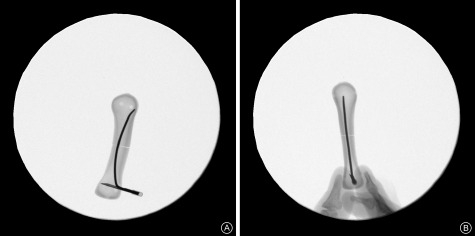
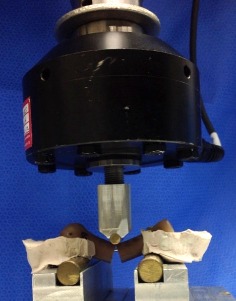
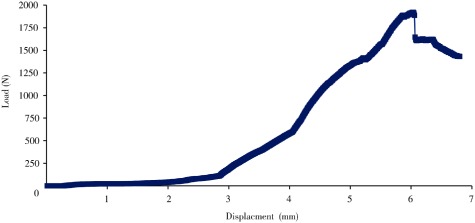
Methods: Mid-diaphyseal transverse fractures were created in 36 synthetic metacarpals and stabilized using nails, XK-wires or non-locking plates. Three-point bending was performed with continuous recording of load and displacement. Statistical analysis was performed using single factor ANOVA and Scheffe's test. Statistical significance was defined as P < 0.05.
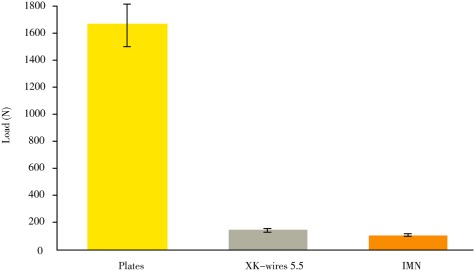
Results: Biomechanical testing revealed significant differences between groups in load-to-failure. Average load to failure was significantly greater in the plate (1669 ± 322 N) than the XK-wire (146 ± 56 N) or IMN (110 ± 43 N) groups. The loads to failure of the K-wires and nails were equivalent. Plates were 11 and 15 times stronger in three-point bending than the K-wires and nails, respectively. There was no statistically significant difference between strengths of the K-wires and nails.
Conclusions: Although plates are the most stable means of fixation of midshaft metacarpal fractures, if minimally-invasive techniques are indicated, intramedullary nails may provide equivalent stability as commonly-used XK-wires. Although some studies have shown favorable clinical outcomes with IMNs, additional clinical correlation of these biomechanical results to fracture healing and outcomes is needed.
Keywords: Biomechanical; Intramedullary nail; Metacarpal fracture; Stabilization.
© 2015 Chinese Orthopaedic Association and Wiley Publishing Asia Pty Ltd.
Figures
References
-
- Chung KC, Spilson SV. The frequency and epidemiology of hand and forearm fractures in the United States. J Hand Surg Am, 2001, 26: 908–915. - PubMed
-
- Henry MH. Fractures of the proximal phalanx and metacarpals in the hand: preferred methods of stabilization. J Am Acad Orthop Surg, 2008, 16: 586–595. - PubMed
-
- Freeland AE, Geissler WB, Weiss AP. Surgical treatment of common displaced and unstable fractures of the hand. Instr Course Lect, 2002, 51: 185–201. - PubMed
-
- Strub B, Schindele S, Sonderegger J, Sproedt J, von Campe A, Gruenert JG. Intramedullary splinting or conservative treatment for displaced fractures of the little finger metacarpal neck? A prospective study. J Hand Surg Eur Vol, 2010, 35: 725–729. - PubMed
-
- Wong TC, Ip FK, Yeung SH. Comparison between percutaneous transverse fixation and intramedullary K‐wires in treating closed fractures of the metacarpal neck of the little finger. J Hand Surg Br, 2006, 31: 61–65. - PubMed
Publication types
MeSH terms
LinkOut - more resources
Full Text Sources
Other Literature Sources
Medical
