Surgical clipping versus endovascular coiling for elderly patients presenting with subarachnoid hemorrhage
- PMID: 26311713
- PMCID: PMC5033047
- DOI: 10.1136/neurintsurg-2015-011890
Surgical clipping versus endovascular coiling for elderly patients presenting with subarachnoid hemorrhage
Abstract
Background: The comparative effectiveness of the two treatment options (surgical clipping and endovascular coiling) for ruptured cerebral aneurysms has not been studied in real-world practice in the USA. We investigated the association between the treatment method for ruptured cerebral aneurysms and outcomes.
Methods: We performed a retrospective cohort study of elderly patients who underwent treatment for ruptured cerebral aneurysms from 2007 to 2012 using a 100% sample of Medicare fee-for-service claims data. An instrumental variable analysis was used to control for unmeasured confounding and to create pseudo-randomization on the treatment method. In sensitivity analysis, controlling only for measured confounding, we used propensity score conditioning and inverse probability weighting with mixed effects to account for clustering at the Hospital Referral Region (HRR) level.
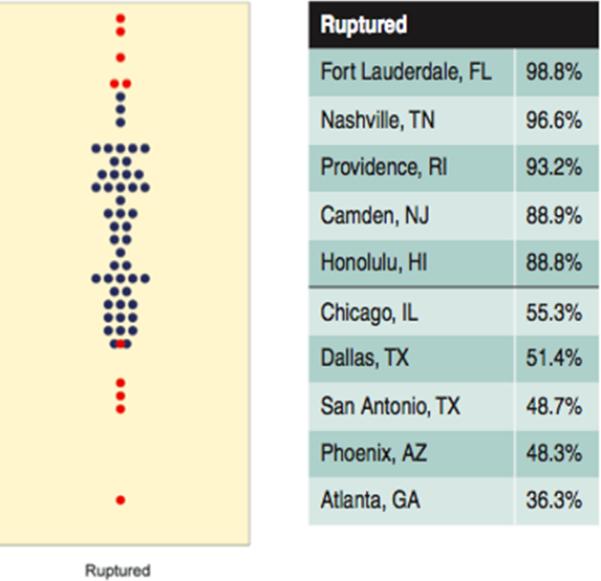
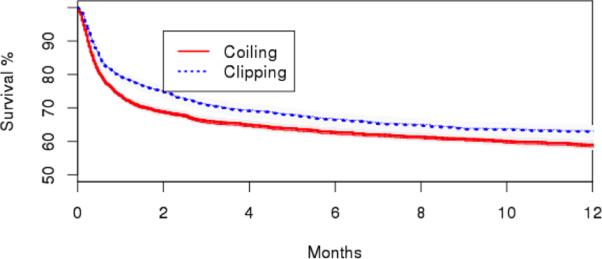
Results: During the study period 3210 patients underwent treatment for ruptured cerebral aneurysms and met the inclusion criteria. Of these, 1206 (37.6%) had surgical clipping and 2004 (62.4%) had endovascular coiling. Instrumental variable analysis demonstrated no difference between coiling and clipping in 1-year postoperative mortality (OR 1.04; 95% CI 0.70 to 1.54), likelihood of discharge to rehabilitation (OR 1.07; 95% CI 0.72 to 1.58), or 30-day readmission rate (OR 1.44; 95% CI 0.70 to 1.87). However, clipping was associated with 2.7 days longer length of stay (LOS) (95% CI 0.45 to 4.99). The same associations were present in propensity score adjusted and inverse probability weighted models.
Conclusions: In a cohort of Medicare patients, we did not demonstrate a difference in mortality, rate of discharge to rehabilitation, and readmissions between clipping and coiling of ruptured cerebral aneurysms. Clipping was associated with a slightly longer LOS.
Keywords: Aneurysm; Subarachnoid.
Published by the BMJ Publishing Group Limited. For permission to use (where not already granted under a licence) please go to http://www.bmj.com/company/products-services/rights-and-licensing/
Figures
References
-
- Bekelis K, Goodney RP, Dzebisashvili N, et al. Variation in the Care of Surgical Conditions: Cerebral Aneurysms. In: Practice TDIfHPaC, editor. A Dartmouth Atlas of Health Care Series. Lebanon, NH: 2014. - PubMed
-
- Brisman JL, Song JK, Newell DW. Cerebral aneurysms. N Engl J Med. 2006;355(9):928–39. - PubMed
-
- Molyneux A, Kerr R, Stratton I, et al. International Subarachnoid Aneurysm Trial (ISAT) of neurosurgical clipping versus endovascular coiling in 2143 patients with ruptured intracranial aneurysms: a randomised trial. Lancet. 2002;360(9342):1267–74. - PubMed
-
- Qureshi AI, Vazquez G, Tariq N, et al. Impact of International Subarachnoid Aneurysm Trial results on treatment of ruptured intracranial aneurysms in the United States. Clinical article. J Neurosurg. 2011;114(3):834–41. - PubMed
-
- Zacharia BE, Ducruet AF, Hickman ZL, et al. Technological advances in the management of unruptured intracranial aneurysms fail to improve outcome in New York state. Stroke. 2011;42(10):2844–49. - PubMed
Publication types
MeSH terms
Grants and funding
LinkOut - more resources
Full Text Sources
Other Literature Sources
Medical
Miscellaneous