. 2015 Sep 29;6(29):27267-74.
doi: 10.18632/oncotarget.4776.

A novel pathogenic germline mutation in the adenomatous polyposis coli gene in a Chinese family with familial adenomatous coli

Affiliations

A novel pathogenic germline mutation in the adenomatous polyposis coli gene in a Chinese family with familial adenomatous coli

Shan-Shan Jiang et al. Oncotarget. .

Abstract

Familial adenomatous polyposis (FAP) is an autosomal dominant disease manifesting as colorectal cancer in middle-aged patients. Mutations of the adenomatous polyposis coli (APC) gene contribute to both FAP and sporadic or familial colorectal carcinogenesis. Here we describe the identification of the causative APC gene defects associated with FAP in a Chinese pedigree. All patients with FAP were diagnosed by their combination of clinical features, family history, colonoscopy, and pathology examinations. Blood samples were collected and genomic DNA was extracted. Mutation analysis of APC was conducted by targeted next-generation sequencing, long-range PCR and Sanger sequencing. A novel mutation in exon 14-15(c.1936-2148 del) and intron 14 of the APC gene was demonstrated in all FAP patients and was absent in unaffected family members. This novel deletion causing FAP in Chinese kindred expands the germline mutation spectrum of the APC gene in the Chinese population.

Keywords: APC gene; Chinese population; exon deletion; familial adenomatous polyposis; targeted next-generation sequencing.


Figures
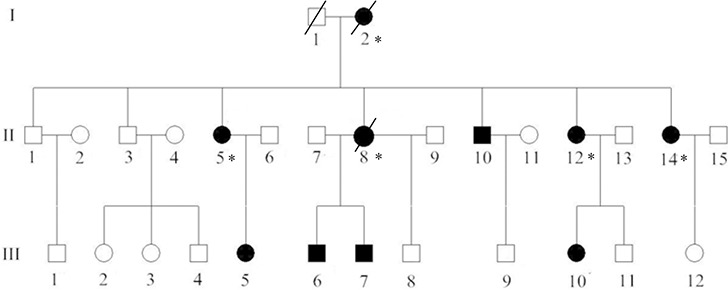
Figure 1
Figure 1. Pedigree structure of the Chinese family with familial adenomatous polyposis
Family members with FAP are indicated with Shading. Squares and circles denoted males and females respectively. Individuals labeled with a solidus were deceased. Asterisks refer to colorectal cancer. Roman numerals indicate generations.
Figure 2
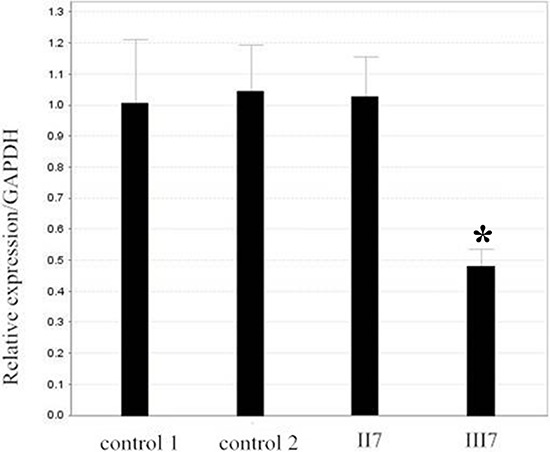
Figure 2. Verification of the deletion in II7 and III7 by real-time PCR
Relative amplification (RA) level of the exon 15 in patient II7 and control is nearly 1, and the RA level in III7 is approximately half. GAPDH DNA was used as a loading control.
Figure 3
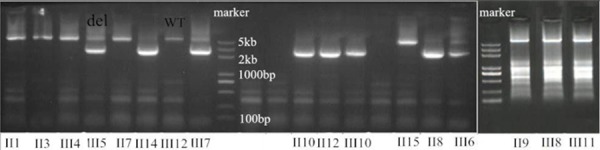
Figure 3. One deletion (exon 14–15 and intron 14) confirmed by long-range PCR
An agarose gel shows the PCR products of this deletion in affected members, compared with controls. In the patients, a second fragment is also visible besides the normal product (WT, wild type; del, deletion).
Figure 4
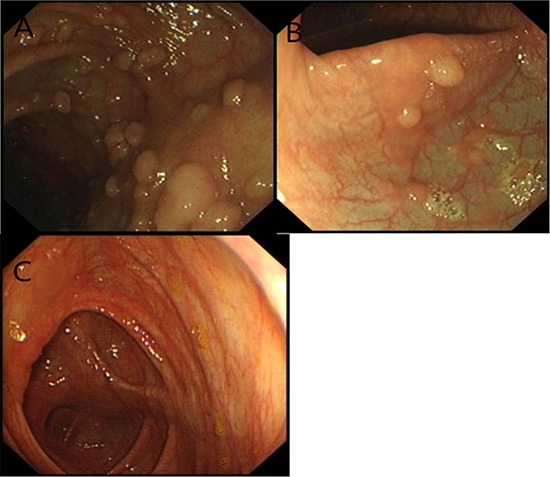
Figure 4. The characterization of the index patients in the pedigree
Some sessile polyps were present in the transverse colon. A. Tubular adenomas of Patient II8 with focal adenocarcinoma in situ. B. Six sessile polyps in the rectum of Patient III6. C. No polyps in the unaffected member.
Figure 5
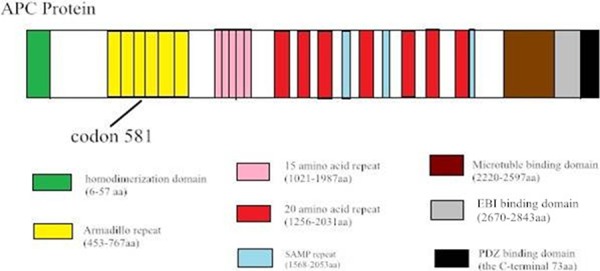
Figure 5. Sequence alignment shows the c.1936–2148 del in exon 14–15 of the APC gene, which creates a STOP codon at 581
Diagram of the protein structure of APC.

References

    1. Half E, Bercovich D, Rozen P. Familial adenomatous polyposis. Orphanet journal of rare diseases. 2009;4:22. - PMC - PubMed
    1. Jang YH, Lim SB, Kim MJ, Chung HJ, Yoo HW, Byeon JS, Myung SJ, Lee W, Chun S, Min WK. Three novel mutations of the APC gene in Korean patients with familial adenomatous polyposis. Cancer genetics and cytogenetics. 2010;200:34–39. - PubMed
    1. Aretz S, Hes FJ. Clinical utility gene card for: MUTYH-associated polyposis (MAP), autosomal recessive colorectal adenomatous polyposis. European journal of human genetics : EJHG. 2010;18 - PMC - PubMed
    1. Aretz S, Genuardi M, Hes FJ. Clinical utility gene card for: MUTYH-associated polyposis (MAP), autosomal recessive colorectal adenomatous polyposis, multiple colorectal adenomas, multiple adenomatous polyps (MAP) - update 2012. European journal of human genetics : EJHG. 2013;21 - PMC - PubMed
    1. Odenwald MA, Prosperi JR, Goss KH. APC/beta-catenin-rich complexes at membrane protrusions regulate mammary tumor cell migration and mesenchymal morphology. BMC cancer. 2013;13:12. - PMC - PubMed

MeSH terms

LinkOut - more resources