. 2015 Nov;89(21):10959-69.
doi: 10.1128/JVI.01195-15. Epub 2015 Aug 26.

Out of the Reservoir: Phenotypic and Genotypic Characterization of a Novel Cowpox Virus Isolated from a Common Vole

Affiliations

Out of the Reservoir: Phenotypic and Genotypic Characterization of a Novel Cowpox Virus Isolated from a Common Vole

Donata Hoffmann et al. J Virol. 2015 Nov.

Abstract

The incidence of human cowpox virus (CPXV) infections has increased significantly in recent years. Serological surveys have suggested wild rodents as the main CPXV reservoir. We characterized a CPXV isolated during a large-scale screening from a feral common vole. A comparison of the full-length DNA sequence of this CPXV strain with a highly virulent pet rat CPXV isolate showed a sequence identity of 96%, including a large additional open reading frame (ORF) of about 6,000 nucleotides which is absent in the reference CPXV strain Brighton Red. Electron microscopy analysis demonstrated that the vole isolate, in contrast to the rat strain, forms A-type inclusion (ATI) bodies with incorporated virions, consistent with the presence of complete ati and p4c genes. Experimental infections showed that the vole CPXV strain caused only mild clinical symptoms in its natural host, while all rats developed severe respiratory symptoms followed by a systemic rash. In contrast, common voles infected with a high dose of the rat CPXV showed severe signs of respiratory disease but no skin lesions, whereas infection with a low dose led to virus excretion with only mild clinical signs. We concluded that the common vole is susceptible to infection with different CPXV strains. The spectrum ranges from well-adapted viruses causing limited clinical symptoms to highly virulent strains causing severe respiratory symptoms. In addition, the low pathogenicity of the vole isolate in its eponymous host suggests a role of common voles as a major CPXV reservoir, and future research will focus on the correlation between viral genotype and phenotype/pathotype in accidental and reservoir species.

Importance: We report on the first detection and isolation of CPXV from a putative reservoir host, which enables comparative analyses to understand the infection cycle of these zoonotic orthopox viruses and the relevant genes involved. In vitro studies, including whole-genome sequencing as well as in vivo experiments using the Wistar rat model and the vole reservoir host allowed us to establish links between genomic sequences and the in vivo properties (virulence) of the novel vole isolate in comparison to those of a recent zoonotic CPXV isolated from pet rats in 2009. Furthermore, the role of genes present only in a reservoir isolate can now be further analyzed. These studies therefore allow unique insights and conclusions about the role of the rodent reservoir in CPXV epidemiology and transmission and about the zoonotic threat that these viruses represent.


Figures

FIG 1
FIG 1
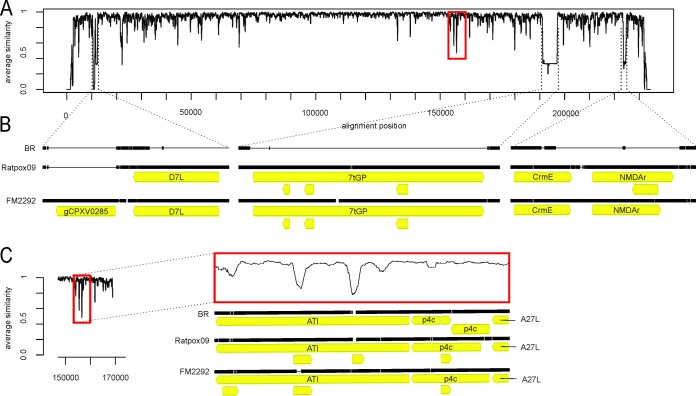
Nucleotide sequence comparison of RatPox09, FM2292, and Brighton Red (BR). (A) Normalized similarity plot of Brighton Red, FM2292, and RatPox09. A value of 1 indicates an identity of 100%, while a value of 0 indicates no conservation at all. Regions of special interest are enlarged. (B) Alignments of genes coding for CPXV0285, D7L-like protein, 7-transmembrane G protein-coupled receptor-like protein (7tGP), CrmE (CPXV0002) protein, and the NMDA receptor-like protein (NMDAr). (C) Alignment of the genes encoding the A-type inclusion protein (ATI), the A26L protein (p4c), and A27L protein.
FIG 2
FIG 2
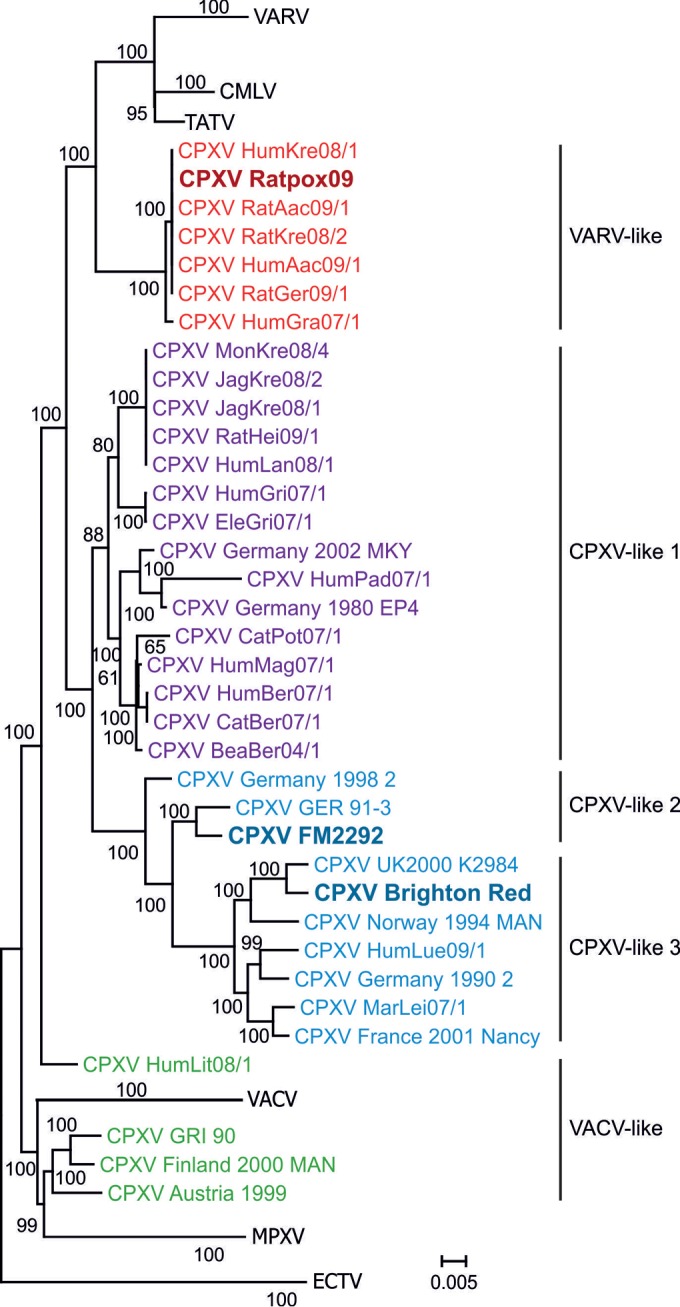
Phylogenetic analysis of whole-genome sequences of orthopoxviruses. CPXV clades (25, 28) are displayed in different colors. RatPox09, FM2292, and BR are highlighted in bold. The variola virus (VARV), camelpox virus (CMLV), taterapox virus (TATV), vaccinia virus (VACV), ectromelia virus (ECTV), and monkeypox virus (MPXV) clusters are presented as collapsed clades and include available whole-genome sequences in GenBank.
FIG 3
FIG 3
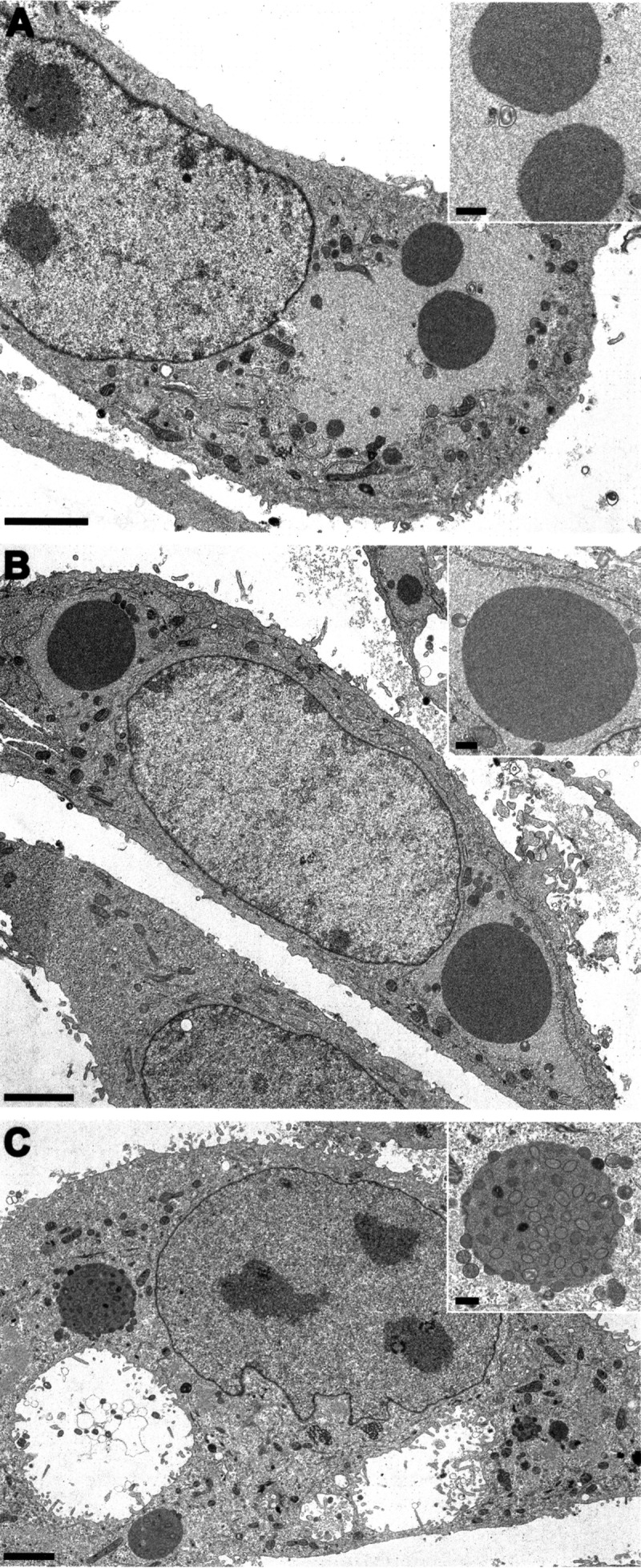
A-type inclusions (ATIs) produced by the three CPXVs. Electron microscopy images of thin sections of Vero76 cells infected with Brighton Red (A), RatPox09 (B), and FM2292 (C) at 36 h postinfection are shown. ATIs were seen in all experiments; however, the V+ phenotype could be observed only for FM2292 (C). Scale bars: 2.5 μm and 500 nm (inset).
FIG 4
FIG 4
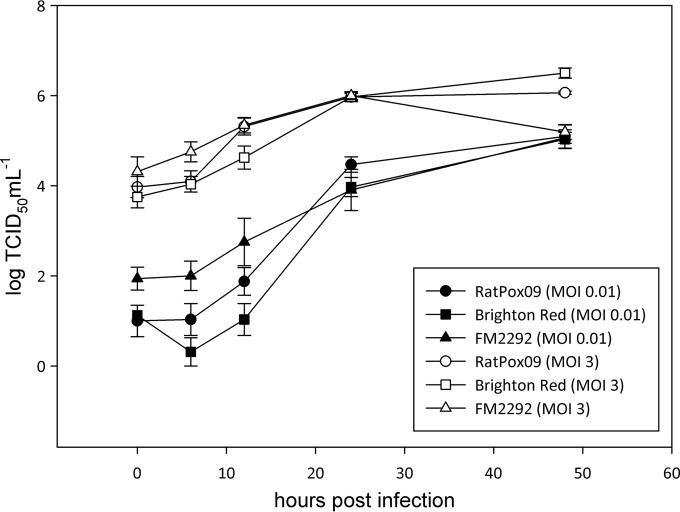
Comparison of replication characteristics of FM2292, RatPox09, and Brighton Red. Vero76 cells were infected with different CPXV strains at an MOI of 0.01 or 3. Infected cells were harvested at several time points postinfection. Virus titers were determined by endpoint dilution assays. The means and standard deviations of two independent experiments are shown, including two technical replicates (n = 4).
FIG 5
FIG 5
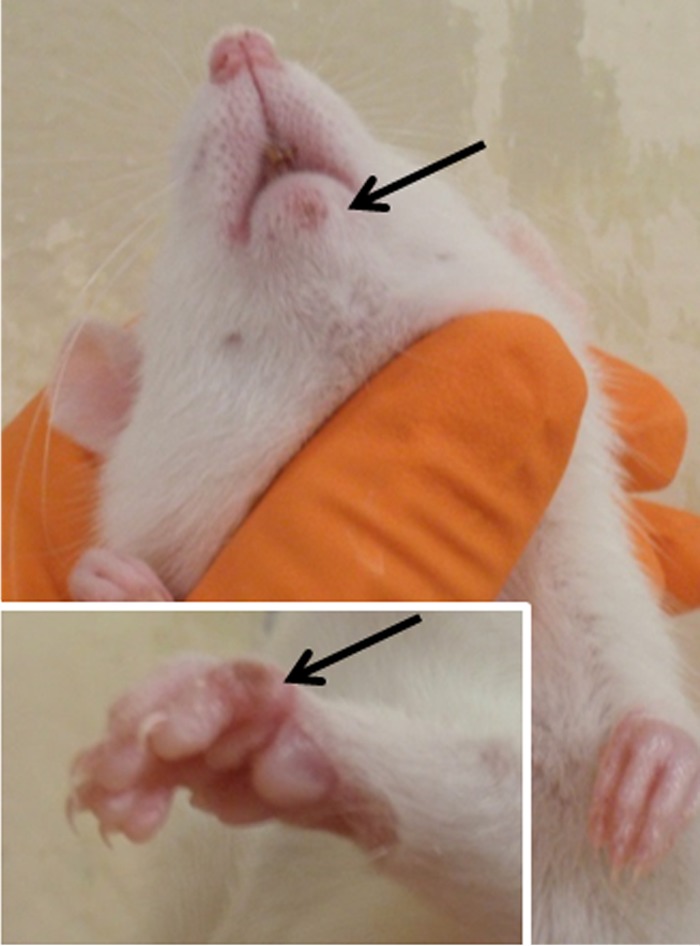
Typical pox-like lesions of a Wistar rat. Wistar rats infected with FM2292 at both doses developed pox-like lesions on the nose, ears, paws, and tail. Images were taken at 9 days p.i. (mouth) and 11 days p.i. (paws).
FIG 6
FIG 6
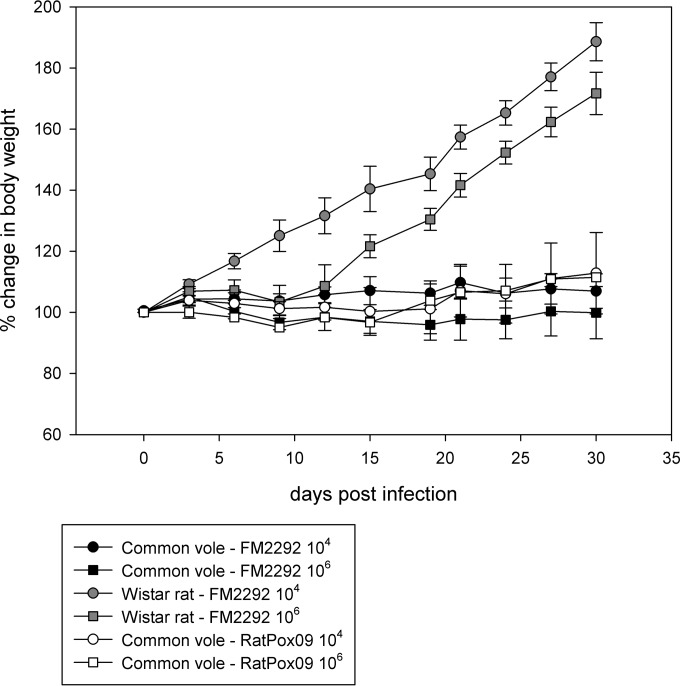
Body weight evolution of common voles and Wistar rats inoculated with FM2292 and RatPox09, respectively. The starting weight was set as 100%, and values are the means with standard deviations.
FIG 7
FIG 7
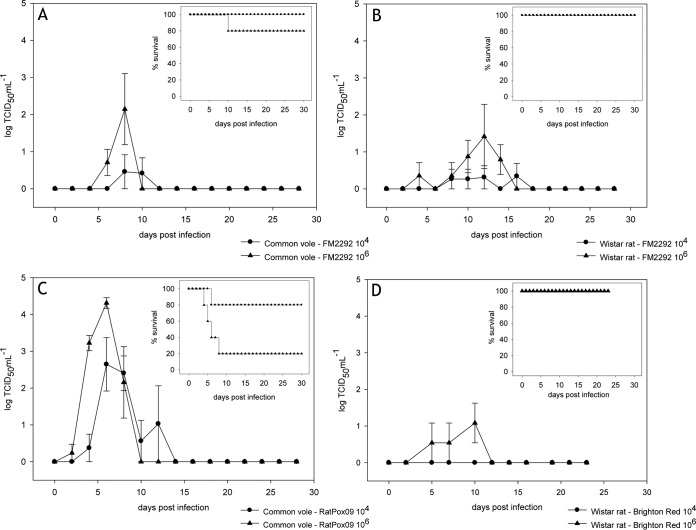
Oropharyngeal viral shedding patterns of common voles and Wistar rats. Shedding patterns are shown for common voles inoculated with FM2292 (A) or RatPox09 (C) and for Wistar rats infected with FM2292 (B) or BR (D). Values are the means with standard deviations.

References

    1. Vorou RM, Papavassiliou VG, Pierroutsakos IN. 2008. Cowpox virus infection: an emerging health threat. Curr Opin Infect Dis 21:153–156. doi: 10.1097/QCO.0b013e3282f44c74. - DOI - PubMed
    1. Essbauer S, Pfeffer M, Meyer H. 2010. Zoonotic poxviruses. Vet Microbiol 140:229–236. doi: 10.1016/j.vetmic.2009.08.026. - DOI - PMC - PubMed
    1. Chantrey J, Meyer H, Baxby D, Begon M, Bown KJ, Hazel SM, Jones T, Montgomery WI, Bennett M. 1999. Cowpox: reservoir hosts and geographic range. Epidemiol Infect 122:455–460. doi: 10.1017/S0950268899002423. - DOI - PMC - PubMed
    1. Becker C, Kurth A, Hessler F, Kramp H, Gokel M, Hoffmann R, Kuczka A, Nitsche A. 2009. Cowpox virus infection in pet rat owners: not always immediately recognized. Dtsch Arztebl Int 106:329–334. doi: 10.3238/arztebl.2009.0329. - DOI - PMC - PubMed
    1. Campe H, Zimmermann P, Glos K, Bayer M, Bergemann H, Dreweck C, Graf P, Weber BK, Meyer H, Büttner M, Busch U, Sing A. 2009. Cowpox virus transmission from pet rats to humans, Germany. Emerg Infect Dis 15:777–780. doi: 10.3201/eid1505.090159. - DOI - PMC - PubMed

Publication types

LinkOut - more resources