Giant juvenile fibroadenoma: a systematic review with diagnostic and treatment recommendations
- PMID: 26312217
- PMCID: PMC4523628
- DOI: 10.3978/j.issn.2227-684X.2015.06.04
Giant juvenile fibroadenoma: a systematic review with diagnostic and treatment recommendations
Abstract
Background: Currently, there is a lack of clear guidelines regarding evaluation and management of giant juvenile fibroadenomas. The purpose of this study was to conduct a systematic review of giant juvenile fibroadenomas and to evaluate the most common diagnostic and therapeutic modalities.
Methods: A systematic literature search of PubMed and MEDLINE databases was conducted in February 2014 to identify articles related to giant juvenile fibroadenomas. Pooled outcomes are reported.
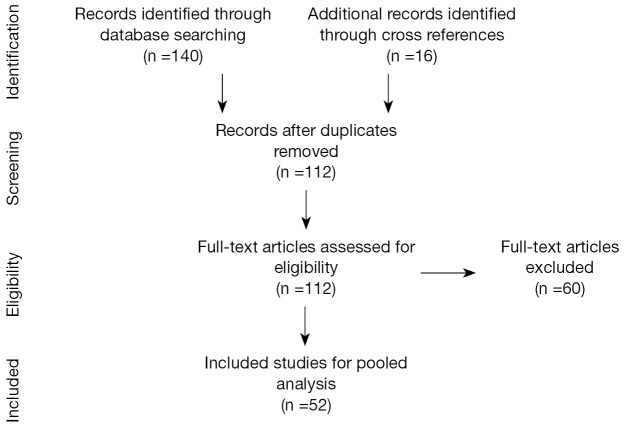
Results: Fifty-two articles (153 patients) met inclusion criteria. Mean age was 16.7 years old, with a mean lesion size of 11.2 cm. Most patients (86%) presented with a single breast mass. Imaging modalities included ultrasound in 72.5% and mammography in 26.1% of cases. Tissue diagnosis was obtained using a core needle biopsy in 18.3% of cases, fine-needle aspiration (FNA) in 25.5%, and excisional biopsy in 11.1% of patients. Surgical treatment was implemented in 98.7% of patients (mean time to treatment of 9.5 months, range, 3 days to 7 years). Surgical intervention included excision in all cases, of which four were mastectomies. Breast reconstruction was completed in 17.6% of cases. There were no postoperative complications.
Conclusions: Diagnosis and treatment of giant juvenile fibroadenoma is heterogeneous. There is a paucity of data to support observation and non-operative treatment. The most common diagnostic modalities include core needle or excisional biopsy. The mainstay of treatment is complete excision with an emphasis on preserving the developing breast parenchyma and nipple areolar complex. Breast reconstruction is uncommon, but may be necessary in certain cases.
Keywords: Fibroadenoma; breast; giant; juvenile; mastectomy; phyllodes.
Conflict of interest statement
Figures
References
-
- Jayasinghe Y, Simmons PS. Fibroadenomas in adolescence. Curr Opin Obstet Gynecol 2009;21:402-6. - PubMed
-
- Davis SE, Wallace AM. A 19 year old with complete androgen insensitivity syndrome and juvenile fibroadenoma of the breast. Breast J 2001;7:430-3. - PubMed
-
- Amiel C, Tramier D, Marck MF, et al. Giant breast fibroadenoma. J Gynecol Obstet Biol Reprod (Paris) 1993;22:764-5. - PubMed
Publication types
LinkOut - more resources
Full Text Sources
Miscellaneous