Comparative Study
. 2015 Aug 27;9(8):e0004038.
doi: 10.1371/journal.pntd.0004038. eCollection 2015.

Immunogenicity and Serological Cross-Reactivity of Saliva Proteins among Different Tsetse Species

Affiliations
Comparative Study

Immunogenicity and Serological Cross-Reactivity of Saliva Proteins among Different Tsetse Species

Xin Zhao et al. PLoS Negl Trop Dis. .

Abstract

Tsetse are vectors of pathogenic trypanosomes, agents of human and animal trypanosomiasis in Africa. Components of tsetse saliva (sialome) are introduced into the mammalian host bite site during the blood feeding process and are important for tsetse's ability to feed efficiently, but can also influence disease transmission and serve as biomarkers for host exposure. We compared the sialome components from four tsetse species in two subgenera: subgenus Morsitans: Glossina morsitans morsitans (Gmm) and Glossina pallidipes (Gpd), and subgenus Palpalis: Glossina palpalis gambiensis (Gpg) and Glossina fuscipes fuscipes (Gff), and evaluated their immunogenicity and serological cross reactivity by an immunoblot approach utilizing antibodies from experimental mice challenged with uninfected flies. The protein and immune profiles of sialome components varied with fly species in the same subgenus displaying greater similarity and cross reactivity. Sera obtained from cattle from disease endemic areas of Africa displayed an immunogenicity profile reflective of tsetse species distribution. We analyzed the sialome fractions of Gmm by LC-MS/MS, and identified TAg5, Tsal1/Tsal2, and Sgp3 as major immunogenic proteins, and the 5'-nucleotidase family as well as four members of the Adenosine Deaminase Growth Factor (ADGF) family as the major non-immunogenic proteins. Within the ADGF family, we identified four closely related proteins (TSGF-1, TSGF-2, ADGF-3 and ADGF-4), all of which are expressed in tsetse salivary glands. We describe the tsetse species-specific expression profiles and genomic localization of these proteins. Using a passive-immunity approach, we evaluated the effects of rec-TSGF (TSGF-1 and TSGF-2) polyclonal antibodies on tsetse fitness parameters. Limited exposure of tsetse to mice with circulating anti-TSGF antibodies resulted in a slight detriment to their blood feeding ability as reflected by compromised digestion, lower weight gain and less total lipid reserves although these results were not statistically significant. Long-term exposure studies of tsetse flies to antibodies corresponding to the ADGF family of proteins are warranted to evaluate the role of this conserved family in fly biology.


Conflict of interest statement

The authors have declared that no competing interests exist.

Figures
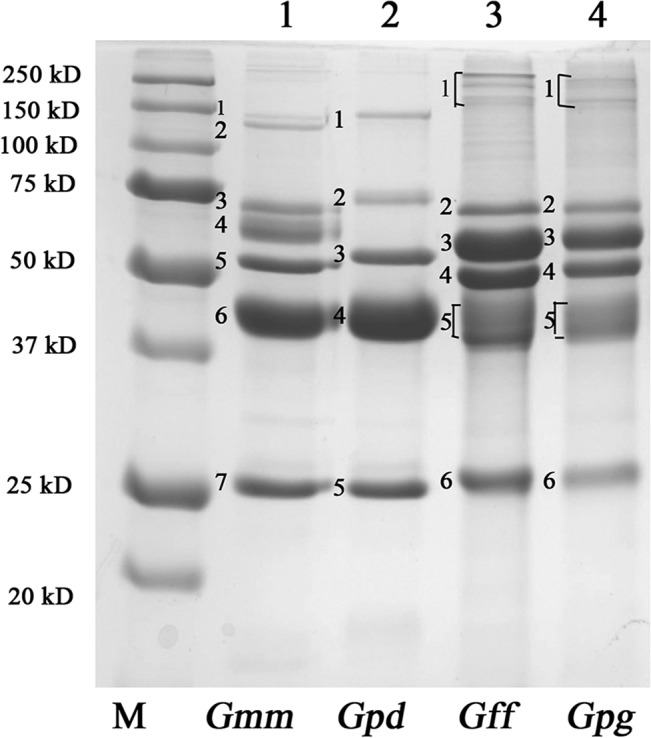
Fig 1
Fig 1. SDS PAGE analysis of saliva from different tsetse species.
Lanes 1–4 show protein profiles of Gmm, Gpd, Gff and Gpg sialomes analyzed by SDS-PAGE analysis stained by Coomassie Blue. M indicates the Molecular Weight marker. Bands referred to in the sialome of each species are numbered from top to bottom. One representative image for the sialome data is shown. Additional results from SG extracts and replicate sialome samples are shown in S1 Fig.
Fig 2
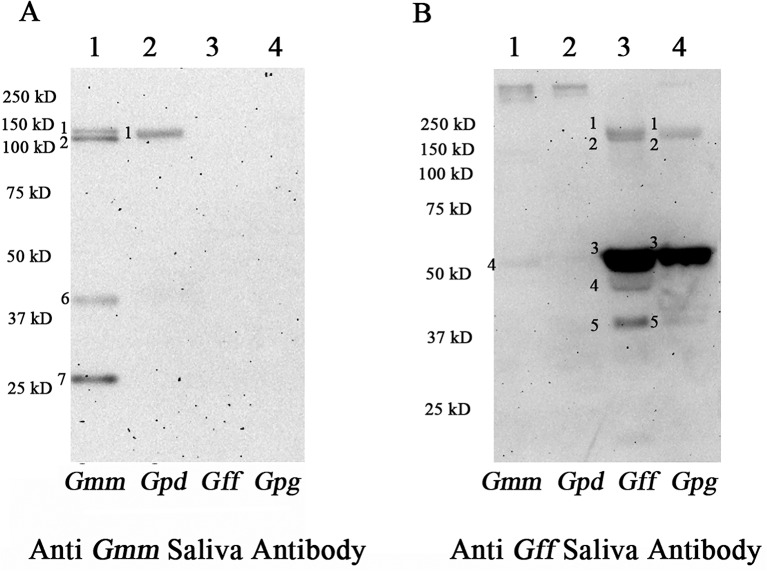
Fig 2. Immunogenic potential of sialome components in different tsetse species.
The same amount of sialome proteins from Gmm, Gpd, Gff and Gpg were analyzed by immunoblot analysis using sera obtained from mice exposed to (A) Gmm and (B) Gff bites. Bands detected are numbered corresponding to Fig 1.
Fig 3
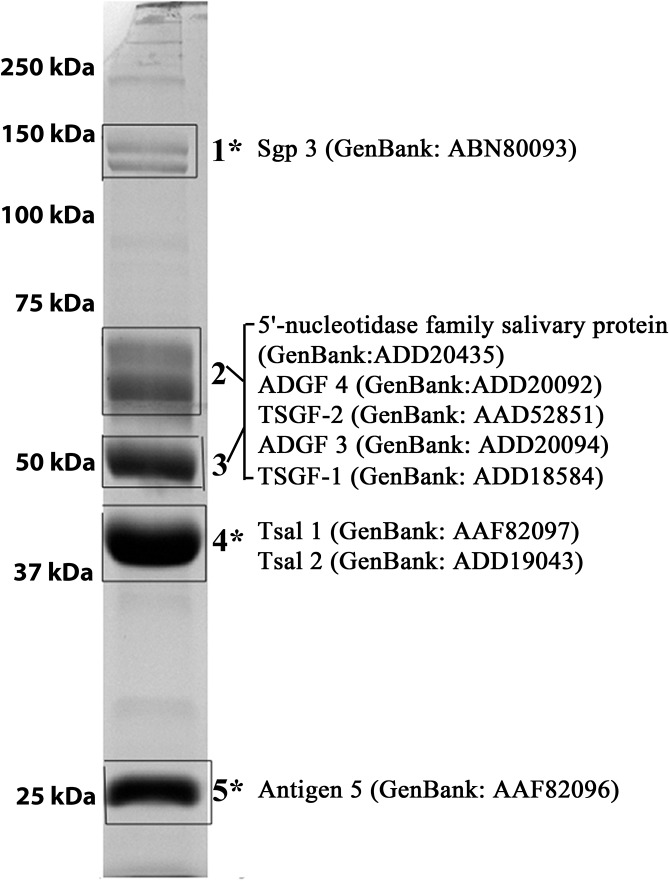
Fig 3. Identification of the major immunogenic and non-immunogenic proteins in Gmm sialome.
The most abundant protein bands extracted for LC-MS/MS analysis are shown boxed. Fractions 1, 4 and 5, as marked by “*”, correspond to protein bands that were noted as immunogenic in the analysis presented in Fig 2. Protein fractions 2 and 3 were combined representing non-immunogenic proteins.
Fig 4
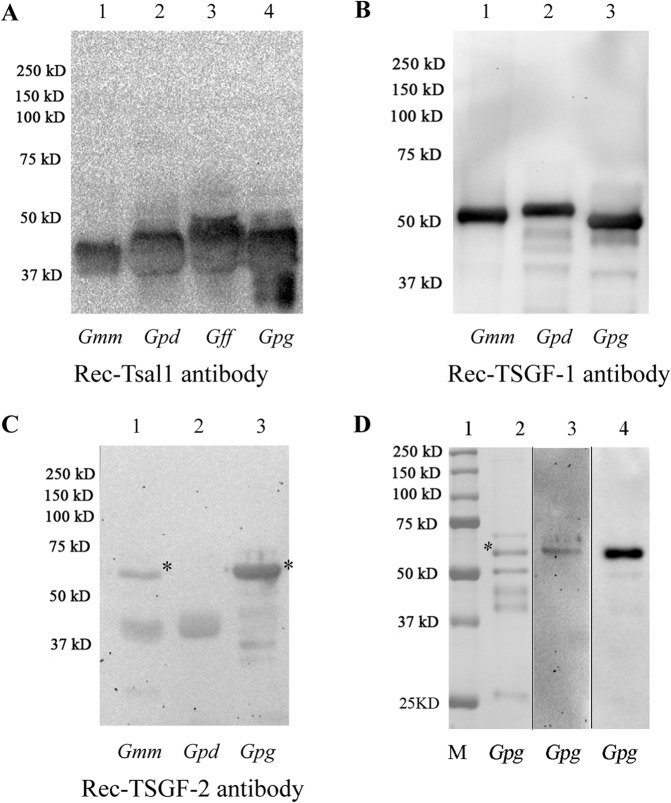
Fig 4. Immunoblot of sialome proteins from Gmm, Gpd, Gff and Gpg.
Same amount of sialome proteins from Gmm, Gpd, Gff and Gpg were probed with (A) rec-Gmm Tsal1, (B) rec-Gmm TSGF-1 and (C) rec-Gmm TSGF-2 antibodies, respectively. (D) Gpg sialome components, equivalent to 0.2 pairs of salivary glands, are analyzed on Coomassie Blue stained SDS-PAGE (lane 2), and by immunoblot analysis using rec-Gmm TSGF-2 antibodies (lane 3) and anti-Gff saliva antibodies (lane 4). Lane 1 shows molecular marker. * indicates TSGF-2 corresponding protein band.
Fig 5
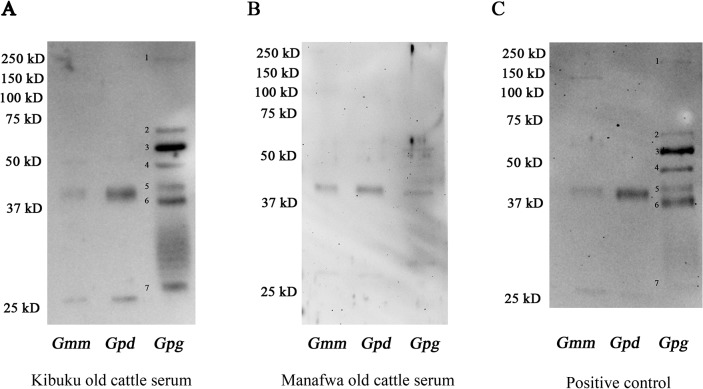
Fig 5. Immunoblot analysis of sialome proteins from Gmm, Gpd and Gpg using endemic cattle sera.
Sialomes from Gmm, Gpd, and Gpg were analyzed with sera from (A) 8–12 year old cattle from Kibuku district, (B) 10–15 year old cattle from Manafwa district and (C) cattle used for Gff colony maintenance included as positive control.
Fig 6
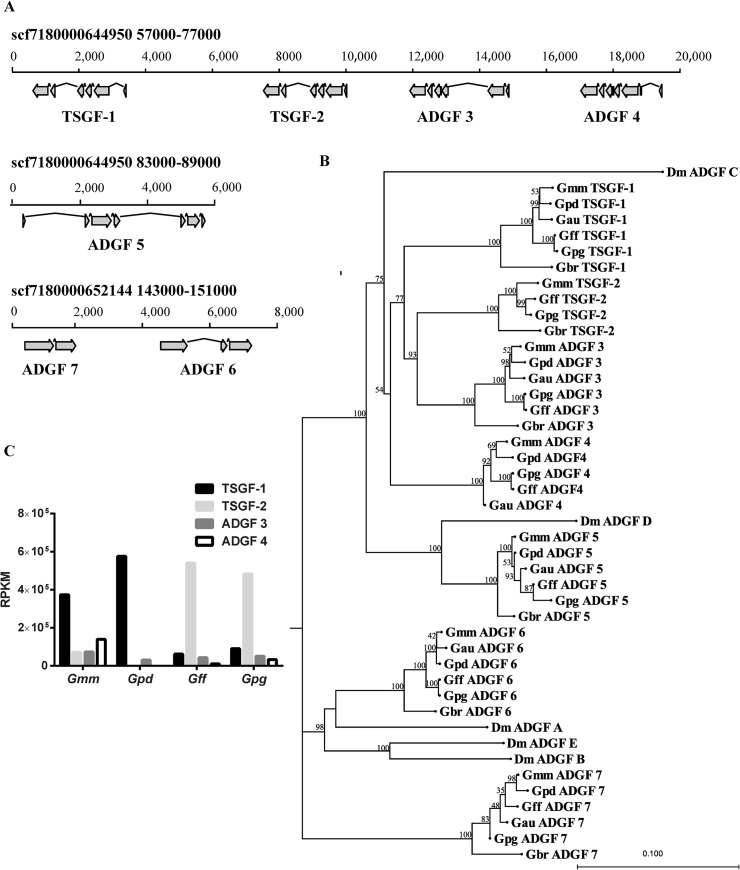
Fig 6. Gmm ADGF family gene organization and transcript abundance.
(A): Chromosomal organization of Gmm ADGF family on genome scaffolds. (B) Phylogenetic tree showing the relatedness of the Drosophila spp. and Glossina spp. ADGF family members inferred from amino acid sequences. The scale bar represents 0.100 substitutions per site. The numbers on top of the branches indicate the bootstrap values. (C) The expression of the four members of the ADGF family of genes from Gmm, Gpd, Gpg and Gff salivary gland. The RNAseq based transcriptomes of salivary glands in different tsetse species were analyzed and the transcript abundance values are shown as RPKM.
Fig 7
Fig 7. The feeding efficiency and survival of flies that had four bloodmeals on mice that received anti-recTSGF 1–2 antibodies.
(A) Mean engorged blood meal weights of flies measured before and after each blood meal. Eight cages of flies were allowed to feed on mice at Day 2, Day 5, Day 8 and Day 11 after the mice received rabbit anti-recTSGF treatment. Cages were weighed before and after each blood meal. Each data point corresponds to one cage, which includes the average blood engorgement data for all alive flies in that cage (n = 8 flies per cage at the beginning). (B) Percent survival of flies maintained on rec-TSGF antibody treated and control mice, respectively. The first day they were exposed to mice is considered Day 0. Both groups had 64 flies at the beginning of the experiment. (C) Average weight change in each cage between Day 1 and Day 12. Each data point represents the average weight change in each cage. As one mouse in the TSGF antibody treated group died before the 3rd blood meal, 6 cages of flies from the TSGF antibody treated group and 8 cages from the control group were measured here. (D): Lipid levels determined from flies 72 h after their 4th blood meal. Each data point represents the average of all alive flies in each cage (n = 6 cages in TSGF antibody treated group and n = 8 cages in control group). Statistical analyses were performed using the Mann Whitney test in the GraphPad Prism 6 software package. No significant difference were detected between the two groups (P>0.1).

References

    1. Welburn SC, Fevre EM, Coleman PG, Odiit M, Maudlin I. Sleeping sickness: a tale of two diseases. Trends in parasitology. 2001;17(1):19–24. - PubMed
    1. Lyons M. The Colonial Disease A social History of Sleeping Sickness in Norther Zaire, 1900–1940. Cambridge UK: Cambridge University Press; 1992.
    1. Aksoy S. Sleeping Sickness elimination in sight: Time to celebrate and reflect, but not relax. Plos Neglected Tropical Diseases. 2011;5(2). - PMC - PubMed
    1. Simarro PP, Diarra A, Postigo JAR, Franco JR, Jannin JG. The Human African Trypanosomiasis control and surveillance programme of the World Health Organization 2000–2009: The way forward. PLoS Neglected Tropical Diseases. 2011;5(2). - PMC - PubMed
    1. Steelman CD. Effects of external and internal arthropod parasites on domestic livestock production. Annual Review of Entomology. 1976;21(4):155–78. - PubMed

Publication types

MeSH terms

Substances