


PRISMA-Extracapsular Dissection Versus Superficial Parotidectomy in Treatment of Benign Parotid Tumors: Evidence From 3194 Patients
- PMID: 26313768
- PMCID: PMC4602923
- DOI: 10.1097/MD.0000000000001237
PRISMA-Extracapsular Dissection Versus Superficial Parotidectomy in Treatment of Benign Parotid Tumors: Evidence From 3194 Patients
Abstract
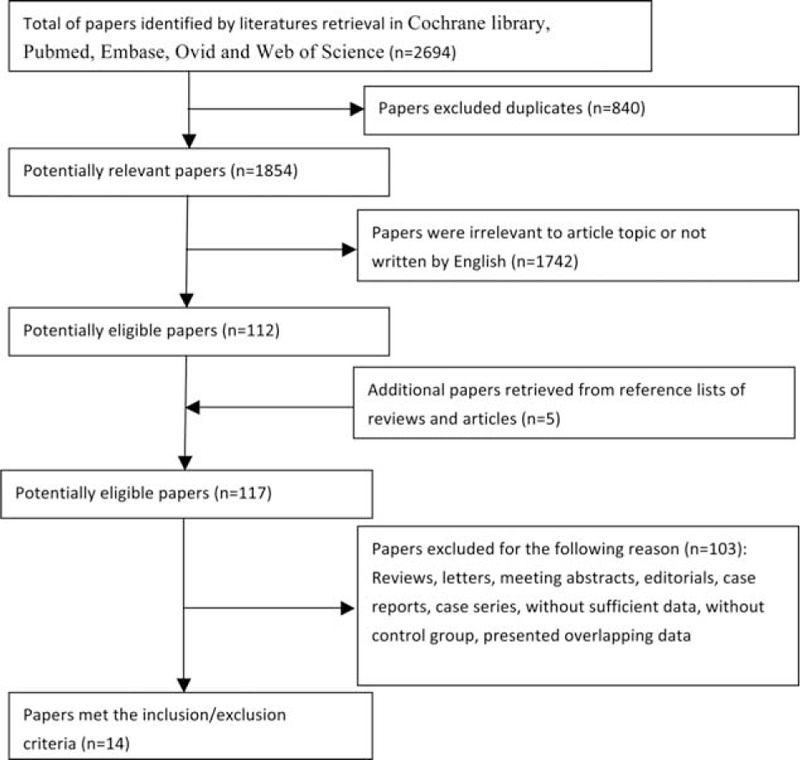
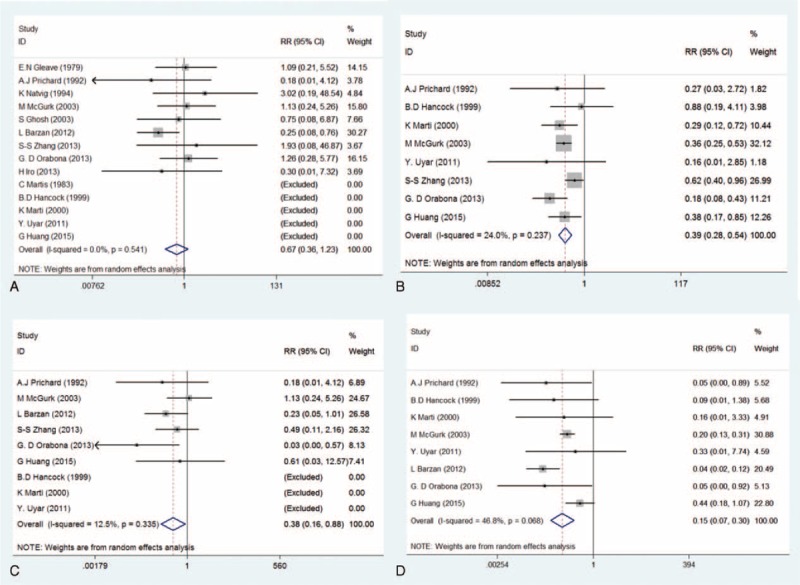
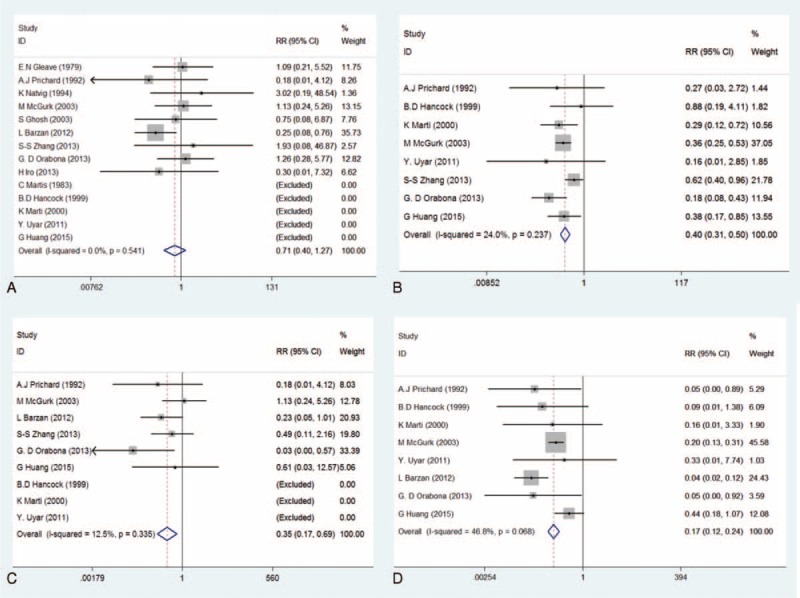
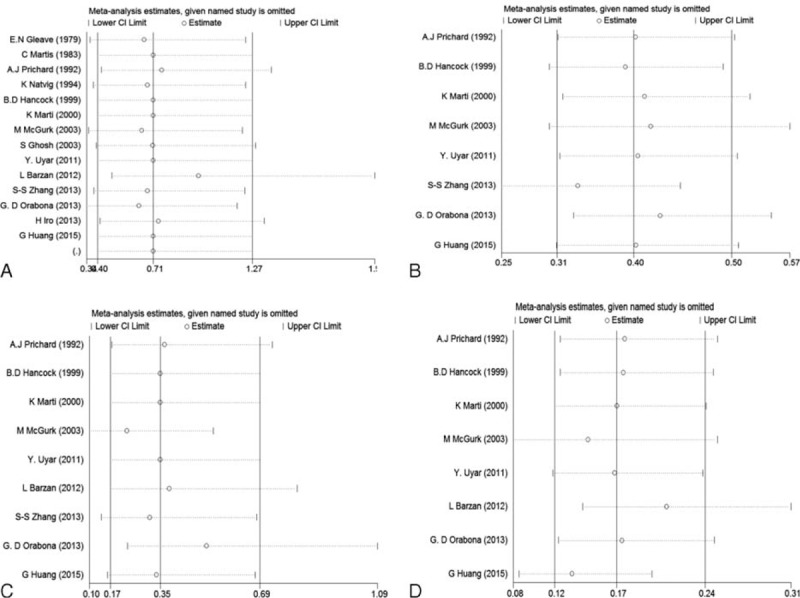
Benign parotid tumor is one of the most common neoplasms in head and neck region. Its therapeutic methods have been debatable topics over the past 100 years. Recently, some surgeons suggest that extracapsular dissection (ECD) instead of superficial parotidectomy (SP) for treatment of benign parotid tumor. This study aimed to compare ECD with SP in the treatment of benign parotid tumors by a meta-analysis.We searched Cochrane Library, PubMed, Embase, Ovid, and Web of Science databases on February 14, 2015 for studies that assessed clinical outcomes of SP and ECD as surgical techniques for the management of benign parotid tumors. Outcome data were evaluated by pooled risk ratio (RR) and corresponding 95% confidence interval (CI).After serious scrutiny, a total of 14 cohort studies with 3194 patients were included in this meta-analysis. The pooled RR revealed that there were no significant difference in tumor recurrence rate between ECD and SP (fixed-effect model: RR = 0.71, 95% CI = 0.40-1.27, P = 0.249; random-effect model: RR = 0.67, 95% CI = 0.38-1.23, P = 0.197). However, there were significantly lower incidences of transient facial nerve dysfunction (FND), permanent FND, and Frey's syndrome in patients of ECD group compared with SP group.ECD might be a good choice in treatment of the benign parotid tumor that were mobile, small, located in superficial lobe and without adhesion to facial nerve; ECD should be performed by the experienced surgeons with ability of dissection facial nerve, who should perform SP if tumor is found adhere to facial nerve during an operation; and a multicenter randomized control trial study is necessary to decide the optimal treatment of benign parotid tumor.
Conflict of interest statement
The authors have no conflicts of interest to disclose.
Figures
References
-
- Leverstein H, van der Wal JE, Tiwari RM, et al. Surgical management of 246 previously untreated pleomorphic adenomas of the parotid gland. Br J Surg 1997; 84:399–403. - PubMed
-
- Iizuka K, Ishikawa K. Surgical techniques for benign parotid tumors: segmental resection vs extracapsular lumpectomy. Acta Otolaryngol Suppl 1998; 537:75–81. - PubMed
-
- Gleave EN, Whittaker JS, Nicholson A. Salivary tumours—experience over thirty years. Clin Otolaryngol Allied Sci 1979; 4:247–257. - PubMed
-
- Smith SL, Komisar A. Limited parotidectomy: the role of extracapsular dissection in parotid gland neoplasms. Laryngoscope 2007; 117:1163–1167. - PubMed
-
- Witt RL. Minimally invasive surgery for parotid pleomorphic adenoma. Ear Nose Throat 2005; 84:308.310–311. - PubMed
Publication types
MeSH terms
LinkOut - more resources
Full Text Sources
Medical
Miscellaneous
