


The level of association between functional performance status measures and patient-reported outcomes in cancer patients: a systematic review
- PMID: 26314706
- PMCID: PMC4832926
- DOI: 10.1007/s00520-015-2923-2
The level of association between functional performance status measures and patient-reported outcomes in cancer patients: a systematic review
Abstract
Purpose: The process of assessing patient symptoms and functionality using patient-reported outcomes (PROs) and functional performance status (FPS) is an essential aspect of patient-centered oncology research and care. However, PRO and FPS measures are often employed separately or inconsistently combined. Thus, the purpose of this study was to conduct a systematic review of the level of association between PRO and FPS measures to determine their differential or combined utility.
Methods: A systematic search was conducted using five databases (1966 to February 2014) to identify studies that described an association between PRO and FPS. Studies were excluded if they were non-cancer specific, did not include adults aged 18 or older, or were review articles. Publications were selected for review by consensus among two authors, with a third author arbitrating as needed.
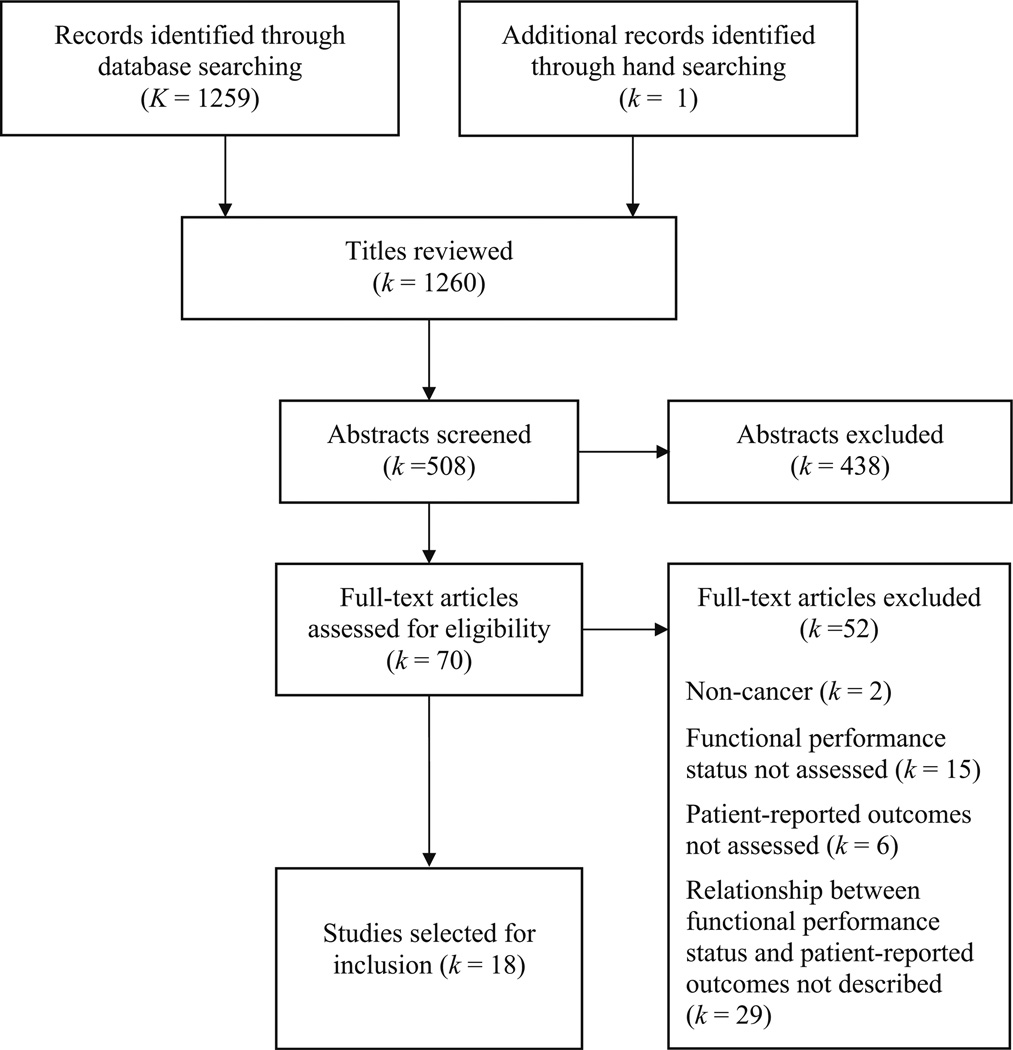
Results: A total of 18 studies met inclusion criteria. FPS was primarily assessed by clinicians using the ECOG Performance Status or Karnofsky Performance Status measures. PROs were captured using a variety of measures, with numerous domains assessed (e.g., pain, fatigue, and general health status). Concordance between PROs and FPS measures was widely variable, falling in the low to moderate range (0.09-0.72).
Conclusions: Despite consistency in the method of capture of PROs or FPS, domain capture varied considerably across reviewed studies. Irrespective of the method of capturing PROs or FPS, the quantified level of association between these two areas was moderate at best, providing evidence that FPS and PRO assessments offer unique information to assist clinicians in their decision-making.
Keywords: Health status; Karnofsky performance status; Neoplasms; Patient outcome assessment.
Conflict of interest statement
References
-
- Kotronoulas G, Kearney N, Maguire R, et al. What is the value of the routine use of patient-reported outcome measures toward improvement of patient outcomes, processes of care, and health service outcomes in cancer care? A systematic review of controlled trials. J Clin Oncol. 2014;32:1480–1501. - PubMed
-
- Wilson IB, Cleary PD. Linking clinical variables with health-related quality of life. A conceptual model of patient outcomes. JAMA. 1995;273:59–65. - PubMed
-
- Oken MM, Creech RH, Tormey DC, et al. Toxicity and response criteria of the eastern cooperative oncology group. Am J Clin Oncol. 1982;5:649–655. - PubMed
-
- Karnofsky DA, Burchenal JH. The clinical evaluation of chemotherapeutic agents in cancer. In: Macleod CM, editor. Evaluation of chemotherapeutic agents. New York: Columbia University Press; 1949. pp. 199–205.
Publication types
MeSH terms
Grants and funding
LinkOut - more resources
Full Text Sources
Other Literature Sources
Miscellaneous
