


MicroRNA-200 promotes lung cancer cell growth through FOG2-independent AKT activation
- PMID: 26314828
- PMCID: PMC4659740
- DOI: 10.1002/iub.1412
MicroRNA-200 promotes lung cancer cell growth through FOG2-independent AKT activation
Abstract
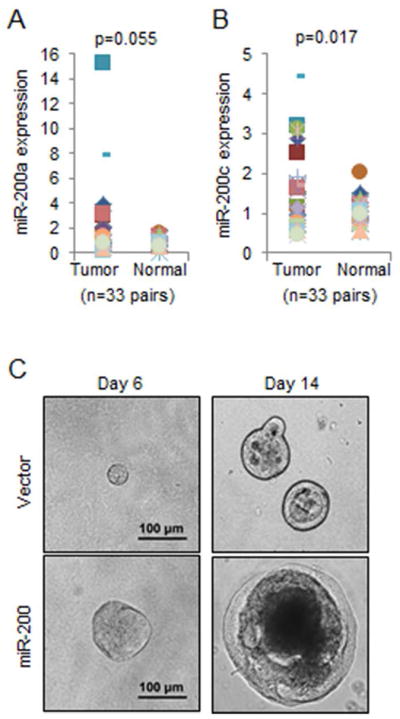
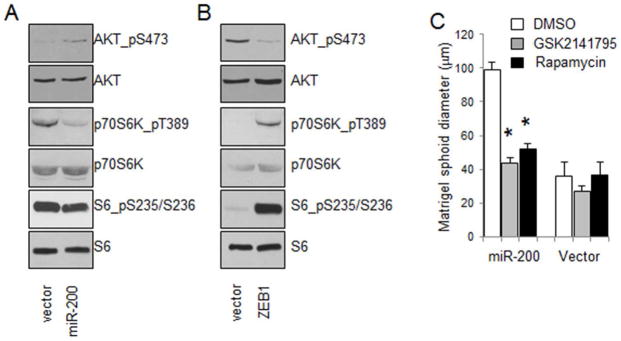
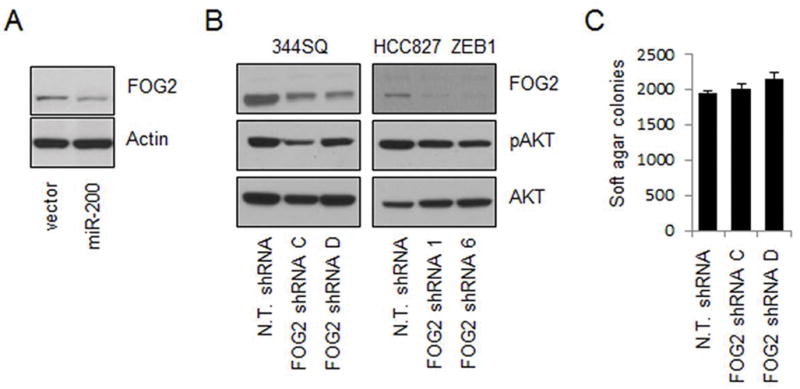
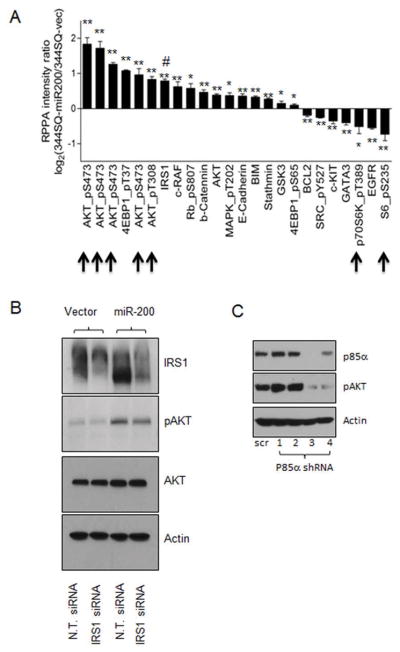
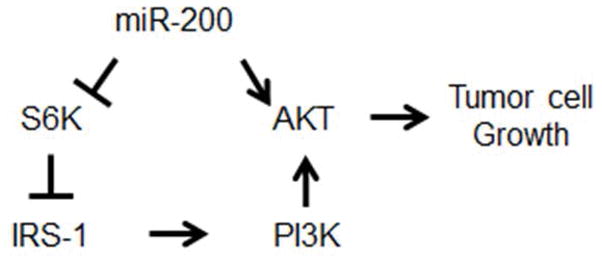
MicroRNA-200 (miR-200) has emerged as a regulator of the PI3K/AKT pathway and cancer cell growth. It was reported that miR-200 can activate PI3K/AKT by targeting FOG2 (friend of GATA 2), which directly binds to the p85α regulatory subunit of PI3K. We found that miR-200 was elevated in early stage lung adenocarcinomas when compared with normal lung tissues, and the expression of miR-200 promoted the tumor spheroid growth of lung adenocarcinoma cells. We show that AKT activation was essential for such oncogenic action of miR-200. However, depletion of FOG2 had little effect on AKT activation. By performing a reverse-phase protein array, we found that miR-200 not only activated AKT but also concomitantly inactivated S6K and increased IRS-1, an S6K substrate that is increased on S6K inactivation. Depletion of IRS-1 partially inhibited the miR-200-dependent AKT activation. Taken together, our results suggest that miR-200 may activate AKT in lung adenocarcinoma cells through a FOG2-independent mechanism involving IRS-1. Our findings also provide evidence that increased miR-200 expression may contribute to early lung tumorigenesis and that AKT inhibitors may be useful for the treatment of miR-200-dependent tumor cell growth.
Keywords: AKT; lung cancer; microRNA-200; signaling.
© 2015 International Union of Biochemistry and Molecular Biology.
Conflict of interest statement
The authors declare that there is no conflict of interest.
Figures
References
-
- Gregory PA, Bert AG, Paterson EL, Barry SC, Tsykin A, et al. The miR-200 family and miR-205 regulate epithelial to mesenchymal transition by targeting ZEB1 and SIP1. Nat Cell Biol. 2008 May;10(5):593–601. - PubMed
-
- Wellner U, Schubert J, Burk UC, Schmalhofer O, Zhu F, et al. The EMT-activator ZEB1 promotes tumorigenicity by repressing stemness-inhibiting microRNAs. Nat Cell Biol. 2009 Dec;11(12):1487–95. - PubMed
Publication types
MeSH terms
Substances
Grants and funding
LinkOut - more resources
Full Text Sources
Other Literature Sources
Medical
