


Dermal and Ophthalmic Findings in Pseudohypoaldosteronism
- PMID: 26316441
- PMCID: PMC4563190
- DOI: 10.4274/jcrpe.1740
Dermal and Ophthalmic Findings in Pseudohypoaldosteronism
Abstract
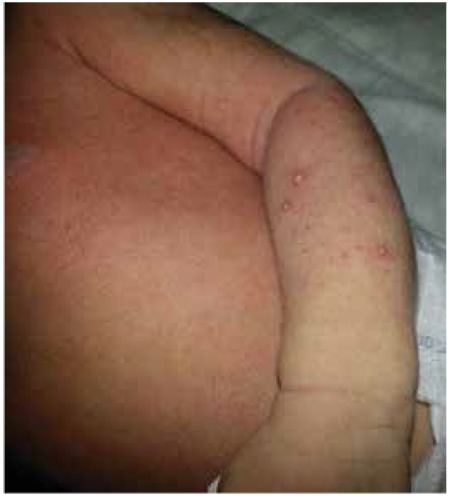
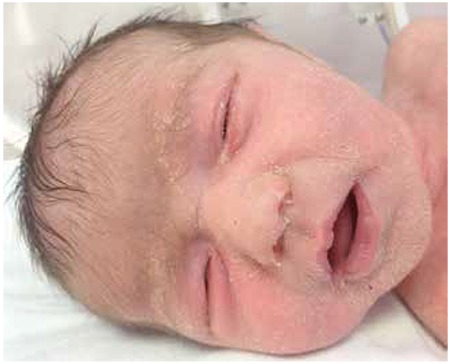
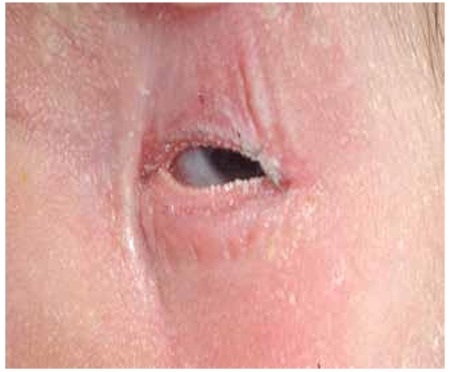
Pseudohypoaldosteronism (PHA) is defined as a state of resistance to aldosterone, a hormone crucial for electrolyte equilibrium. The genetically transmitted type of PHA is primary hypoaldosteronism. Secondary hypoaldosteronism develops as a result of hydronephrosis or hydroureter. PHA patients suffer from severe hyponatremia and a severe clinical condition due to severe loss of salt can be encountered in the neonatal period. Dermal findings in the form of miliaria rubra can also develop in these patients. With the loss of salt, abnormal accumulation of sebum in the eye due to a defect in the sodium channels can also occur. In this paper, a case of PHA in a newborn showing typical dermatological and ophthalmological findings is presented.
Figures
References
-
- Riepe FG. Clinical and molecular features of type 1 pseudohypoaldosteronism. Horm Res. 2009;72:1–9. - PubMed
-
- Tütüncüler F, Günöz H, Bas F, Bundak R, Saka N, Neyzi O. Transient pseudohypoaldosteronism in an infant with urinary tract anomaly. Pediatr Int. 2004;46:618–620. - PubMed
-
- Büyükkayhan D, Köklü E, Görözen F, Kurtoğlu S, Hatipoğlu N, Gündüz Z. An endocrine problem of obstructive uropathy:pseudohypoaldosteronism. Erciyes Medical Journal. 2007;29:82–85.
-
- Geller DS. Mineralocorticoid resistance. Clin Endocrinol (Oxf) 2005;62:513–520. - PubMed
-
- Hanukoglu A. Type I pseudohypoaldosteronism includes two clinically and genetically distinct entities with either renal or multiple target organ defects. J Clin Endocrinol Metab. 1991;73:936–944. - PubMed
Publication types
MeSH terms
Substances
LinkOut - more resources
Full Text Sources
Other Literature Sources
