


A review of mobile applications to help adolescent and young adult cancer patients
- PMID: 26316835
- PMCID: PMC4547645
- DOI: 10.2147/AHMT.S69209
A review of mobile applications to help adolescent and young adult cancer patients
Abstract
Objective: To review research articles utilizing mobile applications with adolescent and young adult (AYA) cancer patients.
Materials and methods: We identified articles via online searches and reference lists (eg, PsycInfo, PubMed). Articles were reviewed by two study team members for target population, stated purpose, technological utilization, sample size, demographic characteristics, and outcome data. Strengths and weaknesses of each study were described.
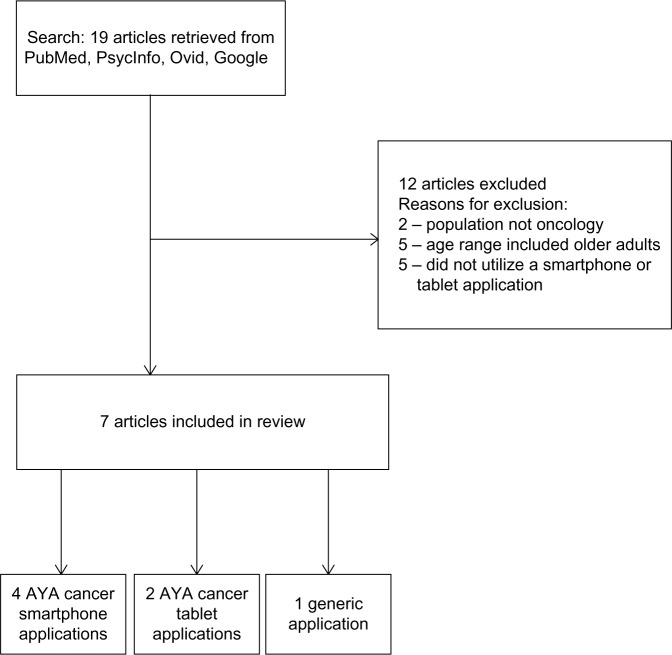
Results: Of 19 identified manuscripts, six met full inclusion criteria for this review (four smartphone applications and two tablet applications). One additional article that included an application not specific to oncology but included AYA patients with cancer within the target sample was also reviewed. Uses of these applications included symptom tracking, pain management, monitoring of eating habits following bone marrow transplant, monitoring of mucositis, and improving medication management. Utility results from pilot studies are presented.
Conclusion: Mobile applications are growing in number and increasingly available to AYAs with and without chronic illness. These applications may prove useful in helping to support AYAs throughout their cancer treatment and beyond. However, few applications provide empirical data supporting their utility. Numerous strengths and benefits of these applications include increased accessibility to educational resources and self-management strategies, more frequent physical and emotional symptom tracking, and increased access to peer support. Despite these strengths, numerous limitations are identified, highlighting the need for future research in this area.
Keywords: adolescent; applications; cancer; mobile; smartphone; young adult.
Figures
References
-
- National Cancer Institute A snapshot of adolescent and young adult cancers. 2014. [Accessed May 19, 2015]. Available from: http://www.cancer.gov/research/progress/snapshots/adolescent-young-adult.
-
- Shama W, Lucchetta S. Psychosocial issues of the adolescent cancer patient and the development of the Teenage Outreach Program (TOP) J Psychosoc Oncol. 2007;25:99–112. - PubMed
-
- Ruland C, Hamilton G, Schjødt-Osmo B. The complexity of symptoms and problems experienced in children with cancer: a review of the literature. J Pain Symptom Manage. 2009;37:403–418. - PubMed
Publication types
LinkOut - more resources
Full Text Sources
Miscellaneous
