


Extensive Genomic Diversity among Bovine-Adapted Staphylococcus aureus: Evidence for a Genomic Rearrangement within CC97
- PMID: 26317849
- PMCID: PMC4552844
- DOI: 10.1371/journal.pone.0134592
Extensive Genomic Diversity among Bovine-Adapted Staphylococcus aureus: Evidence for a Genomic Rearrangement within CC97
Abstract
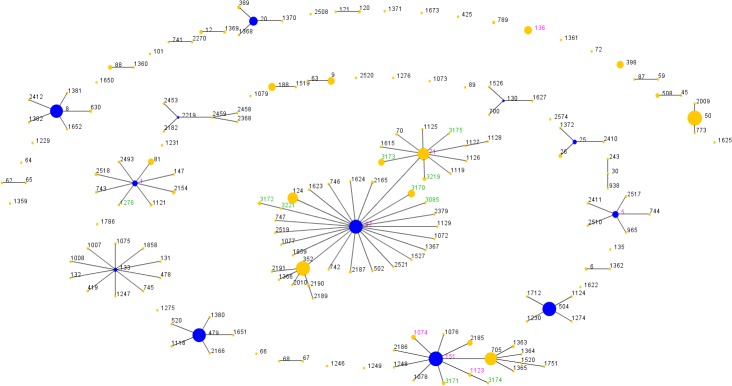
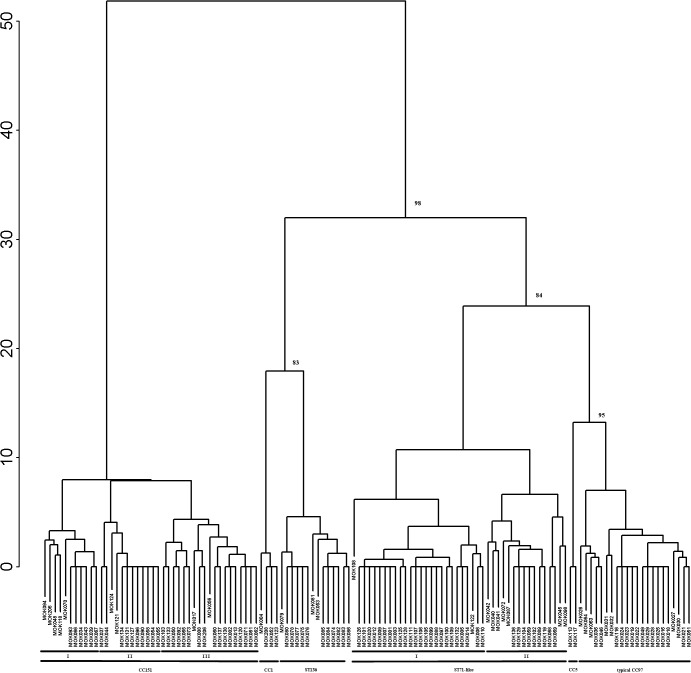
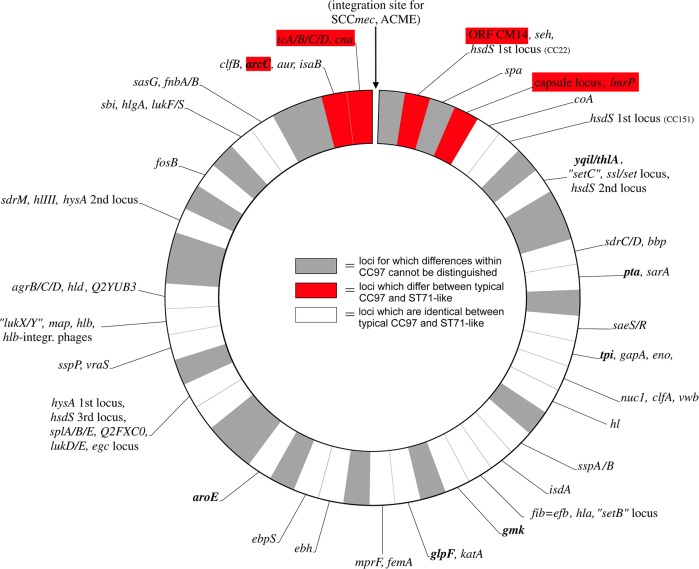
Staphylococcus aureus is an important pathogen associated with both human and veterinary disease and is a common cause of bovine mastitis. Genomic heterogeneity exists between S. aureus strains and has been implicated in the adaptation of specific strains to colonise particular mammalian hosts. Knowledge of the factors required for host specificity and virulence is important for understanding the pathogenesis and management of S. aureus mastitis. In this study, a panel of mastitis-associated S. aureus isolates (n = 126) was tested for resistance to antibiotics commonly used to treat mastitis. Over half of the isolates (52%) demonstrated resistance to penicillin and ampicillin but all were susceptible to the other antibiotics tested. S. aureus isolates were further examined for their clonal diversity by Multi-Locus Sequence Typing (MLST). In total, 18 different sequence types (STs) were identified and eBURST analysis demonstrated that the majority of isolates grouped into clonal complexes CC97, CC151 or sequence type (ST) 136. Analysis of the role of recombination events in determining S. aureus population structure determined that ST diversification through nucleotide substitutions were more likely to be due to recombination compared to point mutation, with regions of the genome possibly acting as recombination hotspots. DNA microarray analysis revealed a large number of differences amongst S. aureus STs in their variable genome content, including genes associated with capsule and biofilm formation and adhesion factors. Finally, evidence for a genomic arrangement was observed within isolates from CC97 with the ST71-like subgroup showing evidence of an IS431 insertion element having replaced approximately 30 kb of DNA including the ica operon and histidine biosynthesis genes, resulting in histidine auxotrophy. This genomic rearrangement may be responsible for the diversification of ST71 into an emerging bovine adapted subgroup.
Conflict of interest statement
Figures
References
-
- Biggs A. Mastitis in Dairy Cattle. 2nd ed. Marlborough, UK: The Crowood Press; 2009.
-
- Fernandez G, Barreal ML, Pombo MB, Ginzo-Villamayor MJ, Gonzalez-Manteiga W, Prieto A, et al. Comparison of the epidemiological behavior of mastitis pathogens by applying time-series analysis in results of milk samples submitted for microbiological examination. Vet Res Commun. 2013;37(4):259–67. 10.1007/s11259-013-9570-1 - DOI - PubMed
-
- Barkema HW, Schukken YH, Zadoks RN. Invited Review: The role of cow, pathogen, and treatment regimen in the therapeutic success of bovine Staphylococcus aureus mastitis. J Dairy Sci. 2006;89(6):1877–95. - PubMed
-
- Miles H, Lesser W, Sears P. The Economic Implications of Bioengineered Mastitis Control. Journal of Dairy Science. 1992;75(2):596–605. - PubMed
Publication types
MeSH terms
Substances
LinkOut - more resources
Full Text Sources
Other Literature Sources
Medical
Molecular Biology Databases
Miscellaneous
