


Overuse and Underuse of Antiosteoporotic Treatments According to Highly Influential Osteoporosis Guidelines: A Population-Based Cross-Sectional Study in Spain
- PMID: 26317872
- PMCID: PMC4552751
- DOI: 10.1371/journal.pone.0135475
Overuse and Underuse of Antiosteoporotic Treatments According to Highly Influential Osteoporosis Guidelines: A Population-Based Cross-Sectional Study in Spain
Abstract
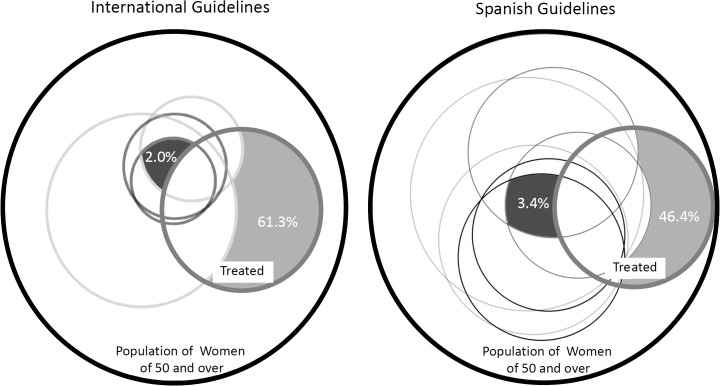
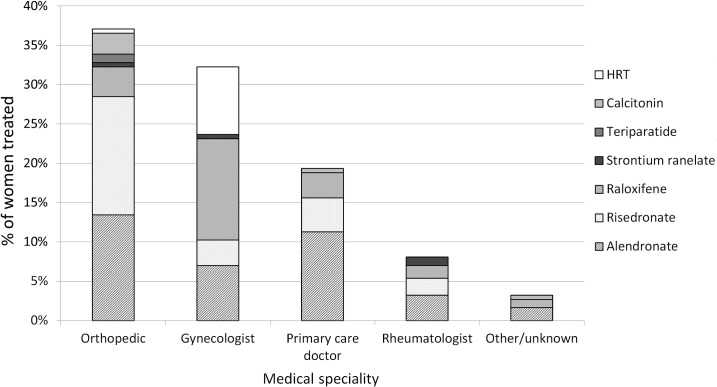
Inappropriate prescribing of antiosteoporotic medications has been observed; however, the joint study of both overuse and underuse has barely been attempted. Spain, with its high utilization rates, constitutes a good example to assess differences in over and under use according to diverse highly-influential osteoporosis guidelines (HIOG) worldwide. We used data of a population-based cross-sectional study including 824 post-menopausal women ≥50 years old living in the city of Valencia, Spain and aimed to estimate the percentage of women eligible for treatment, and the proportion of overuse and underuse of antiosteoporotic treatment according to HIOG. The prevalence of antiosteoporotic treatment in postmenopausal women ≥ 50 in Valencia was 20.9% (95%CI:17.6-24.4). The type of antiosteoporotic drugs prescribed varied greatly depending on the medical specialty responsible of the initial prescription. When applying the HIOG, the percentage of women 50 and over who should be treated varied from less than 9% to over 44%. In real terms, from the approximately eight million women of 50 years old and over in Spain, the number eligible for treatment would range from 0.7 to 3.8 million, depending on the guideline used. A huge proportion of inappropriate treatments was found when applying these guidelines to the Spanish population, combining a high overuse (42-78% depending on the guideline used) and underuse (7-41%). In conclusion, we found that the pharmacological management of osteoporosis in women of 50 and over in this population combines an important overuse and, to a lesser extent, underuse, although the level of inappropriateness varied strikingly depending on the CPG used. It seems urgent to reduce treatment overuse without neglecting underuse, as is urgent an attempt to reach wider agreement worldwide regarding osteoporosis management, in order to facilitate appropriate treatment and development of policies to reduce effectively treatment inappropriateness.
Conflict of interest statement
Figures
References
-
- Chassin MR, Galvin RW. The urgent need to improve health care quality. Institute of Medicine National Roundtable on Health Care Quality. JAMA. 1998;280(11):1000–5 - PubMed
Publication types
MeSH terms
LinkOut - more resources
Full Text Sources
Other Literature Sources
Medical
