


Dynamic changes in extracellular release of GABA and glutamate in the lateral septum during social play behavior in juvenile rats: Implications for sex-specific regulation of social play behavior
- PMID: 26318330
- PMCID: PMC4591248
- DOI: 10.1016/j.neuroscience.2015.08.052
Dynamic changes in extracellular release of GABA and glutamate in the lateral septum during social play behavior in juvenile rats: Implications for sex-specific regulation of social play behavior
Abstract
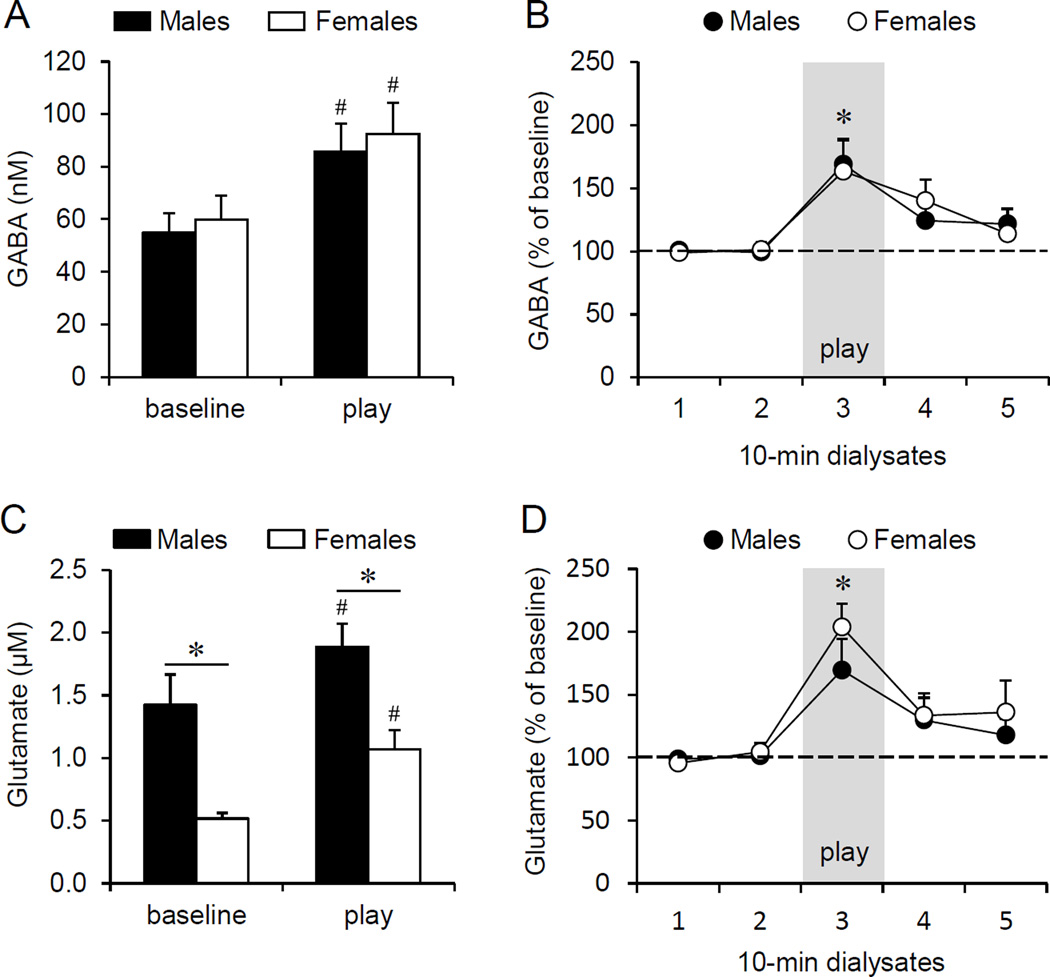
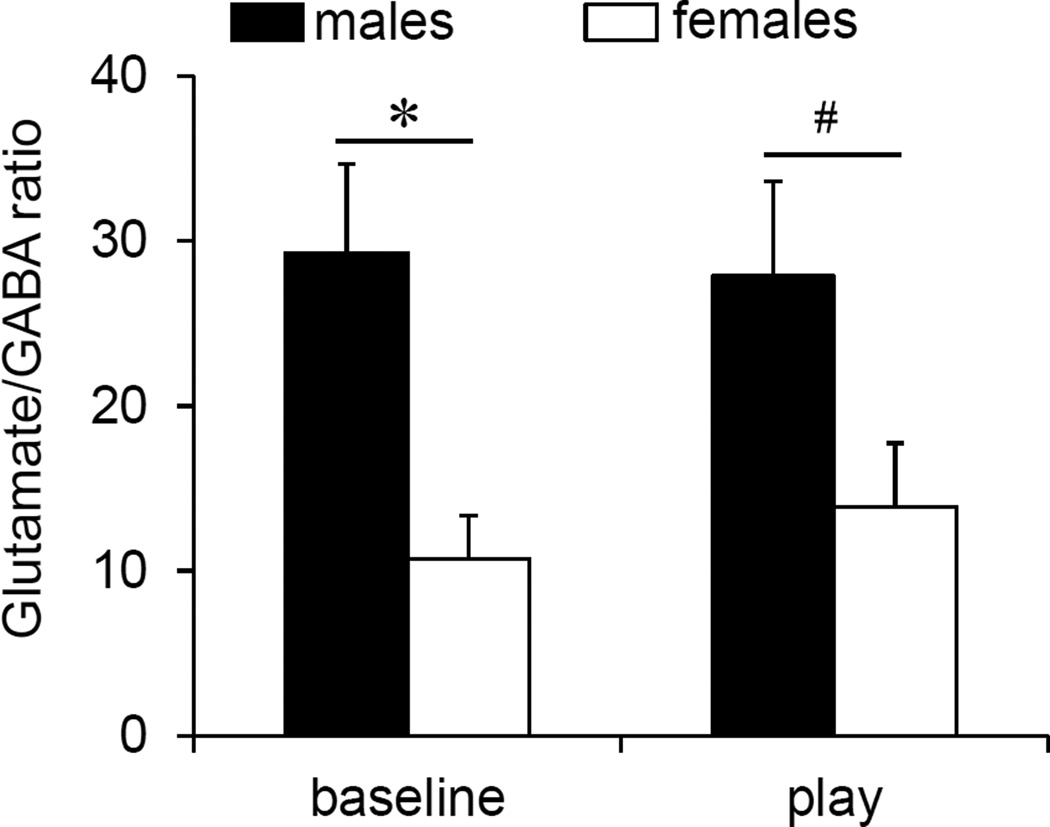
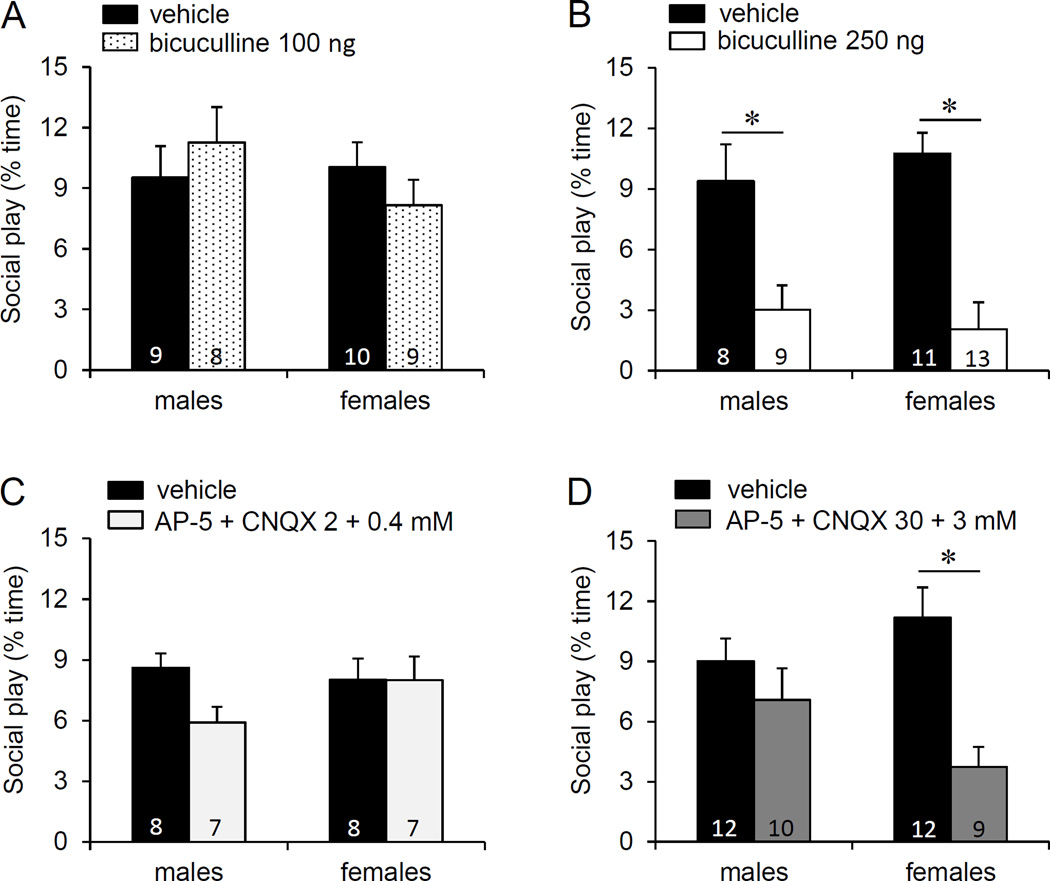
Social play is a motivated and rewarding behavior that is displayed by nearly all mammals and peaks in the juvenile period. Moreover, social play is essential for the development of social skills and is impaired in social disorders like autism. We recently showed that the lateral septum (LS) is involved in the regulation of social play behavior in juvenile male and female rats. The LS is largely modulated by GABA and glutamate neurotransmission, but their role in social play behavior is unknown. Here, we determined whether social play behavior is associated with changes in the extracellular release of GABA and glutamate in the LS and to what extent such changes modulate social play behavior in male and female juvenile rats. Using intracerebral microdialysis in freely behaving rats, we found no sex difference in extracellular GABA concentrations, but extracellular glutamate concentrations are higher in males than in females under baseline conditions and during social play. This resulted in a higher glutamate/GABA concentration ratio in males vs. females and thus, an excitatory predominance in the LS of males. Furthermore, social play behavior in both sexes is associated with significant increases in extracellular release of GABA and glutamate in the LS. Pharmacological blockade of GABA-A receptors in the LS with bicuculline (100 ng/0.5 μl, 250 ng/0.5 μl) dose-dependently decreased the duration of social play behavior in both sexes. In contrast, pharmacological blockade of ionotropic glutamate receptors (NMDA and AMPA/kainate receptors) in the LS with AP-5+CNQX (2mM+0.4mM/0.5 μl, 30 mM+3mM/0.5 μl) dose-dependently decreased the duration of social play behavior in females, but did not alter social play behavior in males. Together, these data suggest a role for GABA neurotransmission in the LS in the regulation of juvenile social play behavior in both sexes, while glutamate neurotransmission in the LS is involved in the sex-specific regulation of juvenile social play behavior.
Keywords: GABA; glutamate; lateral septum; microdialysis; sex difference; social play.
Copyright © 2015 IBRO. Published by Elsevier Ltd. All rights reserved.
Figures
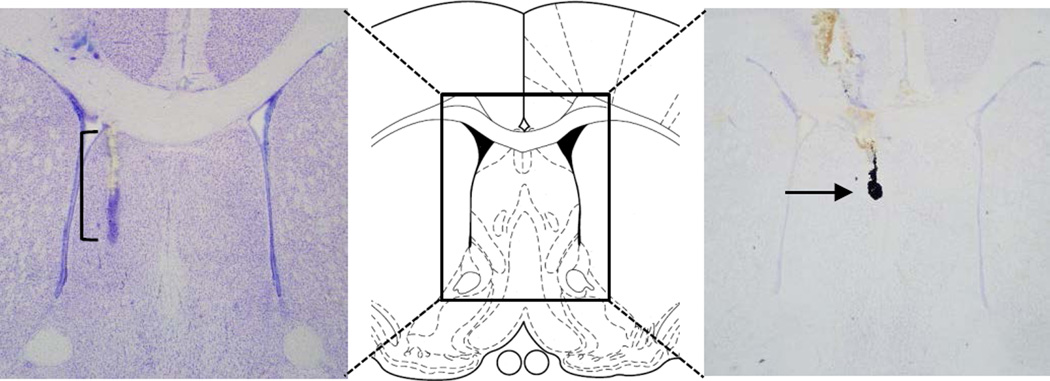
References
-
- Albert DJ, Chew GL. The septal forebrain and the inhibitory modulation of attack and defense in the rat. A review. Behav Neural Biol. 1980;30:357–388. - PubMed
-
- Alessandri SM. Attention, play, and social behavior in ADHD preschoolers. J. Abnorm. Child Psychol. 1992;20:289–302. - PubMed
-
- Allaman-Exertier G, Reymond-Marron I, Tribollet E, Raggenbass M. Vasopressin modulates lateral septal network activity via two distinct electrophysiological mechanisms. Eur J Neurosci. 2007;26:2633–2642. - PubMed
-
- Alonso JR, Frotscher M. Organization of the septal region in the rat brain: a Golgi/EM study of lateral septal neurons. J Comp Neurol. 1989;286:472–487. - PubMed
-
- Araki T, Kiyama H, Tohyama M. The GABAA receptor gamma 1 subunits expressed by distinct neuronal populations. Brain Res Mol Brain Res. 1992;15:121–132. - PubMed
Publication types
MeSH terms
Substances
Grants and funding
LinkOut - more resources
Full Text Sources
Other Literature Sources
