


Exercise for the heart: signaling pathways
- PMID: 26318584
- PMCID: PMC4673228
- DOI: 10.18632/oncotarget.4770
Exercise for the heart: signaling pathways
Abstract
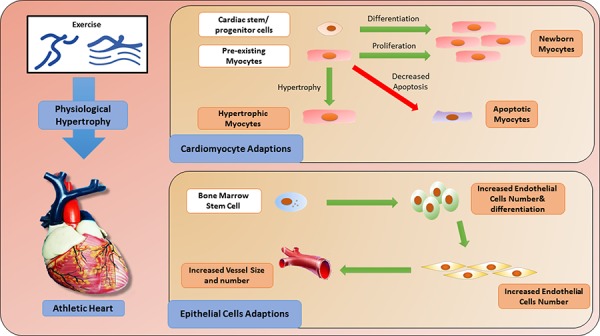
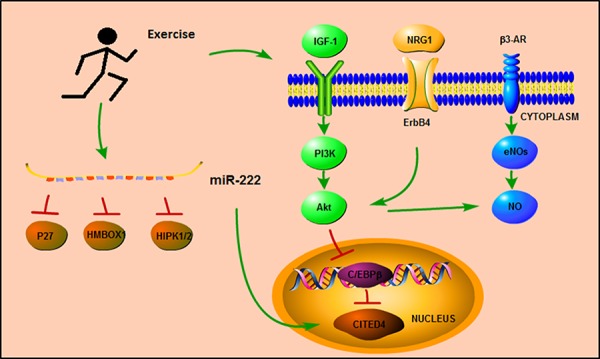
Physical exercise, a potent functional intervention in protecting against cardiovascular diseases, is a hot topic in recent years. Exercise has been shown to reduce cardiac risk factors, protect against myocardial damage, and increase cardiac function. This improves quality of life and decreases mortality and morbidity in a variety of cardiovascular diseases, including myocardial infarction, cardiac ischemia/reperfusion injury, diabetic cardiomyopathy, cardiac aging, and pulmonary hypertension. The cellular adaptation to exercise can be associated with both endogenous and exogenous factors: (1) exercise induces cardiac growth via hypertrophy and renewal of cardiomyocytes, and (2) exercise induces endothelial progenitor cells to proliferate, migrate and differentiate into mature endothelial cells, giving rise to endothelial regeneration and angiogenesis. The cellular adaptations associated with exercise are due to the activation of several signaling pathways, in particular, the growth factor neuregulin1 (NRG1)-ErbB4-C/EBPβ and insulin-like growth factor (IGF)-1-PI3k-Akt signaling pathways. Of interest, microRNAs (miRNAs, miRs) such as miR-222 also play a major role in the beneficial effects of exercise. Thus, exploring the mechanisms mediating exercise-induced benefits will be instrumental for devising new effective therapies against cardiovascular diseases.
Keywords: cardiac growth; cardiovascular disease; exercise.
Conflict of interest statement
The authors declare there are no conflicts of interest.
Figures
References
-
- Chen M, Davignon J, Baass A. Diagnosis and cardiovascular risk factors in dysbetalipoproteinemia: A large cohort study. J Clin Lipidol. 2014;8:302–303.
-
- Eckel RH, Jakicic JM, Ard JD, Miller NH, Hubbard VS, Nonas CA, de Jesus JM, Sacks FM, Lee I-M, Smith SC. 2013 AHA/ACC guideline on lifestyle management to reduce cardiovascular riska report of the american college of cardiology/american heart association task force on practice guidelines. J Am Coll Cardiol. 2013 - PubMed
-
- Figueiredo PA, Appell Coriolano HJ, Duarte JA. Cardiac regeneration and cellular therapy: Is there a benefit of exercise? Int J Sports Med. 2013;35:181–90. - PubMed
-
- Arem H, Moore SC, Patel A, Hartge P, Berrington de Gonzalez A, Visvanathan K, Campbell PT, Freedman M, Weiderpass E, Adami HO, Linet MS, Lee IM, Matthews CE. Leisure time physical activity and mortality: A detailed pooled analysis of the dose-response relationship. JAMA Intern Med. 2015;175:959–67. - PMC - PubMed
Publication types
MeSH terms
Substances
LinkOut - more resources
Full Text Sources
Other Literature Sources
Medical
