


Sex difference in immune response to vaccination: A participant-level meta-analysis of randomized trials of IMVAMUNE smallpox vaccine
- PMID: 26319063
- PMCID: PMC4581981
- DOI: 10.1016/j.vaccine.2015.08.032
Sex difference in immune response to vaccination: A participant-level meta-analysis of randomized trials of IMVAMUNE smallpox vaccine
Abstract
Introduction: Previous research shows immune response to vaccination differs by sex but this has not been explored for IMVAMUNE, a replication-deficient smallpox vaccine developed in response to the potential for bioterrorism using smallpox.
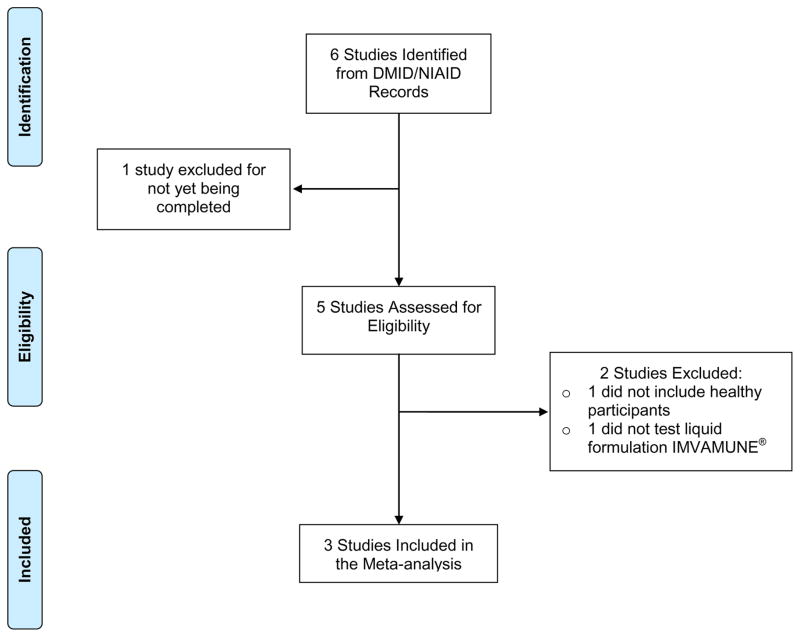
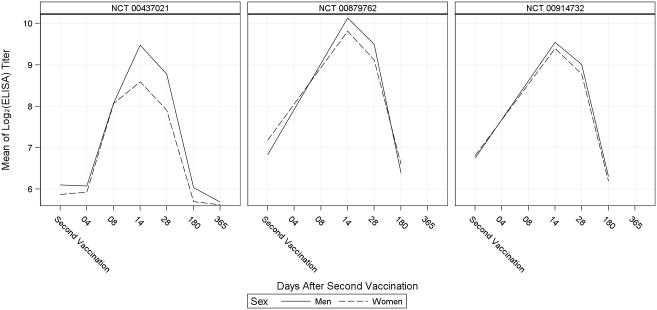
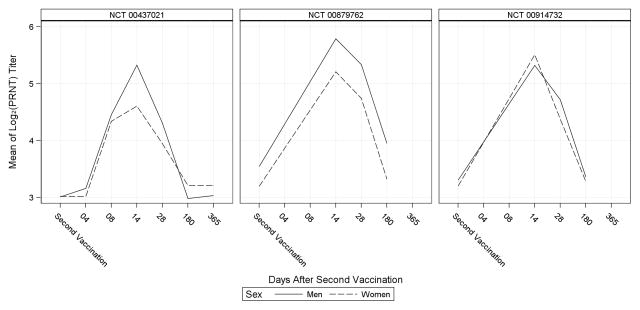
Methods: We conducted a participant-level meta-analysis (N=275, 136 men, 139 women) of 3 randomized trials of IMVAMUNE conducted at 13 centers in the US through a federally-funded extramural research program. Studies were eligible for inclusion if they tested the standard dose (1×10(8)TCID₅₀/mL on Days 0 and 28) of liquid formulation IMVAMUNE, were completed at the time of our search, and enrolled healthy vaccinia-naïve participants. Models of the peak log₂ ELISA and PRNT titers post-second vaccination were constructed for each study with sex as a covariate. Results from these models were combined into random effects meta-analyses of the sex difference in response to IMVAMUNE. We then compared this approach with fixed effects models using the combined participant level data.
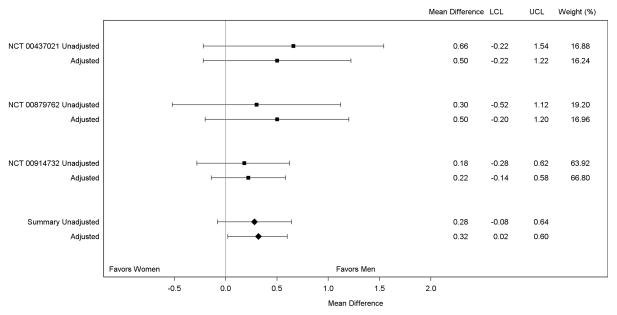
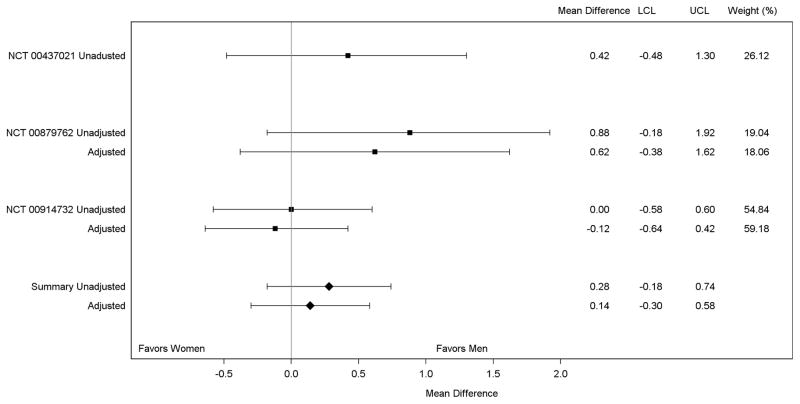
Results: In each study the mean peak log₂ ELISA titer was higher in men than women but no single study demonstrated a statistically significant difference. Combination of the adjusted study-specific estimates into the random effects model showed a higher mean peak log₂-titer in men compared with women (absolute difference [men-women]: 0.32, 95% CI: 0.02-0.60). Fixed effects models controlling for study showed a similar result (log₂ ELISA titer, men-women: 0.34, 95% CI: 0.04-0.63). This equates to a geometric mean peak titer that is approximately 27% higher in men than women (95% CI: 3-55%). Peak log₂ PRNT titers were also higher (although not significantly) in men (men-women: 0.14, 95% CI: -0.30 to 0.58).
Conclusion: Our results show statistically significant differences in response to IMVAMUNE comparing healthy, vaccinia-naïve men with women and suggest that sex should be considered in further development and deployment of IMVAMUNE and other MVA-based vaccines.
Keywords: Imvamune; MVA vaccine; Meta-analysis; Smallpox; Vaccines; Vaccinia virus.
Copyright © 2015 Elsevier Ltd. All rights reserved.
Conflict of interest statement
The authors have no conflicts of interest to declare.
Figures
References
-
- Fauci AS, Morens DM. The perpetual challenge of infectious diseases. N Engl J Med. 2012;366:454–61. - PubMed
Publication types
MeSH terms
Substances
Grants and funding
LinkOut - more resources
Full Text Sources
Other Literature Sources
Medical
