


A five-miRNA signature with prognostic and predictive value for MGMT promoter-methylated glioblastoma patients
- PMID: 26320189
- PMCID: PMC4745726
- DOI: 10.18632/oncotarget.4978
A five-miRNA signature with prognostic and predictive value for MGMT promoter-methylated glioblastoma patients
Abstract
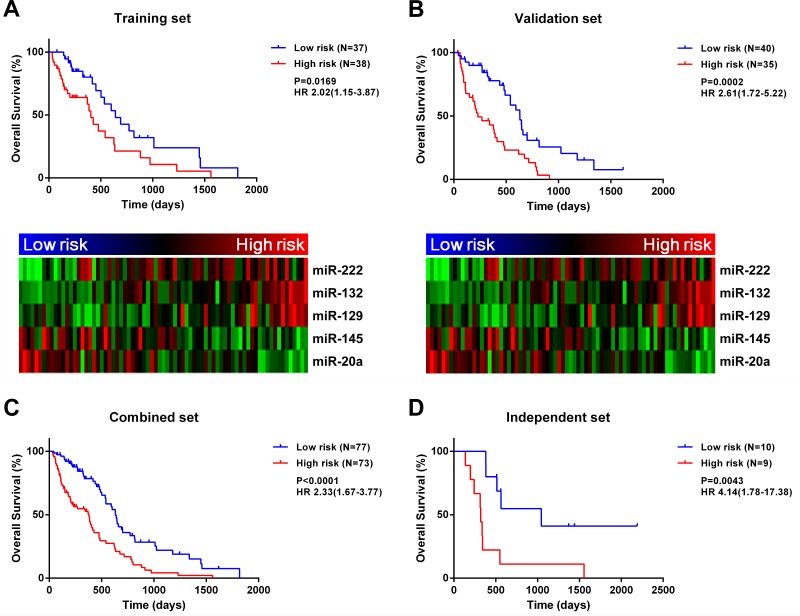
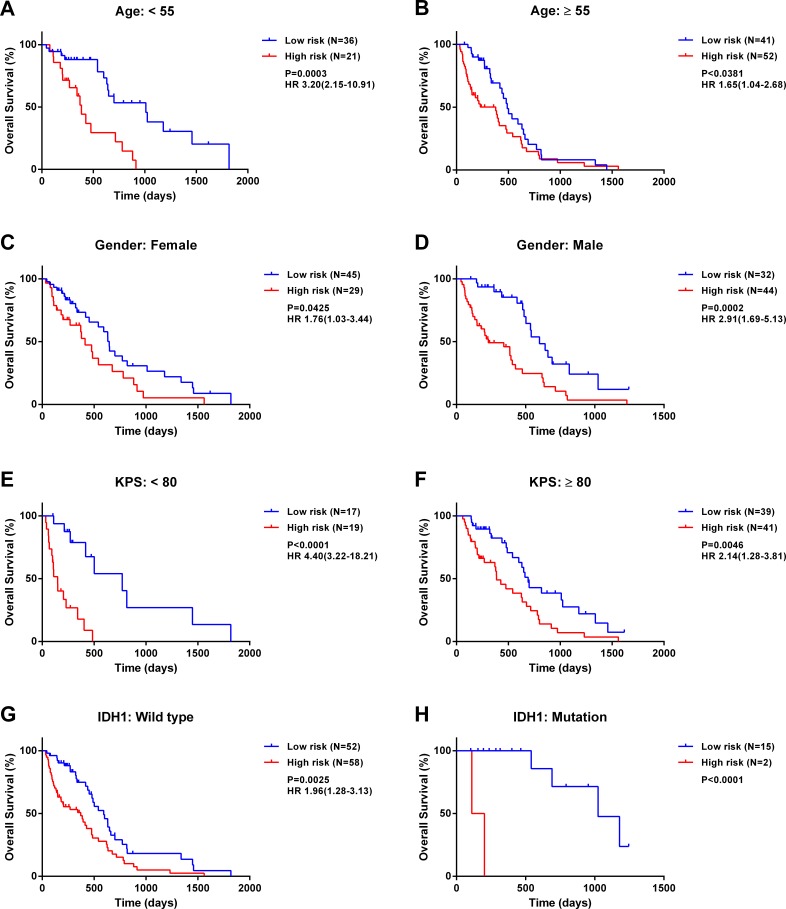
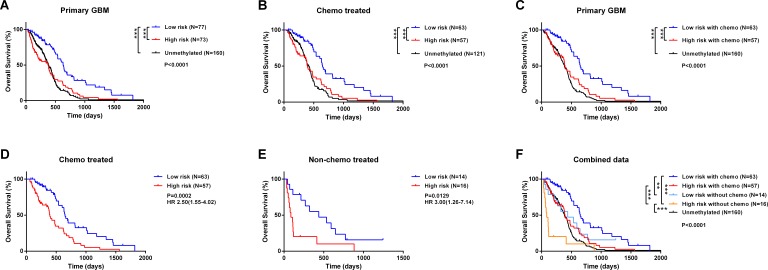
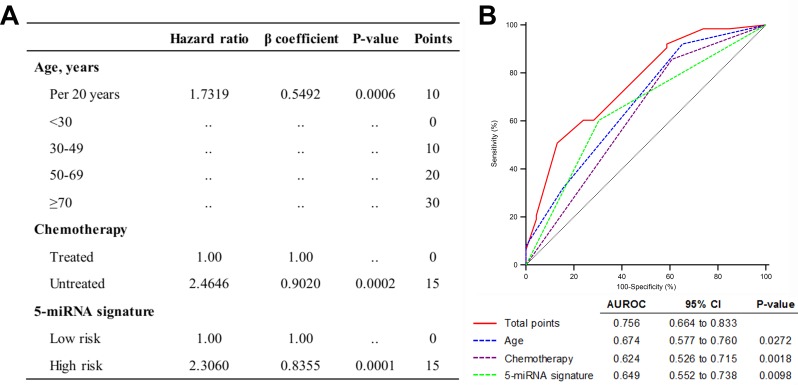
Although O(6)-methylguanine DNA methyltransferase (MGMT) promoter methylation status is an important marker for glioblastoma multiforme (GBM), there is considerable variability in the clinical outcome of patients with similar methylation profiles. The present study aimed to refine the prognostic and predictive value of MGMT promoter status in GBM by identifying a micro (mi)RNA risk signature. Data from The Cancer Genome Atlas was used for this study, with MGMT promoter-methylated samples randomly divided into training and internal validation sets. Data from The Chinese Glioma Genome Atlas was used for independent validation. A five miRNA-based risk signature was established for MGMT promoter-methylated GBM to distinguish cases as high- or low-risk with distinct prognoses, which was confirmed using internal and external validation sets. Importantly, the prognostic value of the signature was significant in different cohorts stratified by clinicopathologic factors and alkylating chemotherapy, and a multivariate Cox analysis found it to be an independent prognostic marker along with age and chemotherapy. Based on these three factors, we developed a quantitative model with greater accuracy for predicting the 1-year survival of patients with MGMT promoter-methylated GBM. These results indicate that the five-miRNA signature is an independent risk predictor for GBM with MGMT promoter methylation and can be used to identify patients at high risk of unfavorable outcome and resistant to alkylating chemotherapy, underscoring its potential for personalized GBM management.
Keywords: MGMT promoter methylation; glioblastoma; miRNA; predictive model; prognosis.
Conflict of interest statement
None of the authors have conflicts of interest relevant to this article.
Figures
References
-
- Esteller M, Garcia-Foncillas J, Andion E, Goodman SN, Hidalgo OF, Vanaclocha V, Baylin SB, Herman JG. Inactivation of the DNA-repair gene MGMT and the clinical response of gliomas to alkylating agents. The New England journal of medicine. 2000;343:1350–1354. - PubMed
-
- Hegi ME, Diserens AC, Gorlia T, Hamou MF, de Tribolet N, Weller M, Kros JM, Hainfellner JA, Mason W, Mariani L, Bromberg JE, Hau P, Mirimanoff RO, Cairncross JG, Janzer RC, Stupp R. MGMT gene silencing and benefit from temozolomide in glioblastoma. The New England journal of medicine. 2005;352:997–1003. - PubMed
-
- Volinia S, Calin GA, Liu CG, Ambs S, Cimmino A, Petrocca F, Visone R, Iorio M, Roldo C, Ferracin M, Prueitt RL, Yanaihara N, Lanza G, Scarpa A, Vecchione A, Negrini M, et al. A microRNA expression signature of human solid tumors defines cancer gene targets. Proceedings of the National Academy of Sciences of the United States of America. 2006;103:2257–2261. - PMC - PubMed
Publication types
MeSH terms
Substances
LinkOut - more resources
Full Text Sources
Other Literature Sources
Medical
Research Materials
