


The Increasing Relevance of Tumour Histology in Determining Oncological Outcomes in Colorectal Cancer
- PMID: 26321889
- PMCID: PMC4550646
- DOI: 10.1007/s11888-015-0280-7
The Increasing Relevance of Tumour Histology in Determining Oncological Outcomes in Colorectal Cancer
Abstract
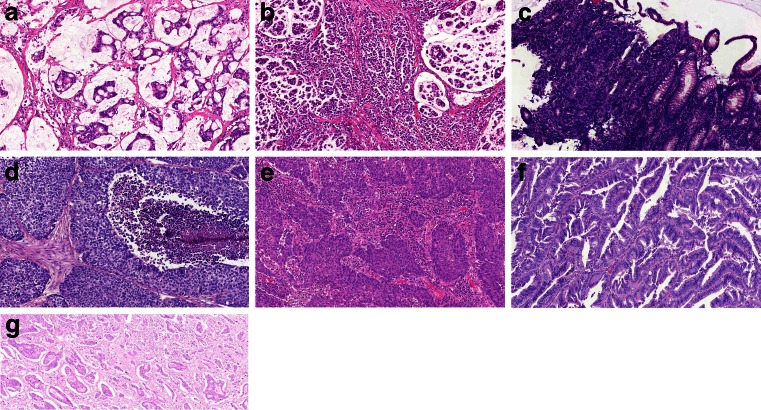
Colorectal cancer is not just one type of cancer. Differences in outcome and reaction to treatment can at least be partly explained by different histological and molecular subtypes. Recognition of these differences may influence treatment decisions. However, there is huge variation in the amount of information that is available. Several tumour types such as mucinous carcinoma, signet ring cell carcinoma, neuroendocrine carcinoma and adenosquamous carcinoma have such a distinct phenotype that they are readily recognised. However, due to the rarity of signet ring cell carcinoma and adenosquamous carcinoma, limited data are available. More recently defined subtypes, like medullary carcinoma, serrated adenocarcinoma and micropapillary carcinoma, are not adequately diagnosed, which limits research possibilities using large-scale data from registries. In the current review, we systematically describe the histologic subtypes with the clinical and molecular background. We evaluate their prognosis compared to adenocarcinoma not otherwise specified and speculate about the clinical relevance.
Keywords: Adenocarcinoma; Adenosquamous carcinoma; BRAF mutation; Colorectal cancer; Medullary carcinoma; Micropapillary carcinoma; Microsatellite instability; Mucinous carcinoma; Neuroendocrine carcinoma; Prognosis; RAS mutation; Serrated carcinoma; Signet ring cell carcinoma; Survival.
Figures
References
-
- Bosman FT, World Health Organization. International Agency for Research on Cancer . World Health Organization classification of tumours. 4. Lyon: International Agency for Research on Cancer; 2010.
Publication types
LinkOut - more resources
Full Text Sources
Other Literature Sources
Research Materials
