


η-Secretase processing of APP inhibits neuronal activity in the hippocampus
- PMID: 26322584
- PMCID: PMC6570618
- DOI: 10.1038/nature14864
η-Secretase processing of APP inhibits neuronal activity in the hippocampus
Abstract
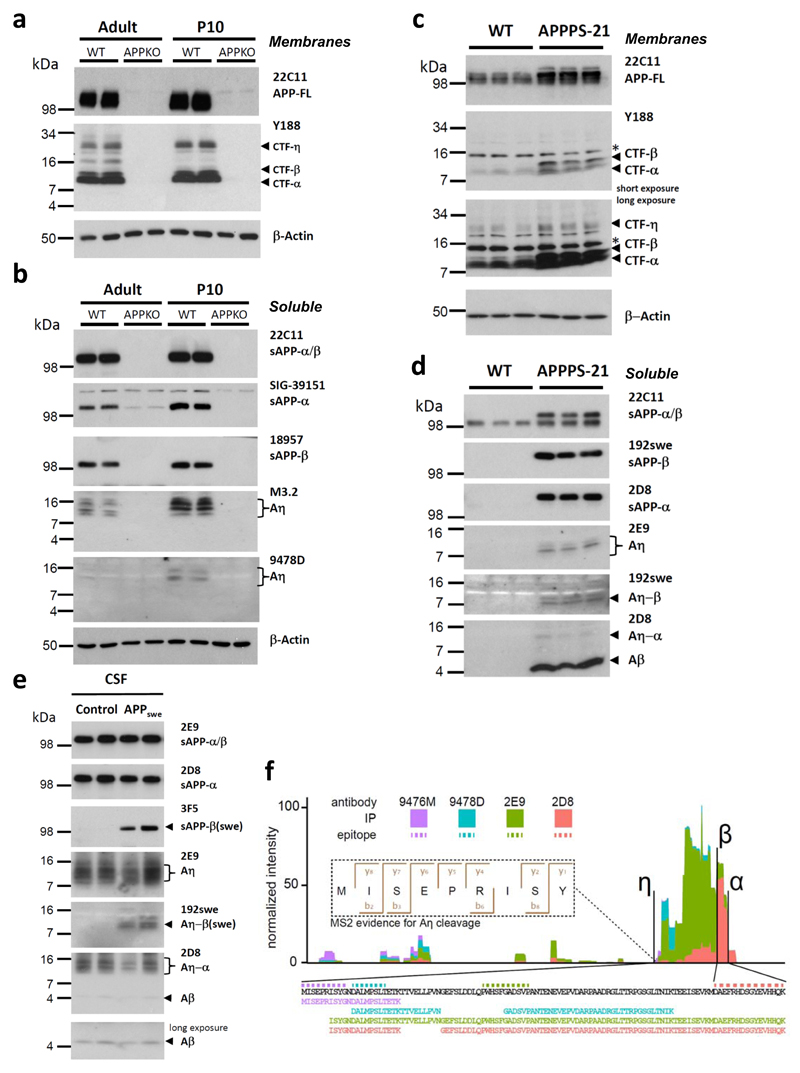
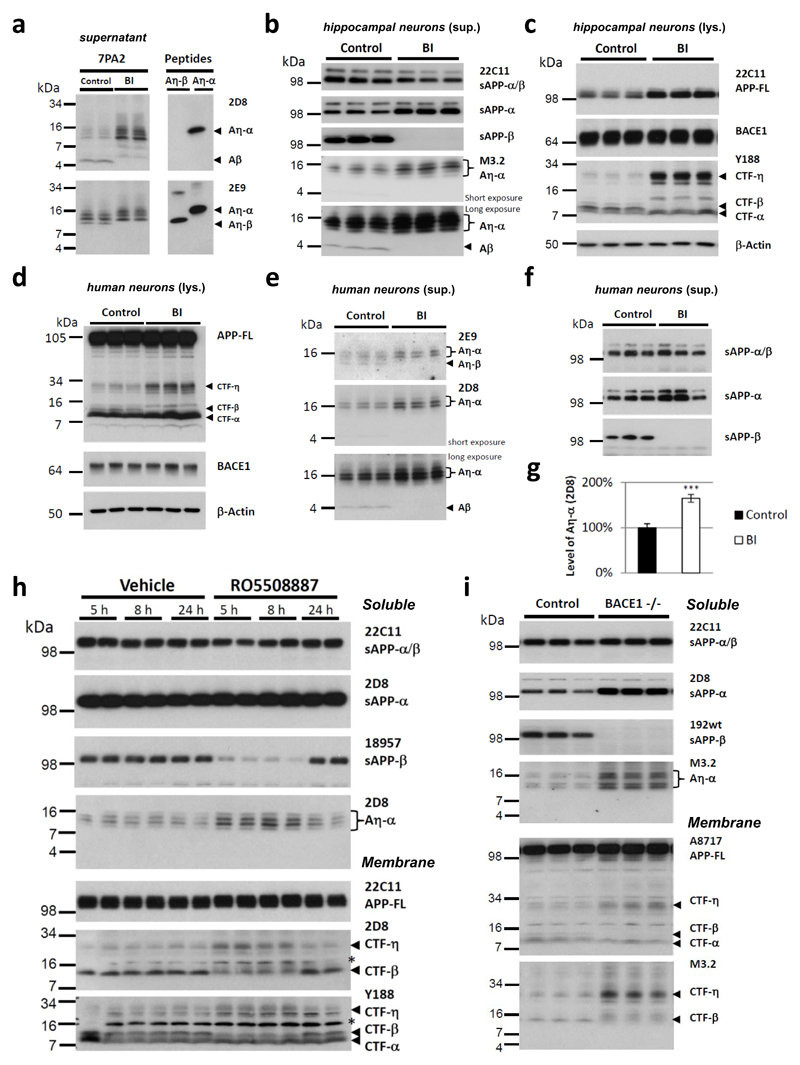
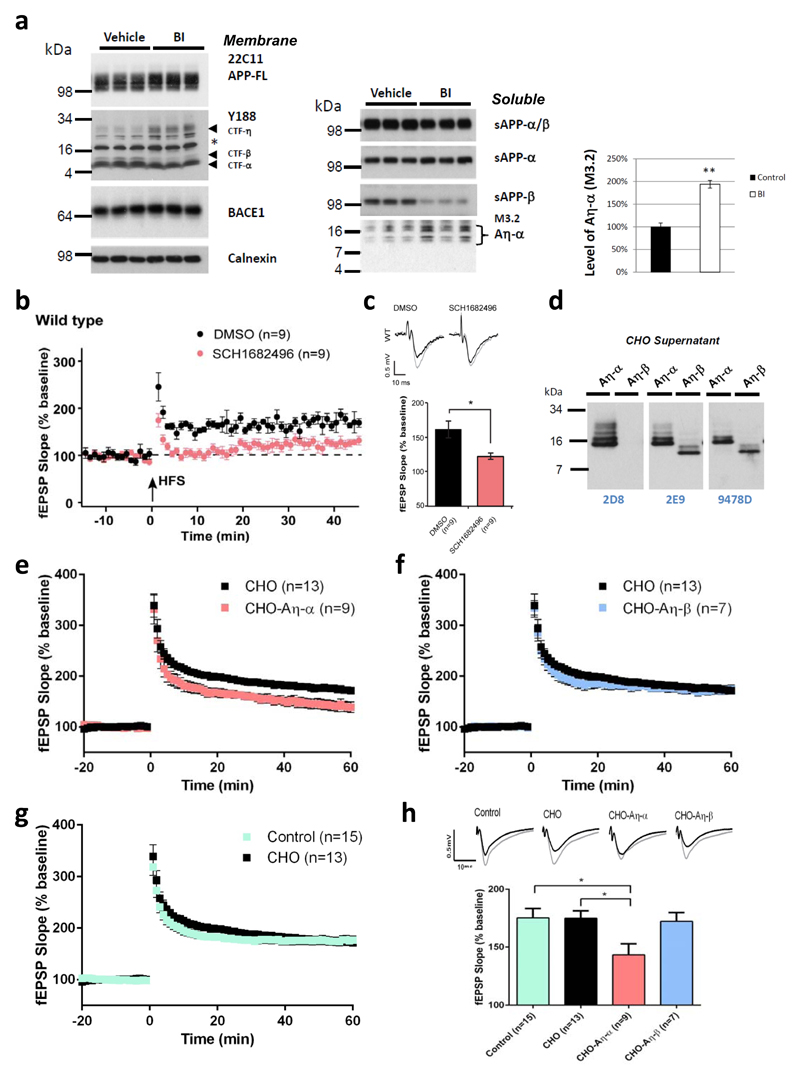
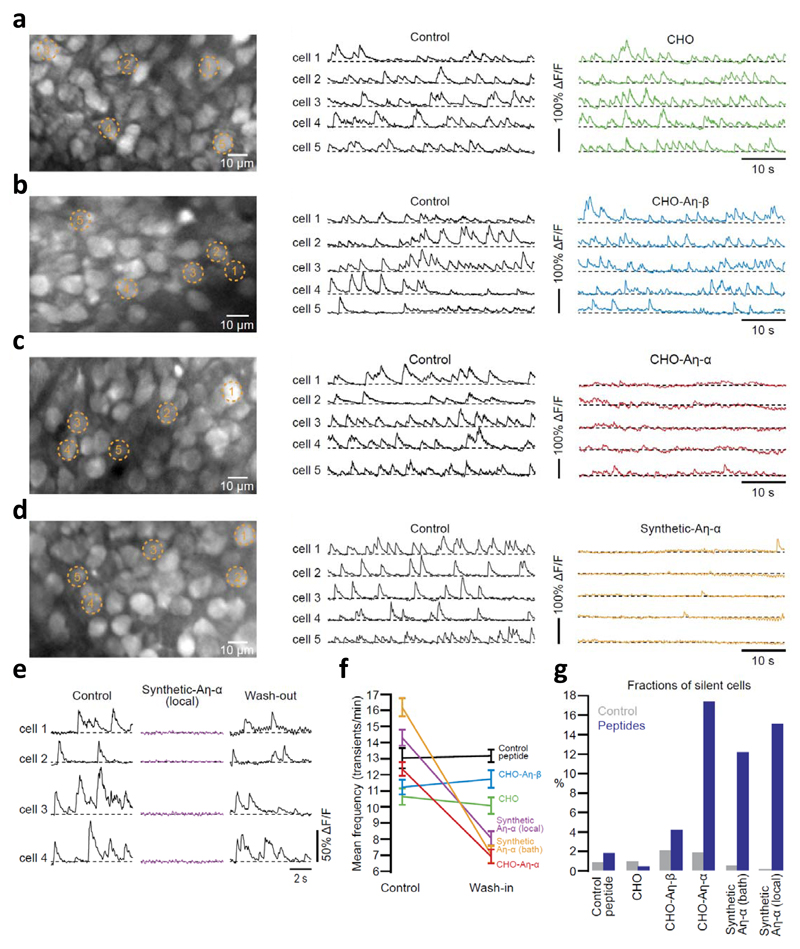
Alzheimer disease (AD) is characterized by the accumulation of amyloid plaques, which are predominantly composed of amyloid-β peptide. Two principal physiological pathways either prevent or promote amyloid-β generation from its precursor, β-amyloid precursor protein (APP), in a competitive manner. Although APP processing has been studied in great detail, unknown proteolytic events seem to hinder stoichiometric analyses of APP metabolism in vivo. Here we describe a new physiological APP processing pathway, which generates proteolytic fragments capable of inhibiting neuronal activity within the hippocampus. We identify higher molecular mass carboxy-terminal fragments (CTFs) of APP, termed CTF-η, in addition to the long-known CTF-α and CTF-β fragments generated by the α- and β-secretases ADAM10 (a disintegrin and metalloproteinase 10) and BACE1 (β-site APP cleaving enzyme 1), respectively. CTF-η generation is mediated in part by membrane-bound matrix metalloproteinases such as MT5-MMP, referred to as η-secretase activity. η-Secretase cleavage occurs primarily at amino acids 504-505 of APP695, releasing a truncated ectodomain. After shedding of this ectodomain, CTF-η is further processed by ADAM10 and BACE1 to release long and short Aη peptides (termed Aη-α and Aη-β). CTFs produced by η-secretase are enriched in dystrophic neurites in an AD mouse model and in human AD brains. Genetic and pharmacological inhibition of BACE1 activity results in robust accumulation of CTF-η and Aη-α. In mice treated with a potent BACE1 inhibitor, hippocampal long-term potentiation was reduced. Notably, when recombinant or synthetic Aη-α was applied on hippocampal slices ex vivo, long-term potentiation was lowered. Furthermore, in vivo single-cell two-photon calcium imaging showed that hippocampal neuronal activity was attenuated by Aη-α. These findings not only demonstrate a major functionally relevant APP processing pathway, but may also indicate potential translational relevance for therapeutic strategies targeting APP processing.
Conflict of interest statement
The authors declare no competing financial interests. A patent is pending.
Figures
Comment in
-
New tricks from an old dog: Another synaptotoxic fragment from APP.Cell Res. 2015 Nov;25(11):1185-6. doi: 10.1038/cr.2015.125. Epub 2015 Oct 27. Cell Res. 2015. PMID: 26503171 Free PMC article.
References
-
- Haass C, Selkoe DJ. Soluble protein oligomers in neurodegeneration: lessons from the Alzheimer's amyloid beta-peptide. Nat Rev Mol Cell Biol. 2007;8:101–112. - PubMed
-
- Nygaard HB. Current and Emerging Therapies for Alzheimer's Disease. Clin Ther. 2013;35:1480–1489. - PubMed
-
- Portelius E, et al. Mass spectrometric characterization of amyloid-beta species in the 7PA2 cell model of Alzheimer's disease. J Alzheimers Dis. 2013;33:85–93. - PubMed
Publication types
MeSH terms
Substances
Grants and funding
LinkOut - more resources
Full Text Sources
Other Literature Sources
Molecular Biology Databases
