


Pointing, looking at, and pressing keys: A diffusion model account of response modality
- PMID: 26322685
- PMCID: PMC4666812
- DOI: 10.1037/a0039653
Pointing, looking at, and pressing keys: A diffusion model account of response modality
Abstract
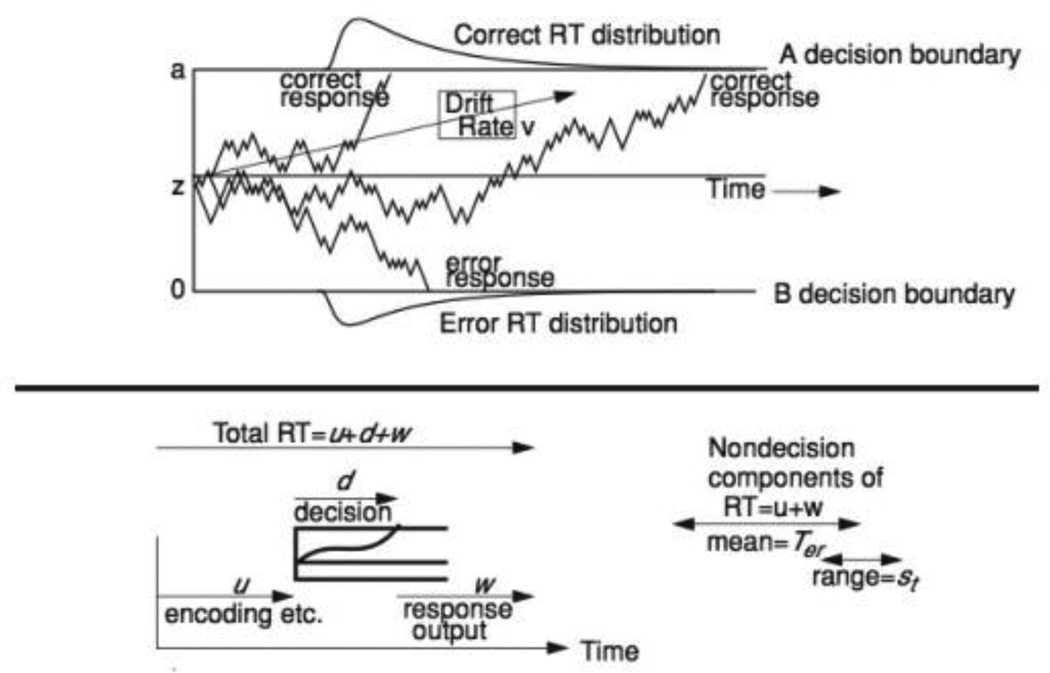
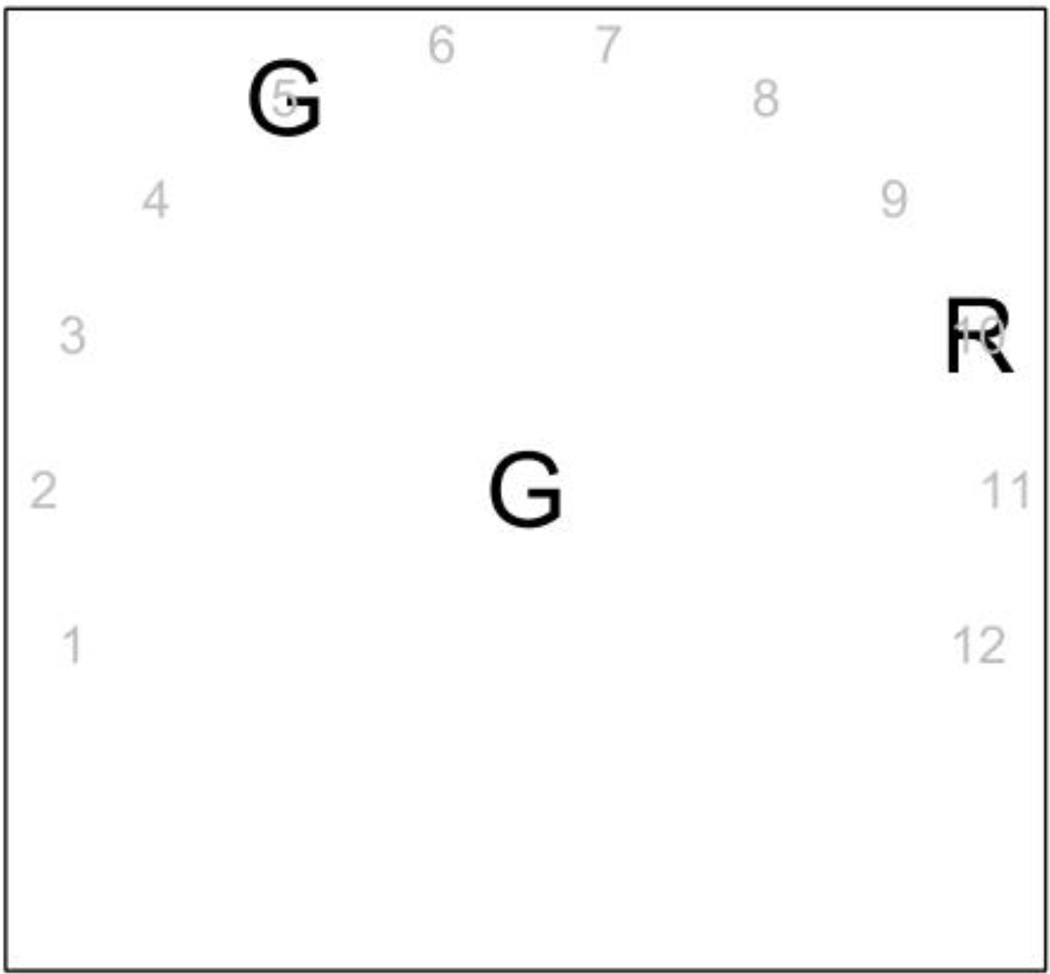
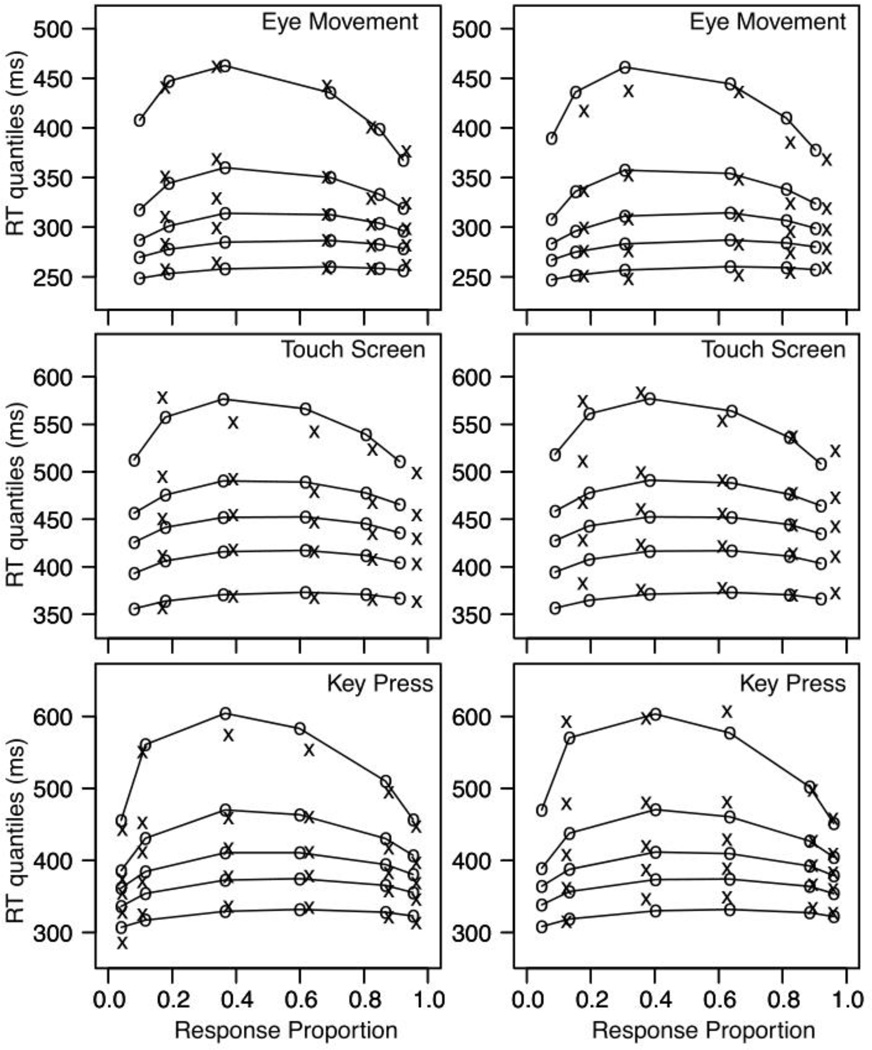
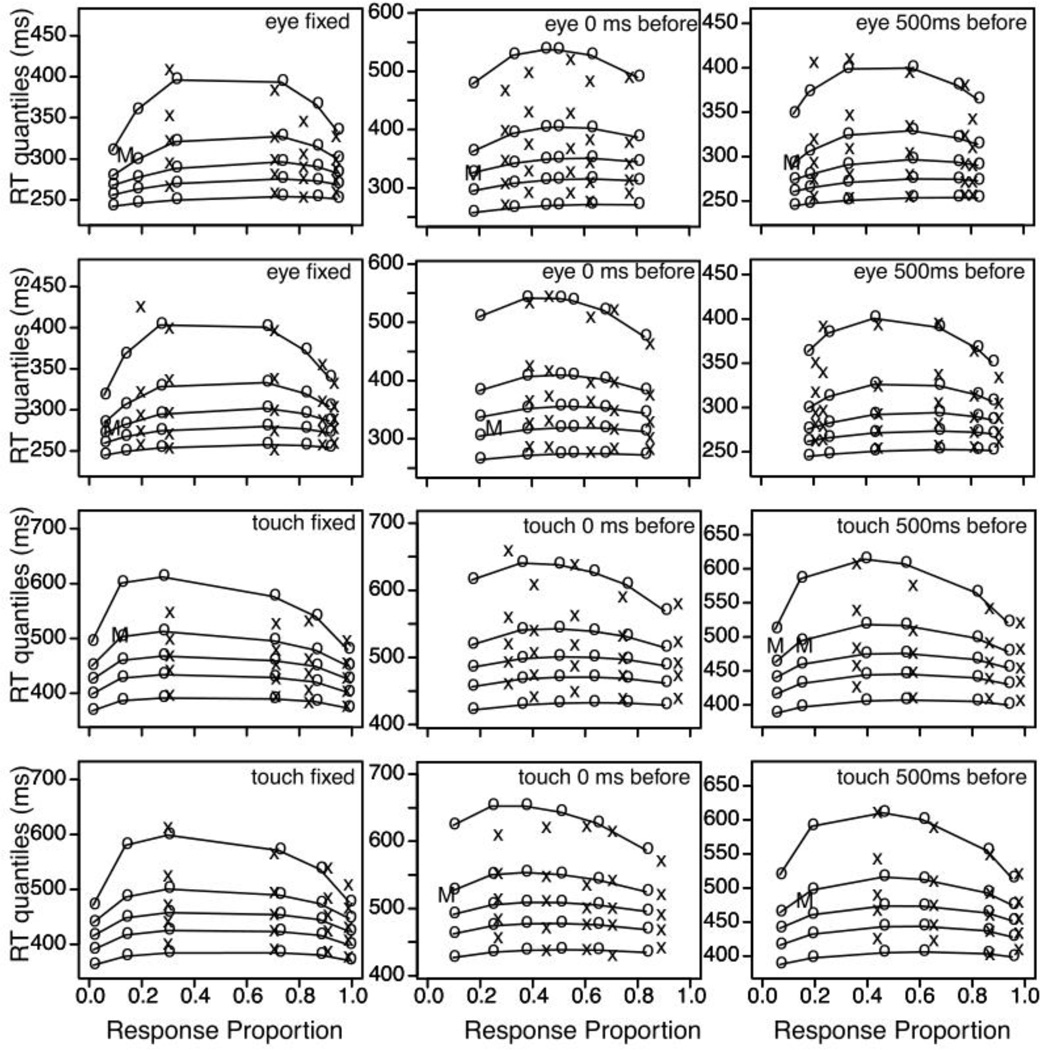
Accumulation of evidence models of perceptual decision making have been able to account for data from a wide range of domains at an impressive level of precision. In particular, Ratcliff's (1978) diffusion model has been used across many different 2-choice tasks in which the response is executed via a key-press. In this article, we present 2 experiments in which we used a letter-discrimination task exploring 3 central aspects of a 2-choice task: the discriminability of the stimulus, the modality of the response execution (eye movement, key pressing, and pointing on a touchscreen), and the mapping of the response areas for the eye movement and the touchscreen conditions (consistent vs. inconsistent). We fitted the diffusion model to the data from these experiments and examined the behavior of the model's parameters. Fits of the model were consistent with the hypothesis that the same decision mechanism is used in the task with 3 different response methods. Drift rates are affected by the duration of the presentation of the stimulus while the response execution time changed as a function of the response modality.
(c) 2015 APA, all rights reserved).
Figures
References
-
- Brown S, Heathcote A. A ballistic model of choice response time. Psychological Review. 2005;112:117–128. - PubMed
-
- Busemeyer JR, Townsend JT. Decision field theory: A dynamic-cognitive approach to decision making in an uncertain environment. Psychological Review. 1993;100:432–459. - PubMed
-
- Diederich A, Busemeyer J. Simple matrix methods for analyzing diffusion models of choice probability, choice response time, and simple response time. Journal of Mathematical Psychology. 2003;47(3):304–322.
-
- Gold J, Shadlen M. Neural computations that underlie decisions about sensory stimuli. Trends in Cognitive Sciences. 2001;5(1):10–16. - PubMed
Publication types
MeSH terms
Grants and funding
LinkOut - more resources
Full Text Sources
Other Literature Sources
