


Should I stop or should I go? The role of associations and expectancies
- PMID: 26322688
- PMCID: PMC4685931
- DOI: 10.1037/xhp0000116
Should I stop or should I go? The role of associations and expectancies
Erratum in
-
"Should I stop or should I go? The role of associations and expectancies": Correction to Best et al. (2016).J Exp Psychol Hum Percept Perform. 2017 Feb;43(2):428. doi: 10.1037/xhp0000366. J Exp Psychol Hum Percept Perform. 2017. PMID: 28134551 Free PMC article.
Abstract
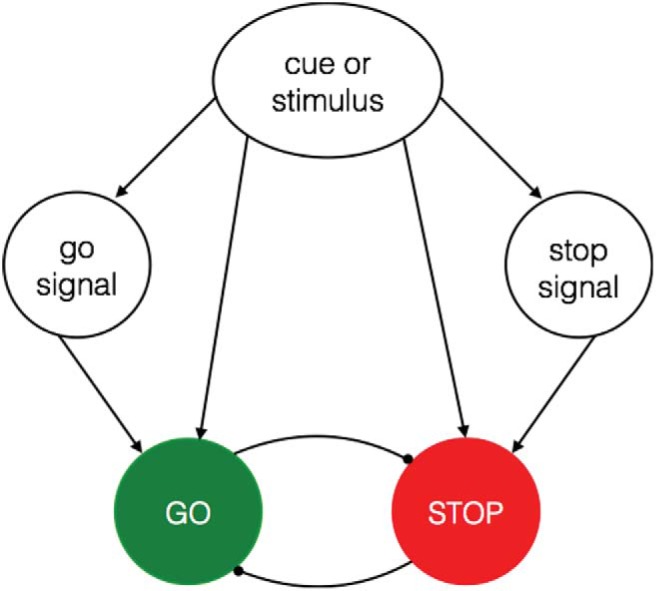
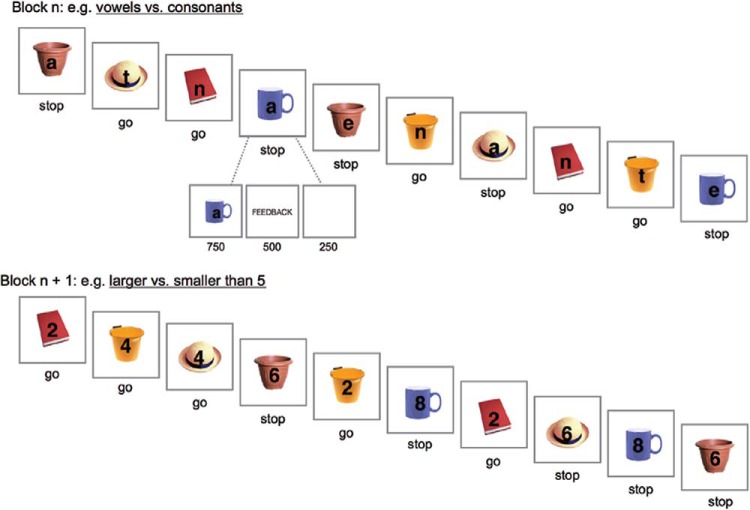
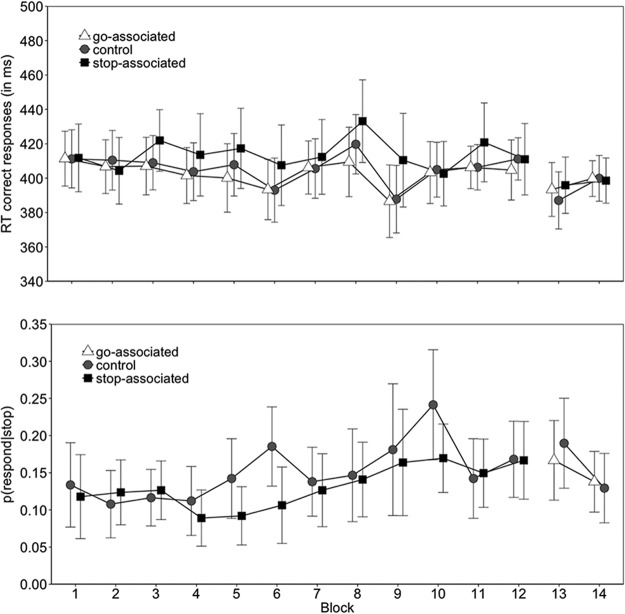
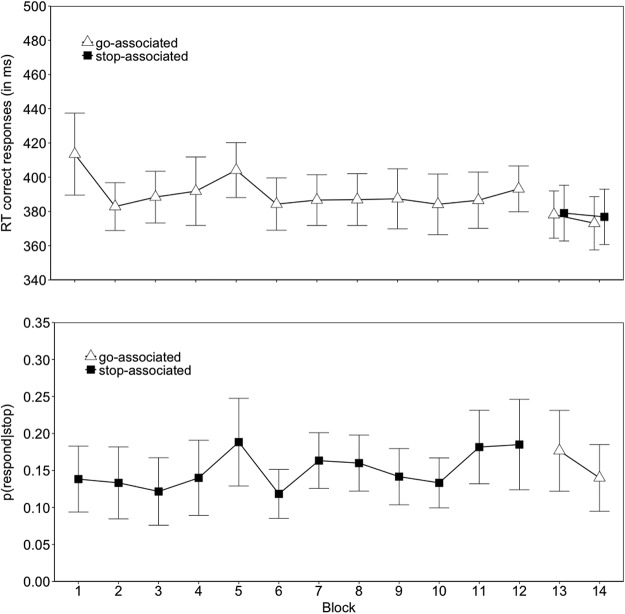
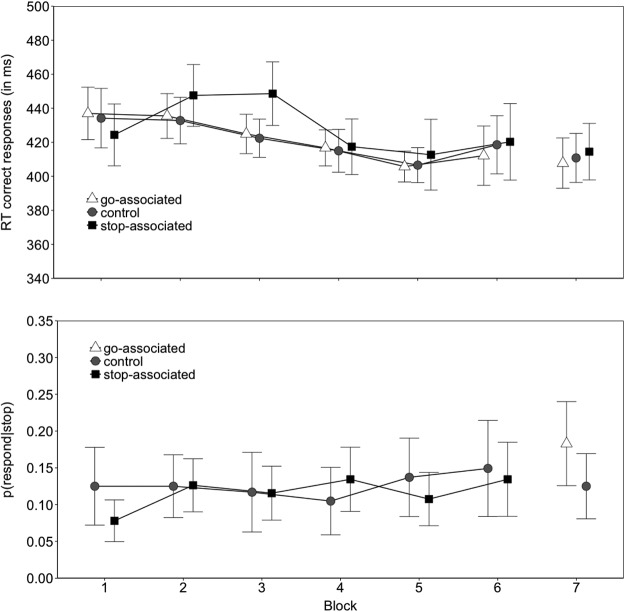
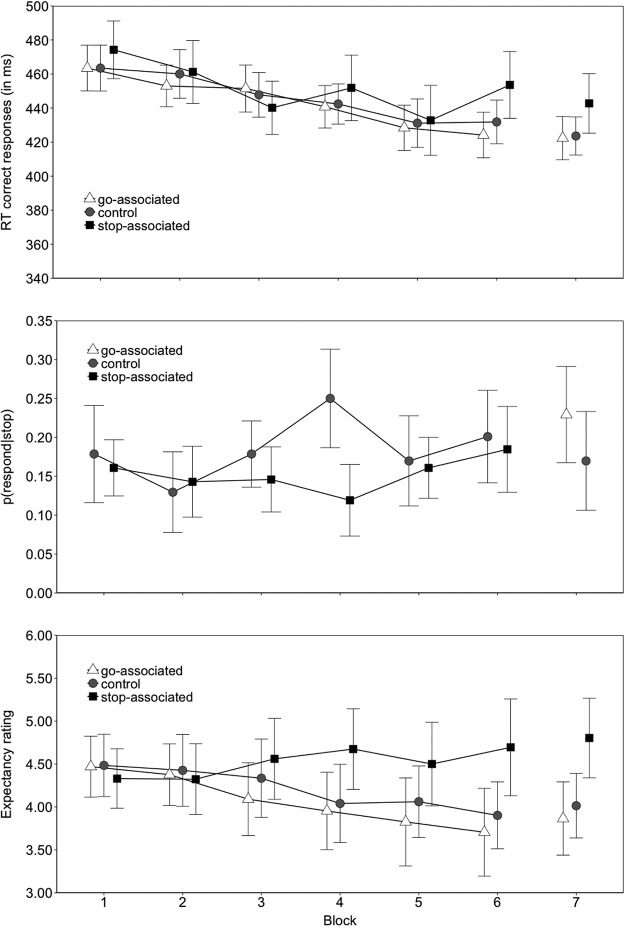
Following exposure to consistent stimulus-stop mappings, response inhibition can become automatized with practice. What is learned is less clear, even though this has important theoretical and practical implications. A recent analysis indicates that stimuli can become associated with a stop signal or with a stop goal. Furthermore, expectancy may play an important role. Previous studies that have used stop or no-go signals to manipulate stimulus-stop learning cannot distinguish between stimulus-signal and stimulus-goal associations, and expectancy has not been measured properly. In the present study, participants performed a task that combined features of the go/no-go task and the stop-signal task in which the stop-signal rule changed at the beginning of each block. The go and stop signals were superimposed over 40 task-irrelevant images. Our results show that participants can learn direct associations between images and the stop goal without mediation via the stop signal. Exposure to the image-stop associations influenced task performance during training, and expectancies measured following task completion or measured within the task. But, despite this, we found an effect of stimulus-stop learning on test performance only when the task increased the task-relevance of the images. This could indicate that the influence of stimulus-stop learning on go performance is strongly influenced by attention to both task-relevant and task-irrelevant stimulus features. More generally, our findings suggest a strong interplay between automatic and controlled processes.
(c) 2015 APA, all rights reserved).
Figures
References
-
- Arrington C. M., & Logan G. D. (2004). Episodic and semantic components of the compound-stimulus strategy in the explicit task-cuing procedure. Memory & Cognition, 32, 965–978. - PubMed
-
- Bechara A., Noel X., & Crone E. (2006). Loss of willpower: Abnormal neural mechanisms of impulse control and decision making in addiction In Wiers R. W. & Stacy A. W. (Eds.), Handbook of implicit cognition and addiction (pp. 225–232). Thousand Oaks, CA: Sage; 10.4135/9781412976237.n15 - DOI
Publication types
MeSH terms
LinkOut - more resources
Full Text Sources
Other Literature Sources
