. 2015 Sep 29;6(29):26982-94.
doi: 10.18632/oncotarget.4831.

Carfilzomib enhances natural killer cell-mediated lysis of myeloma linked with decreasing expression of HLA class I

Affiliations

Carfilzomib enhances natural killer cell-mediated lysis of myeloma linked with decreasing expression of HLA class I

Guang Yang et al. Oncotarget. .

Abstract

Natural killer (NK) cell-based treatments are promising therapies for multiple myeloma (MM). Carfilzomib (CFZ), is a second-generation proteasome inhibitor, used to treat relapsed and refractory MM. In this study, we determined that CFZ treatment enhanced the sensitivity of MM cells to NK cell-mediated lysis. Here, we report that CFZ decreased the expression of human leukocyte antigen (HLA) class I in a time- and dose-dependent manner. CFZ also down-regulated the expression of newly formed HLA class I on MM cells. Treatment of MM with CFZ enhanced NK cell degranulation and significantly sensitized patients' MM cells to NK cell-mediated lysis. Furthermore, the enhancement of NK cell-mediated lysis was linked with the decreased expression of HLA class I. Our findings show a novel activity of CFZ as an immunomodulating agent and suggest a possible approach to therapeutically augment NK cell function in MM patients.

Keywords: carfilzomib; histocompatibility antigens class I; multiple myeloma; natural killer cell; proteasome inhibitor.


Conflict of interest statement

CONFLICTS OF INTERESTS

The authors disclose no potential conflicts of interest.

Figures
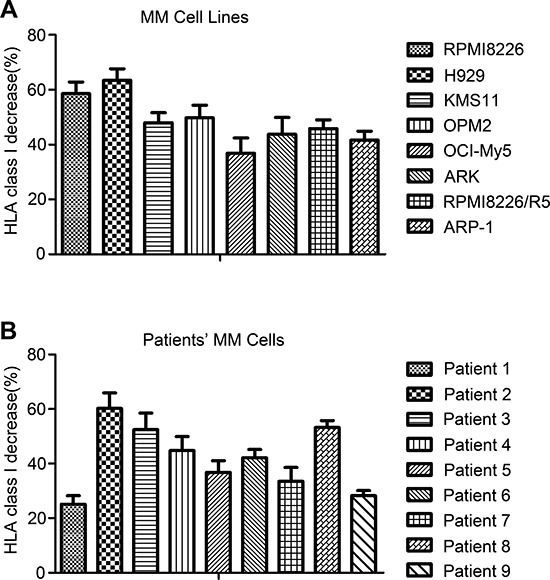
Figure 1
Figure 1. Expression of HLA class I decreased after CFZ treatment in MM cell lines and primary MM cells
A. MM cells were incubated with 10 nM CFZ for 24 hours, then cells were stained with FITC-HLA-ABC, APC-Annexin V and 7AAD. Flow cytometer was used to gate the both Annexin V and 7AAD double negative cells and the mean-fluorescence intensity (MFI) was recorded. Class I decrease % = 100 × (MFI of control - MFI of treated cells)/MFI of control. B. The patients' MM cells were treated with 20 to 40 nM CFZ for 24 hours. MFI was recorded to test the down-regulation of HLA.
Figure 2
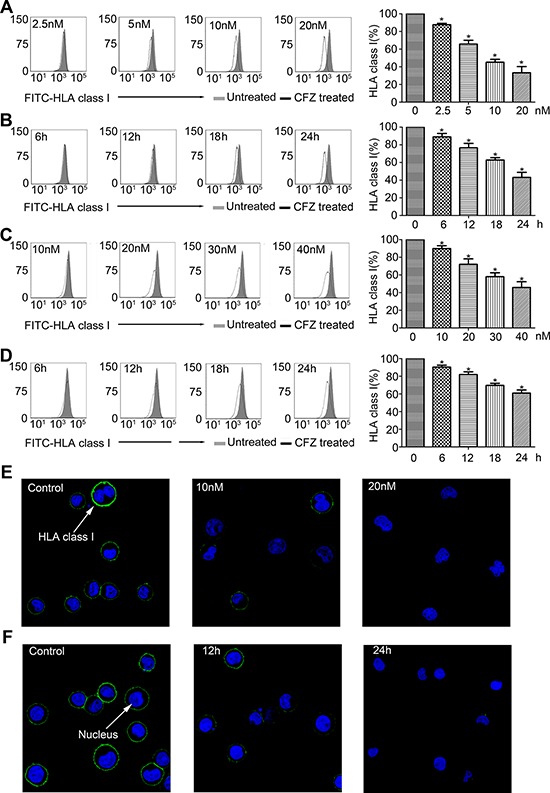
Figure 2. Down-regulation of HLA class I was in a dose- and time-dependent manner
A. H929 was treated with different doses of CFZ for 24 hours. B. H929 was treated with 10 nM CFZ for different durations. C. Primary MM cells were treated with different doses of CFZ for 24 hours. D. Primary MM cells were treated with 40 nM CFZ for different durations. E. and F. Immunofluorescence analysis was performed to confirm the consequence that down-regulation of HLA class I was in a dose- and time-dependent manner. *P < 0.05.
Figure 3
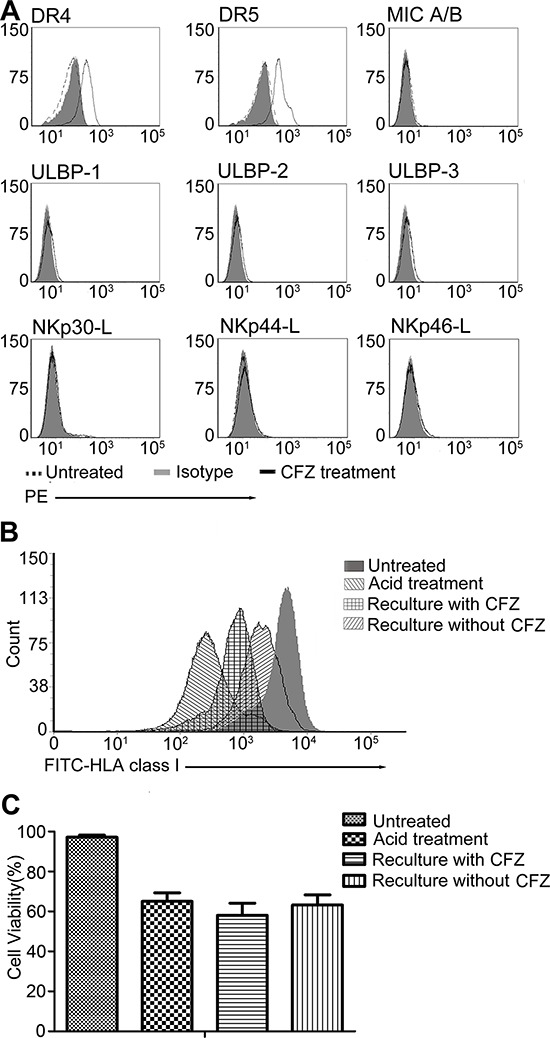
Figure 3. CFZ up-regulated DR4, DR5 and affected the re-expression of HLA class I on cell surface, but had no effect on ULBP 1–3, MIC A/B, NKp30-L, NKp44-L and NKp46-L
A. H929 was treated with 10 nM CFZ for 24 hours. Flow cytometer was used to detect the expression of DR4, DR5, ULBP1–3, MIC A/B, NKp30-L, NKp44-L and NKp46-L. MFI of DR4 and DR5 were increased after CFZ treatment (DR4: 195.3 ± 6.1 vs 44.1 ± 2.6 and DR5: 363.2 ± 9.2 vs 79.3 ± 3.8) B. Acid stripping was performed to remove the HLA class I on H929 cell surface as described in the Material and Methods, then cells were recultured with or without CFZ for 12 hours to investigate the re-expression of HLA class I. C. The survival of H929 after acid treatment was 65.1% ± 4.3, compared to the untreated group (97.1% ± 1.1). The viability of H929 was similar in the presence (58.6% ± 6.1) or absence (63.2% ± 5.1) of CFZ.
Figure 4
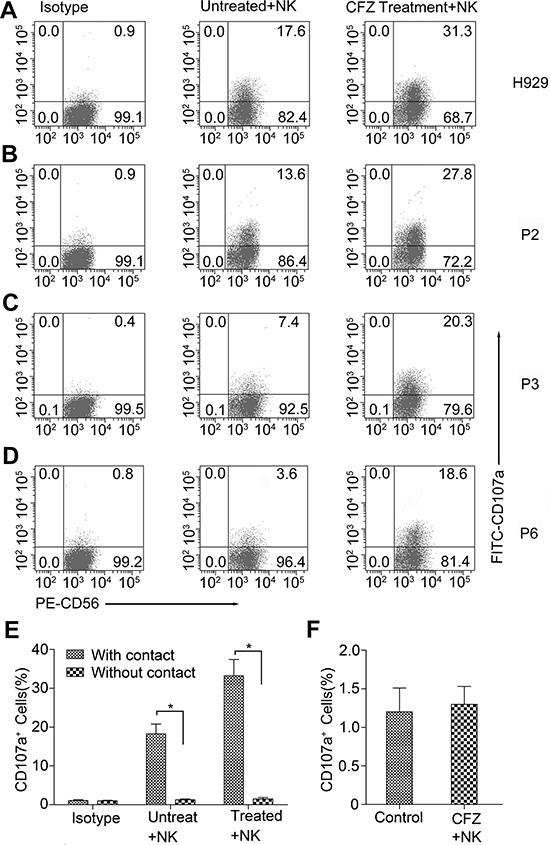
Figure 4. CFZ treatment enhanced the NK cell degranulation in MM cell lines and patients' MM cells
A–D. MM cells were cultured in the presence or absence of CFZ for 24 hours. We used 10 nM CFZ to treat MM cell line H929 and 20 to 40 nM CFZ to treat patients' MM cells. Then both the treated or untreated cells were cocultured with NK cells at an E/T ratio of 5:1 for 4 hours. FITC-conjugated CD107a was added at the beginning of the culture and monensin was added at the second hour of culture. After that cells were washed and stained with PE-conjugated CD56 for 30 minutes. Flow cytometer was used to analyze the expression of CD107a on NK cells. B-D represented three of the nine patients' MM cells. P represented Patient. *P < 0.05. E. CFZ treated or untreated H929 were cocultured with or without the contact of NK cells at an E/T ratio of 5:1 for 4 hours. F. NK cells were treated with CFZ for 4 hours to detect the expression of CD107a.
Figure 5
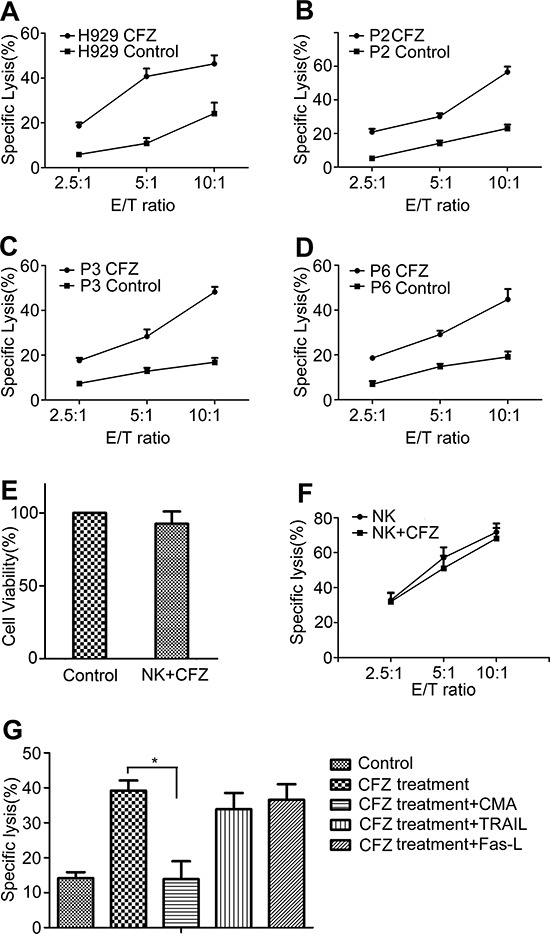
Figure 5. CFZ treatment enhanced NK cell-mediated lysis
A–D. H929 was treated with 10 nM CFZ for 24 hours. Patients' MM cells were exposed to 20 to 40 nM CFZ for 24 hours. After they were stained with 100 μCi 51Cr for 1 hour, cells were cocultured with NK cells at different E/T ratio for 4 hours. Specific lysis percentage was calculated as (experimental release − spontaneous release) / (maximal release − spontaneous release) × 100. B-D represented three of the nine patients' MM cells. P represented Patient. E. NK cells were cultured in the presence or absence of CFZ for 12 hours. Then cells were collected and stained with FITC-annexin V and PI. Flow cytometer was used to gate annexin V and PI double negative cells. Untreated NK cells were defined as the control group. F. NK cells were cultured in the presence or absence of CFZ for 12 hours. 51Cr release assay (mentioned above) was used to analysis the NK cell-mediated lysis. The NK cell-sensitive cell line K562 was used as the target cells. G. CMA (100 nM), anti–Fas-L (5 μg/ml), and anti-TRAIL mAb (2.5 μg/ml) were used to test the cytotoxic pathways used by NK cells at an E/T ratio of 5:1. *P < 0.05.
Figure 6
Figure 6. Enhancement of NK cell-mediated lysis was associated with down-regulation of HLA class I
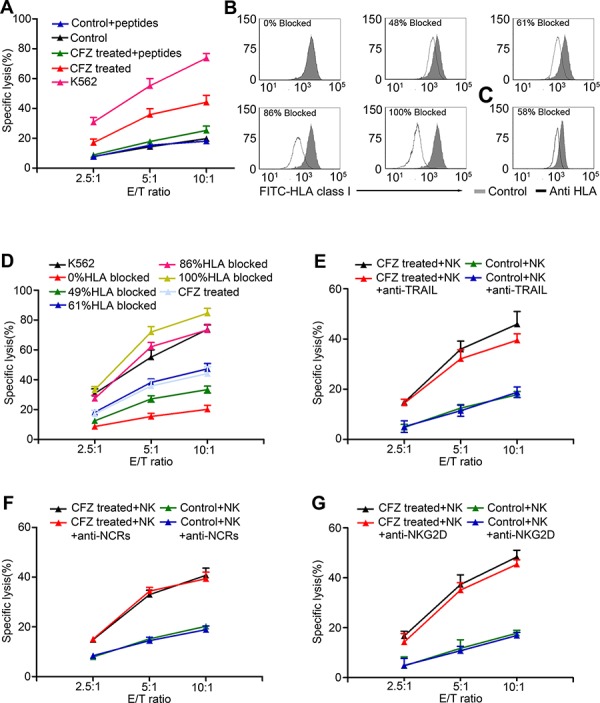
A. Exogenous binding peptides and Human β2M were added when H929 were treated by CFZ. 51Cr release assay was performed to analysis the NK cell-mediated lysis at different E/T ratio. B. Different concentrations of anti-HLA antibody were used to block the expression of HLA on H929 surface. C. 10 nM CFZ treatment for 24 hours caused 58% reduction in HLA class I expression. D. NK cell-mediated lysis was enhanced by the increasing percentage of HLA blocking. E. The enhancement of NK cell-mediated lysis was not mainly affected by the blocking of TRAIL on NK cells. F. The enhancement of NK cell-mediated lysis was not mainly affected by the blocking of NCRs on NK cells. G. The enhancement of NK cell-mediated lysis was not mainly affected by the blocking of NKG2D on NK cells. The E/T ratio were 2.5:1, 5:1, and 10:1.

References

    1. Pautasso C, Bringhen S, Cerrato C, Magarotto V, Palumbo A. The mechanism of action, pharmacokinetics, and clinical efficacy of carfilzomib for the treatment of multiple myeloma. Expert Opin Drug Metab Toxicol. 2013;9:1371–1379. - PubMed
    1. Kumar SK, Rajkumar SV, Dispenzieri A, Lacy MQ, Hayman SR, Buadi FK, Zeldenrust SR, Dingli D, Russell SJ, Lust JA, Greipp PR, Kyle RA, Gertz MA. Improved survival in multiple myeloma and the impact of novel therapies. Blood. 2008;111:2516–2520. - PMC - PubMed
    1. Abdi J, Chen G, Chang H. Drug resistance in multiple myeloma: latest findings and new concepts on molecular mechanisms. Oncotarget. 2013;4:2186–2207. - PMC - PubMed
    1. Vekemans MC, Michaux L, Van Den Neste E, Ferrant A. Long-term survival after allogeneic stem cell transplantation for advanced stage multiple myeloma. Br J Haematol. 2014;166:616–618. - PubMed
    1. Gahrton G, Iacobelli S, Bjorkstrand B, Hegenbart U, Gruber A, Greinix H, Volin L, Narni F, Carella AM, Beksac M, Bosi A, Milone G, Corradini P, et al. Autologous/reduced-intensity allogeneic stem cell transplantation vs autologous transplantation in multiple myeloma: long-term results of the EBMT-NMAM2000 study. Blood. 2013;121:5055–5063. - PubMed

Publication types

MeSH terms