. 2015 Sep 1:6:8101.
doi: 10.1038/ncomms9101.

Cas9-Assisted Targeting of CHromosome segments CATCH enables one-step targeted cloning of large gene clusters

Affiliations

Cas9-Assisted Targeting of CHromosome segments CATCH enables one-step targeted cloning of large gene clusters

Wenjun Jiang et al. Nat Commun. .

Abstract

The cloning of long DNA segments, especially those containing large gene clusters, is of particular importance to synthetic and chemical biology efforts for engineering organisms. While cloning has been a defining tool in molecular biology, the cloning of long genome segments has been challenging. Here we describe a technique that allows the targeted cloning of near-arbitrary, long bacterial genomic sequences of up to 100 kb to be accomplished in a single step. The target genome segment is excised from bacterial chromosomes in vitro by the RNA-guided Cas9 nuclease at two designated loci, and ligated to the cloning vector by Gibson assembly. This technique can be an effective molecular tool for the targeted cloning of large gene clusters that are often expensive to synthesize by gene synthesis or difficult to obtain directly by traditional PCR and restriction-enzyme-based methods.


Conflict of interest statement

T.F.Z., Y.E., C.L., W.J., X.Z. and T.G. have filed a provisional patent application related to this work.

Figures
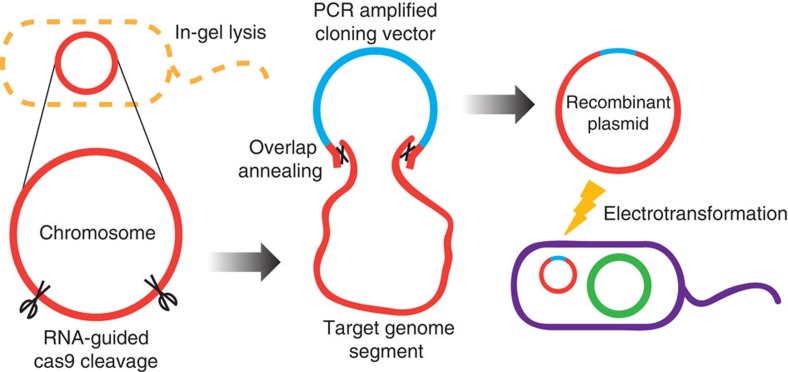
Figure 1
Figure 1. One-step large-gene-cluster cloning by CATCH.
After in-gel lysis of bacterial cells, the chromosomes are cleaved by RNA-guided Cas9 at the designated target sites. A cloning vector (length not to scale) that shares 30-bp terminal sequence overlaps (black cross) with the target DNA at both ends is ligated to the target segment in a Gibson assembly mix. The recombinant plasmid is then electrotransformed into a cloning host.
Figure 2
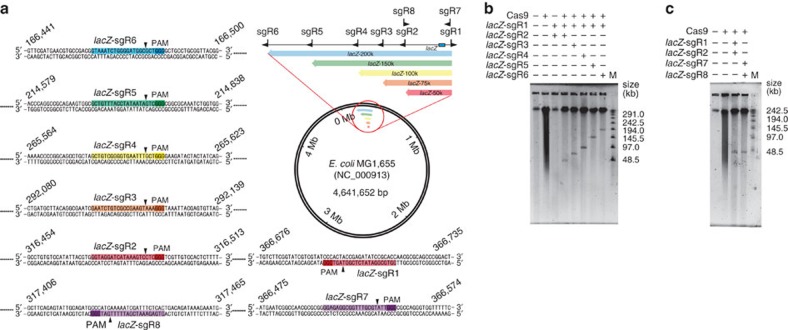
Figure 2. CATCH cleavage and cloning of long genomic sequences of various lengths.
(a) A total of six sgRNA pairs were designed to target genome segments of different lengths (50, 75, 100, 150 and 200 kb, respectively, including one pair targeting 50 kb but with the PAM sequences falling on the flanking sequences instead of the target genome segment) in the E. coli str. K-12 substr. MG1655 genome, all containing a lacZ gene. The genome location, target sequences, PAM sequences and cleavage sites are detailed and highlighted. (b) E. coli chromosomes in agarose gel plugs were digested by Cas9 with the corresponding sgRNA pairs and analysed using PFGE. (c) A 50-kb segment on the E. coli chromosomes was targeted by two sgRNA pairs of opposite orientations, and the cleavage products were analysed using PFGE. M, marker.
Figure 3
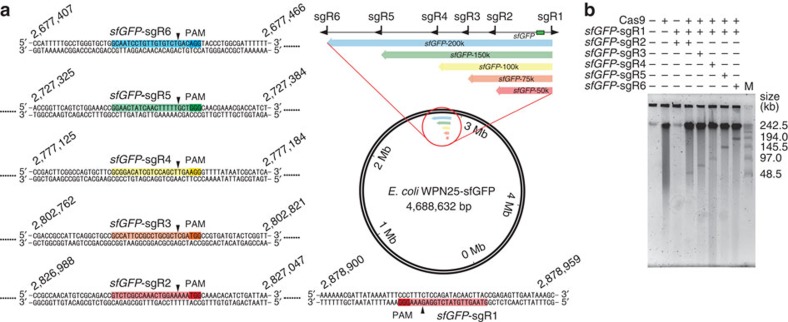
Figure 3. CATCH cleavage and cloning of long genomic sequences of various lengths from different genomic locations.
(a) A total of five sgRNA pairs were designed to target segments of different lengths (50, 75, 100, 150 and 200 kb, respectively) in the E. coli DH5a str. WPN25-sfGFP genome, all containing an sfGFP gene. The genome location, target sequences, PAM sequences and cleavage sites are detailed and highlighted. (b) E. coli chromosomes in agarose gel plugs were digested by Cas9 with the corresponding sgRNA pairs and analysed by PFGE. M, marker.
Figure 4
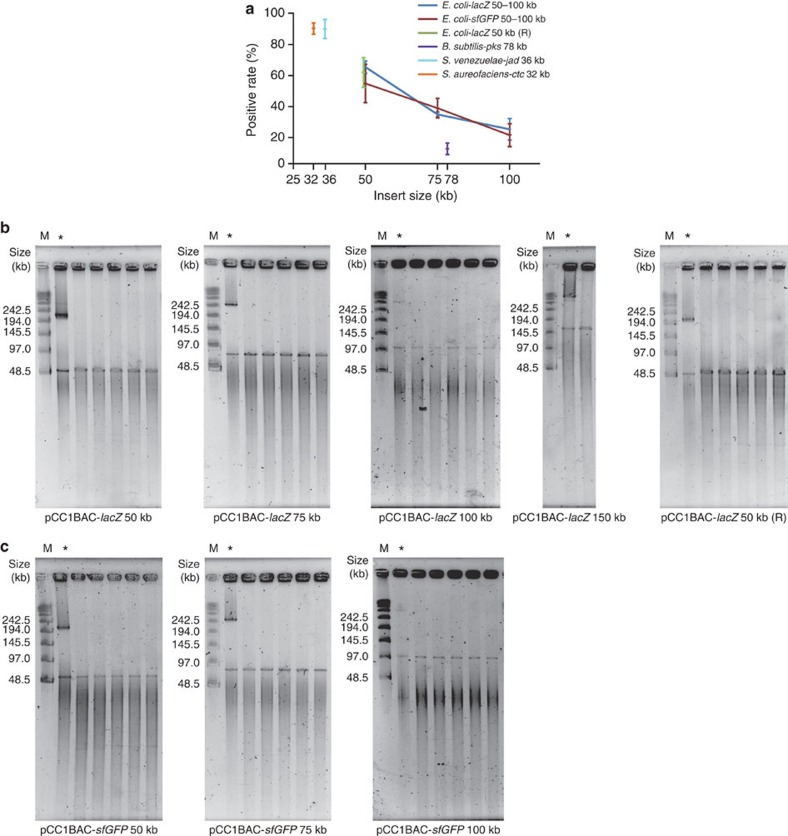
Figure 4. Efficiency of CATCH cloning of different genomic sequences.
(a) The positive rates of CATCH cloning with different insert sizes and target sequences from different genome locations, as well as from different bacteria are analysed (error bar: s.d.; n=3). E. coli-lacZ 50 kb (R) is the cloning result of a 50-kb genome segment targeted by lacZ-sgRNAs 7 and 8, with the PAM sequences falling on the flanking sequences instead of the target genome segment. (b) Plasmids carrying the target sequences of different lengths cloned from E. coli str. K-12 substr. MG1655 (ligated to an 8-kb BAC vector) were purified from the blue–white-screening- and PCR-positive clones, linearized and analysed by PFGE. (c) Plasmids carrying the target sequences of different lengths cloned from E. coli DH5a str. WPN25-sfGFP were purified, linearized and analysed by PFGE. M, marker; asterisk, λ-terminase-free control.
Figure 5
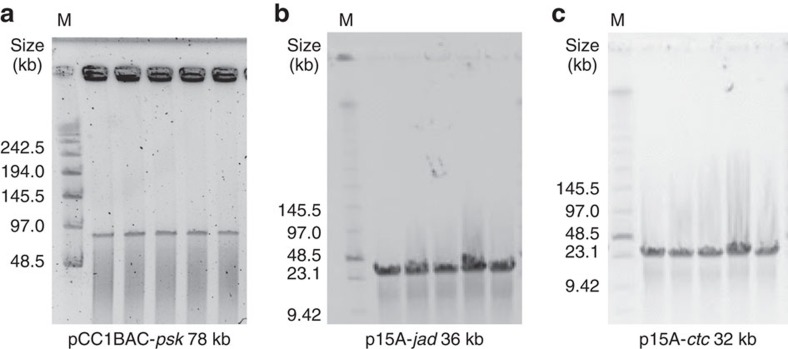
Figure 5. Cloning large gene clusters from different bacteria into different vectors.
Plasmids carrying the target large gene clusters cloned from B. subtilis (a), S. venezuelae (b) or S. aureofaciens (c), respectively (see Table 1 and Supplementary Table 2), were purified from the PCR-positive clones, linearized and analysed using PFGE. M, marker.

References

    1. Endy D. Foundations for engineering biology. Nature 438, 449–453 (2005). - PubMed
    1. Keasling J. D. Synthetic biology and the development of tools for metabolic engineering. Metab. Eng. 14, 189–195 (2012). - PubMed
    1. Cobb R. E. & Zhao H. Direct cloning of large genomic sequences. Nat. Biotechnol. 30, 405–406 (2012). - PMC - PubMed
    1. Gronenberg L. S., Marcheschi R. J. & Liao J. C. Next generation biofuel engineering in prokaryotes. Curr. Opin. Chem. Biol. 17, 462–471 (2013). - PMC - PubMed
    1. Pfeifer B. A., Admiraal S. J., Gramajo H., Cane D. E. & Khosla C. Biosynthesis of complex polyketides in a metabolically engineered strain of E. coli. Science 291, 1790–1792 (2001). - PubMed

Publication types

MeSH terms