Environmental exposure to pesticides and respiratory health
- PMID: 26324808
- PMCID: PMC9487696
- DOI: 10.1183/16000617.00006114
Environmental exposure to pesticides and respiratory health
Abstract
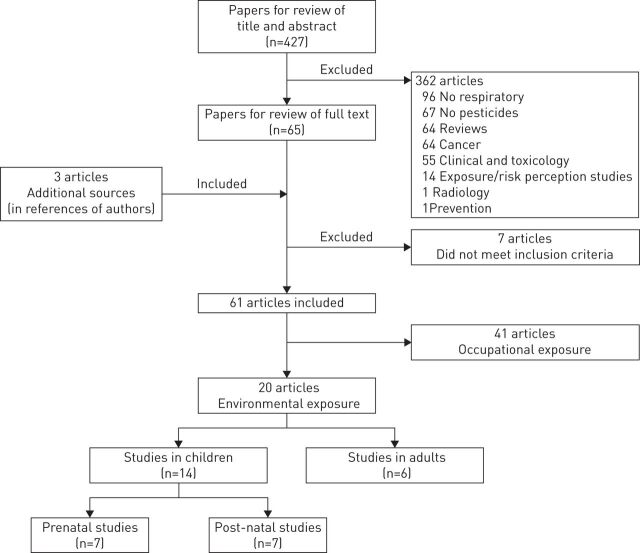
Respiratory effects of environmental exposure to pesticides are debated. Here we aimed to review epidemiological studies published up until 2013, using the PubMed database. 20 studies dealing with respiratory health and non-occupational pesticide exposure were identified, 14 carried out on children and six on adults. In four out of nine studies in children with biological measurements, mothers' dichlorodiphenyldichloroethylene (DDE) blood levels during pregnancy were associated with asthma and wheezing in young children. An association was also found between permethrin in indoor air during pregnancy and wheezing in children. A significant association between asthma and DDE measured in children's blood (aged 7-10 years) was observed in one study. However, in three studies, no association was found between asthma or respiratory infections in children and pesticide levels in breast milk and/or infant blood. Lastly, in three out of four studies where post-natal pesticide exposure of children was assessed by parental questionnaire an association with respiratory symptoms was found. Results of the fewer studies on pesticide environmental exposure and respiratory health of adults were much less conclusive: indeed, the associations observed were weak and often not significant. In conclusion, further studies are needed to confirm whether there is a respiratory risk associated with environmental exposure to pesticides.
Copyright ©ERS 2015.
Conflict of interest statement
Conflict of interest: Disclosures can be found alongside the online version of this article at
Figures
References
-
- American College of Chest Physicians. Global Reports. FIRS Report: Respiratory Diseases in the World www.chestnet.org/Guidelines-and-Resources/Health-Policy/FIRS-Report-Resp... Date last accessed: April 9, 2014.
-
- Dalphin JC. Pathologie respiratoire en milieu agricole [Respiratory pathology in the agricultural environment]. Rev Prat 1998; 48: 1313–1318. - PubMed
-
- Michielsen C, Zeamari S, Leusink-Muis A, et al. The environmental pollutant hexachlorobenzene causes eosinophilic and granulomatous inflammation and in vitro airways hyperreactivity in the Brown Norway rat. Arch Toxicol 2002; 76: 236–247. - PubMed
Publication types
MeSH terms
Substances
LinkOut - more resources
Full Text Sources
Medical