


Exploitation of the Medfly Gut Microbiota for the Enhancement of Sterile Insect Technique: Use of Enterobacter sp. in Larval Diet-Based Probiotic Applications
- PMID: 26325068
- PMCID: PMC4556606
- DOI: 10.1371/journal.pone.0136459
Exploitation of the Medfly Gut Microbiota for the Enhancement of Sterile Insect Technique: Use of Enterobacter sp. in Larval Diet-Based Probiotic Applications
Abstract
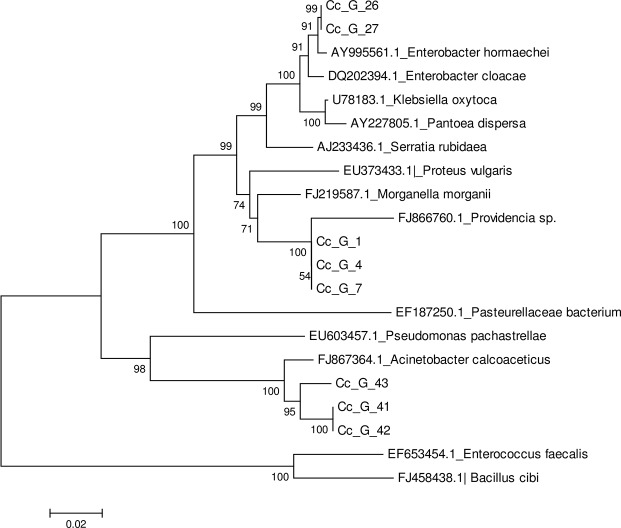
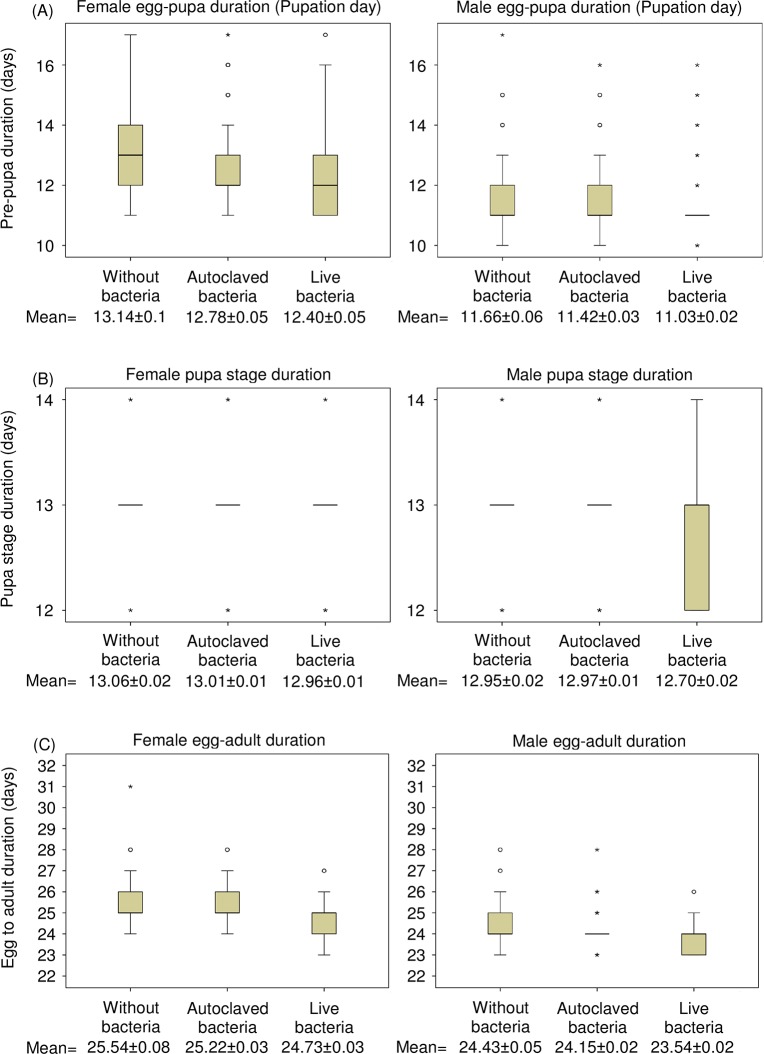
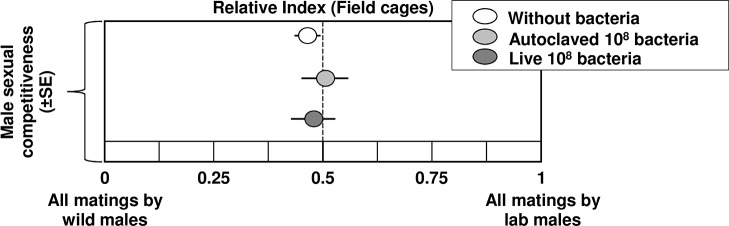
The Mediterranean fruit fly (medfly), Ceratitis capitata, is a pest of worldwide substantial economic importance, as well as a Tephritidae model for sterile insect technique (SIT) applications. The latter is partially due to the development and utilization of genetic sexing strains (GSS) for this species, such as the Vienna 8 strain, which is currently used in mass rearing facilities worldwide. Improving the performance of such a strain both in mass rearing facilities and in the field could significantly enhance the efficacy of SIT and reduce operational costs. Recent studies have suggested that the manipulation of gut symbionts can have a significant positive effect on the overall fitness of insect strains. We used culture-based approaches to isolate and characterize gut-associated bacterial species of the Vienna 8 strain under mass rearing conditions. We also exploited one of the isolated bacterial species, Enterobacter sp., as dietary supplement (probiotic) to the larval diet, and we assessed its effects on fitness parameters under the standard operating procedures used in SIT operational programs. Probiotic application of Enterobacter sp. resulted in improvement of both pupal and adult productivity, as well as reduced rearing duration, particularly for males, without affecting pupal weight, sex ratio, male mating competitiveness, flight ability and longevity under starvation.
Conflict of interest statement
Figures

References
-
- Buchner P, editor. Endosymbiosis of animals with plant microorganisms New York: John Wiley and Sons Ltd; 1965.
-
- Bourtzis K, Miller T, editors. Insect symbiosis Florida, USA: CRC Press, Taylor and Francis Group, LLC; 2003.
-
- Zchori-Fein E, Bourtzis K, editors. Manipulative tenants: Bacteria associated with arthropods CRC Press; 2011.
-
- Baumann P, Baumann L, Lai CY, Rouhbakhsh D, Moran NA, Clark MA. Genetics, physiology, and evolutionary relationships of the genus Buchnera: Intracellular symbionts of aphids. Annual Review of Microbiology. 1995;49: 55–94. - PubMed
Publication types
MeSH terms
LinkOut - more resources
Full Text Sources
Other Literature Sources
Molecular Biology Databases
Miscellaneous
