


Cancer related fatigue syndrome in neoplastic diseases
- PMID: 26327879
- PMCID: PMC4352912
- DOI: 10.5114/pm.2014.47989
Cancer related fatigue syndrome in neoplastic diseases
Abstract
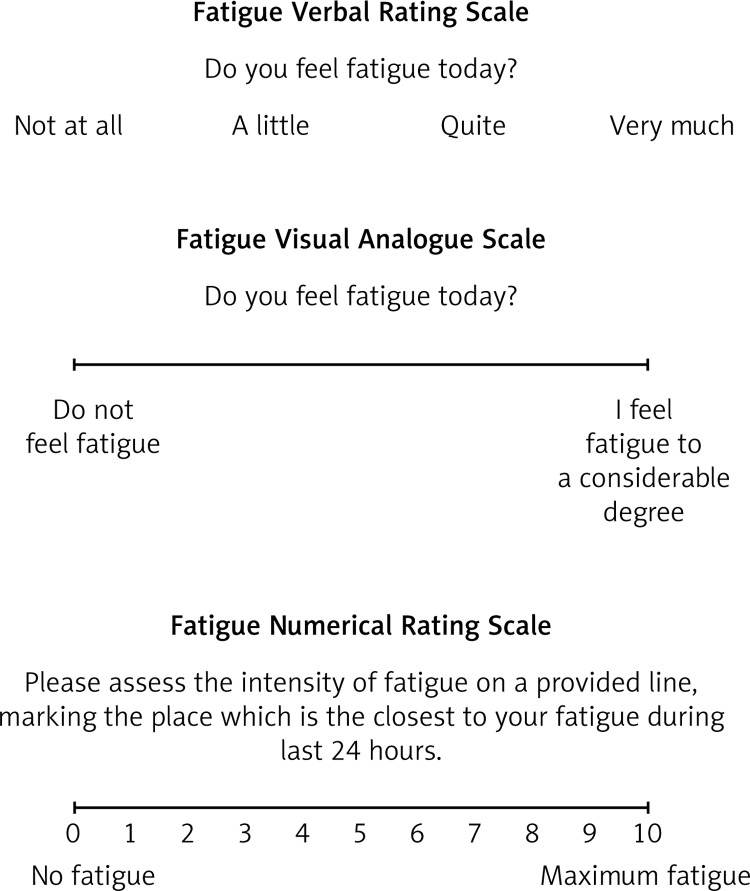
Fatigue is one of the most important factors which has a considerable influence on treatment and the life quality of oncological patients. The fatigue syndrome is often diagnosed during cancer treatment and this syndrome is not related to the physical effort. Cancer related fatigue is a patient's subjective, psychologically, physically and emotionally based feeling. It is disproportionate to patient's daily activity. The pathogenesis of this syndrome remains still unknown. However, on the basis of various questionnaires, it is possible to test the disease's complex nature. Cancer related fatigue causes deterioration of patient's life along with lower motivation to struggle with the disease. It is thought that the factor which increases the incidence of cancer related fatigue is a long-term use of drugs such as opioids, benzodiazepine, and medicines containing codeine, tranquilizers, anxiolytics and antidepressants. On the basis of the results, one can choose an appropriate treatment method for cancer related fatigue such as rehabilitation, psychotherapy or public assistance. A great number of patients consider excessive fatigue a typical concomitant symptom in neoplastic disease; therefore, they do not report it. It is of a paramount importance to make patients aware of the fact that cancer related fatigue is a serious disease which can be treated.
Keywords: cancer disease; fatigue; fatigue-related syndrome; oncology.
Figures
References
-
- Pyk M, Michno M, Nowak-Szymańska M. Zmęczenie, ból, lęk i depresja u chorych onkologicznych. Studia Medyczne Akademii Świętokrzyskiej. 2003;1:149–158.
-
- Zaucha M. Wpływ niedokrwistości na jakość życia chorych na nowotwory; Akademia Onkologii i Hematologii; Program edukacyjny pod patronatem PTHiT oraz PTOK.
-
- Centeno C, Angustias Portela Tejedor M, Carvajal A, et al. What is the best term in Spanish to express the concept of cancer-related fatigue? J Palliat Med. 2009;12:441–445. - PubMed
-
- Brola W, Ziomek M, Czernicki J. Zespół zmęczenia w przewlekłych chorobach neurologicznych. Neurol Neurochir Pol. 2007;41:340–349. - PubMed
Publication types
LinkOut - more resources
Full Text Sources
Other Literature Sources