


Quality of life assessment in women after cervicosacropexy with polypropylene mesh for pelvic organ prolapse: a preliminary study
- PMID: 26327900
- PMCID: PMC4498030
- DOI: 10.5114/pm.2015.52153
Quality of life assessment in women after cervicosacropexy with polypropylene mesh for pelvic organ prolapse: a preliminary study
Abstract
Aim of the study: Aim of the study was to assess the changes in the subjective perception of quality of life in patients who underwent abdominal cervicosacropexy for pelvic organ prolapse.
Material and methods: Forty patients with diagnosed pelvic organ prolapse (Pelvic Organ Prolapse - Quantification [POPQ] stage IV or IIIC) underwent abdominal supracervical hysterectomy and cervicosacropexy. The questionnaire concerning the quality of life was filled in before and 6 months after the surgery.
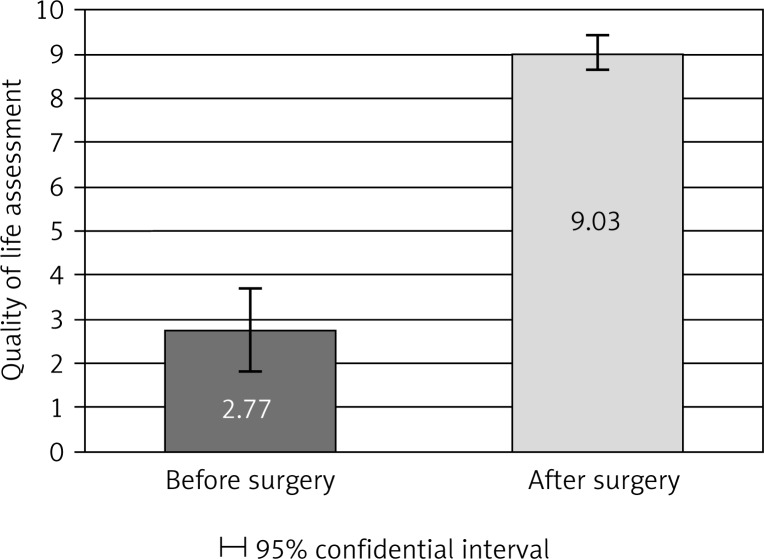
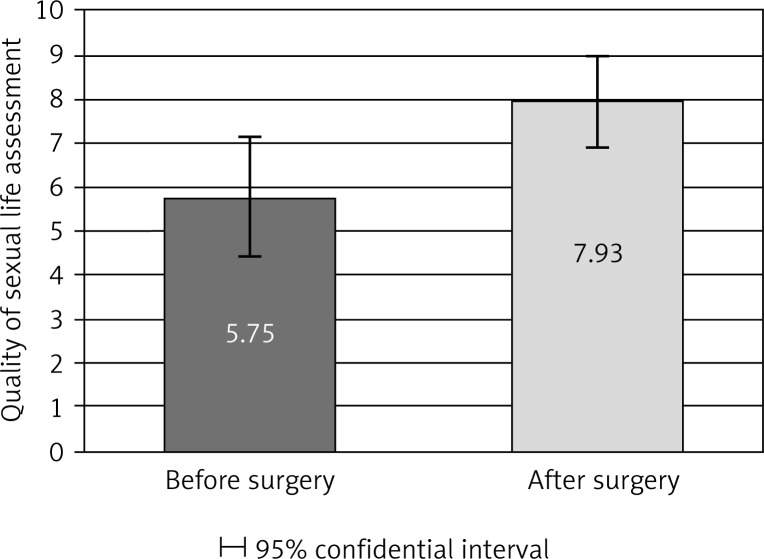
Results: In all patients, an accurate prolapse correction was achieved. In 42% of patients, stress urinary incontinence (SUI) was diagnosed prior to surgery, while after the surgery in 38.24% (p > 0.05). In 50% of women, symptoms of overactive bladder (OAB) occurred pre-surgery. These symptoms were reported by 17.65% of patients postoperatively (p < 0.05). Urinary retention was observed in 32.36% before and in 2.5% after the surgery (p < 0.05). The average score of the quality of sexual life was 5.75 (SD 2.52, 95% CI: 4.41-7.1) before and increased to 7.93 (SD 1.77, 95% CI: 6.9-8.95) after the procedure (p < 0.05). The mean score of the overall quality of life in relation to POP before and after the procedure was 2.77 (SD 2.39, 95% CI: 1.87-8.64) and 9.03 (SD 1.08, 95% CI: 8.66-9.43), respectively (p < 0.001).
Conclusions: These results show a highly significant improvement of the quality of life in patients who underwent abdominal cervicosacropexy for POP. The change in quality of their sexual life, reduced OAB and urinary retention rates, as well as improvement of the esthetic self-perception may have contributed to this positive effect.
Keywords: abdominal cervicosacropexy; pelvic organ prolapse; stress urinary incontinence.
Figures
References
-
- Rechberger T, Miotla P, Futyma K. Czynniki ryzyka defektów dna miednicy u kobiet zakwalifikowanych do operacji rekonstrukcyjnych – polskie badanie wieloośrodkowe. Ginekol Pol. 2010;81:821–827. - PubMed
-
- Rekomendacje Zespołu Ekspertów Polskiego Towarzystwa Ginekologicznego dotyczące zapobiegania śródporodowym urazom kanału rodnego oraz struktur dna miednicy. Ginekol Pol. 2011;82:390–394. - PubMed
-
- Bump RC, Mattiasson A, Bø K, et al. The standardization of terminology of female pelvic organ prolapse and pelvic floor dysfunction. Am J Obstet Gynecol. 1996;175:10–17. - PubMed
-
- MacLennan AH, Taylor AW, Wilson DH, Wilson D. The prevalence of pelvic floor disorders and their relationship to gender, age, parity and mode of delivery. BJOG. 2000;107:1460–1470. - PubMed
-
- Ellerkman RM, Cundiff GW, Melick CF, et al. Correlation of symptoms with location and severity of pelvic organ prolapsed. Am J Obstet Gynecol. 2001;185:1332–1339. - PubMed
LinkOut - more resources
Full Text Sources
Other Literature Sources
Research Materials
