


Immune Checkpoint Blockade: A New Paradigm in Treating Advanced Cancer
- PMID: 26328216
- PMCID: PMC4530113
- DOI: 10.6004/jadpro.2014.5.6.3
Immune Checkpoint Blockade: A New Paradigm in Treating Advanced Cancer
Abstract
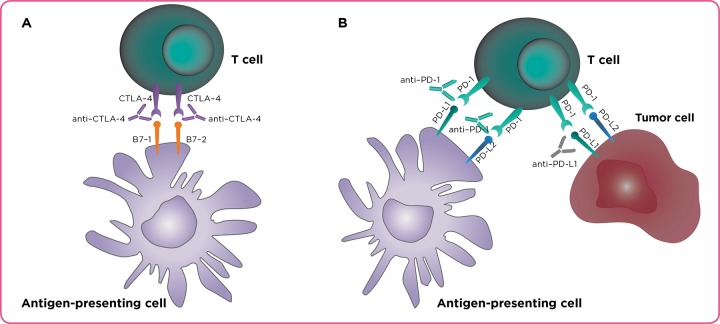
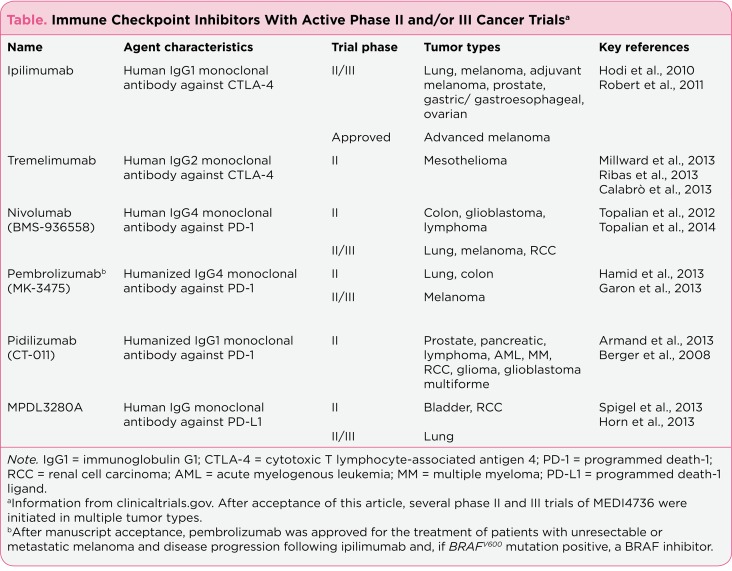
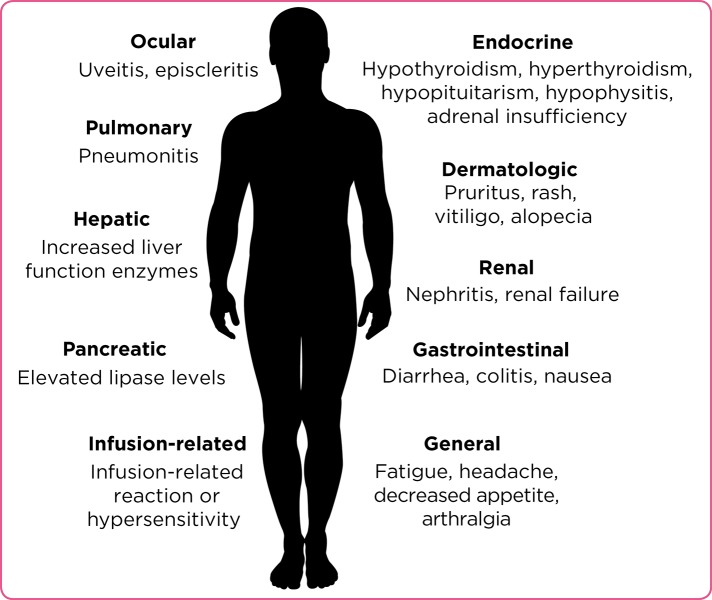
The approval of the immune checkpoint inhibitor ipilimumab for the treatment of advanced melanoma in 2011 spearheaded the development of other anticancer therapies with immune mechanisms of action, including other immune checkpoint inhibitors. Instead of acting directly on the tumor, these therapies work to "remove the brakes" on the immune system to restore antitumor immune responses. In addition to ipilimumab, which targets the cytotoxic T lymphocyte-associated antigen 4 pathway, several new drugs that target the programmed death-1 pathway are in phase III trials across tumor types, including melanoma, lung cancer, and renal cell carcinoma. In keeping with their unique mechanism of action, these immune checkpoint inhibitors have shown both conventional and unconventional response patterns, including initial apparent tumor progression followed by regression, and adverse events (AEs) that are likely immune-related. Advanced practitioners (APs) treating patients receiving immuno-oncology agents are in a key position to educate patients about expectations with these therapies and to screen patients for AEs and initiate appropriate and timely interventions. This review summarizes current immune checkpoint inhibitor data and provides patient management strategies for APs to optimize patient outcomes with these novel therapies.
Figures
References
-
- Antonia S. J., Grosso J. F., Horak C. E ., D. M. Cardona, Simon J. S., Gupta A. K., …Cogswell J. Association of tumor PD-L1 expression and immune biomarkers with clinical activity in patients with non-small cell lung cancer (NSCLC) treated with nivolumab (Anti-PD-1; BMS-936558; ONO-4538) [Abstract P2.11-035] International Association for the Study of Lung Cancer 15th World Conference on Lung Cancer. 2013
-
- Armand Philippe, Nagler Arnon, Weller Edie A, Devine Steven M, Avigan David E, Chen Yi-Bin, Kaminski Mark S, Holland H Kent, Winter Jane N, Mason James R, Fay Joseph W, Rizzieri David A, Hosing Chitra M, Ball Edward D, Uberti Joseph P, Lazarus Hillard M, Mapara Markus Y, Gregory Stephanie A, Timmerman John M, Andorsky David, Or Reuven, Waller Edmund K, Rotem-Yehudar Rinat, Gordon Leo I. Disabling immune tolerance by programmed death-1 blockade with pidilizumab after autologous hematopoietic stem-cell transplantation for diffuse large B-cell lymphoma: results of an international phase II trial. Journal of clinical oncology : official journal of the American Society of Clinical Oncology. 2013;31:4199–4206. - PMC - PubMed
-
- Berger Raanan, Rotem-Yehudar Rinat, Slama Gideon, Landes Shimon, Kneller Abraham, Leiba Merav, Koren-Michowitz Maya, Shimoni Avichai, Nagler Arnon. Phase I safety and pharmacokinetic study of CT-011, a humanized antibody interacting with PD-1, in patients with advanced hematologic malignancies. Clinical cancer research : an official journal of the American Association for Cancer Research. 2008;14:3044–3051. - PubMed
-
- Brahmer J. R., Horn L., Antonia S. J., Spigel D. R., Gandhi L., Sequist L. V., Gettinger S. N. Nivolumab (anti-PD-1; BMS-936558; ONO-4538) in patients with non-small cell lung cancer (NSCLC): Overall survival and long-term safety in a phase 1 trial [Abstract MO18.03] International Association for the Study of Lung Cancer 15th World Conference on Lung Cancer. 2013
Publication types
LinkOut - more resources
Full Text Sources
Other Literature Sources
Miscellaneous