


Protein intake in early childhood and cardiometabolic health at school age: the Generation R Study
- PMID: 26329684
- PMCID: PMC5009172
- DOI: 10.1007/s00394-015-1026-7
Protein intake in early childhood and cardiometabolic health at school age: the Generation R Study
Abstract
Purpose: High protein intake in infancy has been linked to obesity. We aimed to examine the associations of protein intake in early childhood with cardiovascular and metabolic outcomes at school age.
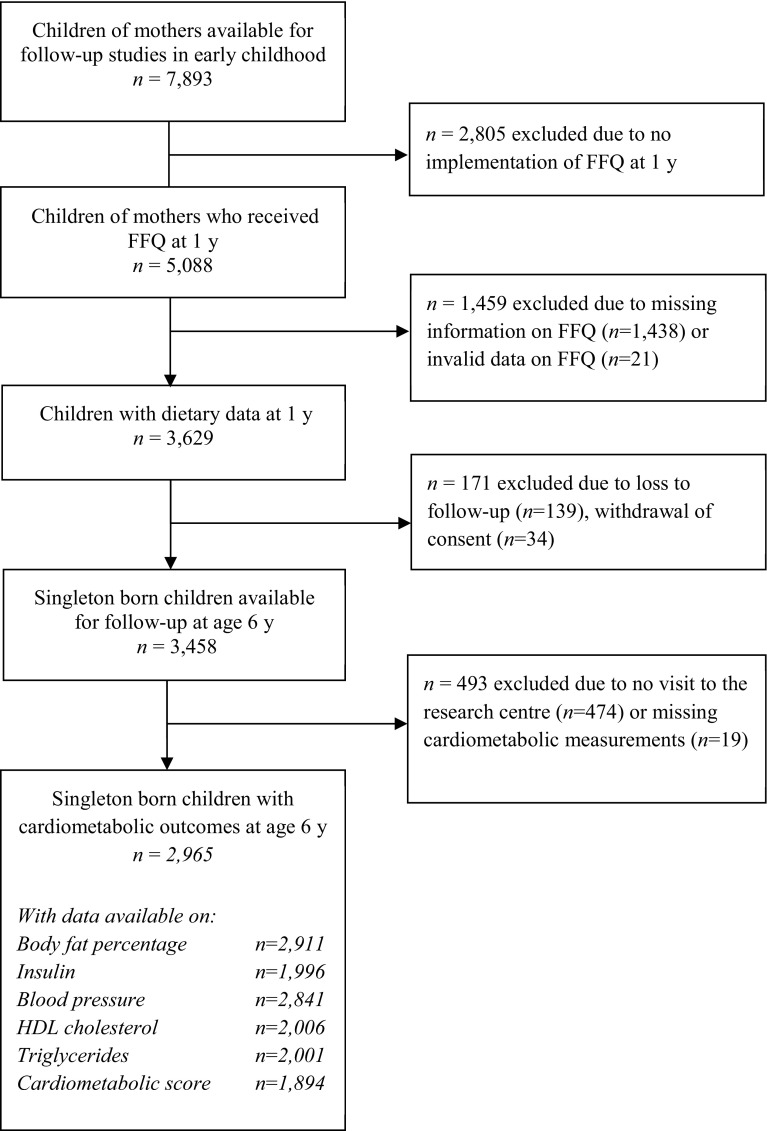
Methods: This study was performed in 2965 children participating in a population-based prospective cohort study. Protein intake at 1 year was assessed with a food frequency questionnaire and was adjusted for energy intake. At the children's age of 6 years, we measured their body fat percentage (BF%), blood pressure (BP), and insulin, HDL cholesterol, and triglyceride serum levels. These measures were incorporated into a cardiometabolic risk factor score, using age- and sex-specific SD scores.
Results: In covariate-adjusted models, higher protein intake was associated with a higher BF%, lower diastolic BP, and lower triglyceride levels. We observed a significant interaction of protein intake with child sex on metabolic outcomes. Stratified analyses showed that protein intake was positively associated with BF% [0.07 SD (95 % CI 0.02; 0.13) per 10 g/day] and insulin levels in girls, but not in boys. In boys, but not in girls, higher protein intake was associated with lower triglyceride levels [-0.12 SD (95 % CI -0.20; -0.04) per 10 g/day] and a lower cardiometabolic risk factor score. Protein intake was not consistently associated with systolic BP or HDL cholesterol levels.
Conclusion: Protein intake in early childhood was associated with a higher BF% and higher insulin levels at 6 years in girls and with lower triglyceride levels in boys. Further studies are needed to explore these sex differences and to investigate whether the observed changes persist into adulthood.
Keywords: Blood pressure; Body fat; Children; Dietary protein; Epidemiology; Insulin.
Conflict of interest statement
The authors have no conflicts of interest relevant to this article to disclose. Ethical standard The study was approved by the Medical Ethics Committee of Erasmus Medical Center, Rotterdam, and all parents provided written informed consent.
Figures
References
-
- Felix JF, Voortman T, van den Hooven EH, Sajjad A, Leermakers ET, Tharner A, Kiefte-de Jong JC, Duijts L, Verhulst FC, de Jongste JC, Tiemeier H, Hofman A, Rivadeneira F, Moll HA, Raat H, Jaddoe VW, Franco OH. Health in children: a conceptual framework for use in healthy ageing research. Maturitas. 2014;77(1):47–51. doi: 10.1016/j.maturitas.2013.09.011. - DOI - PubMed
MeSH terms
Substances
LinkOut - more resources
Full Text Sources
Other Literature Sources
Medical
Miscellaneous
