Clonidine as an adjuvant to ropivacaine-induced supraclavicular brachial plexus block for upper limb surgeries
- PMID: 26330717
- PMCID: PMC4541185
- DOI: 10.4103/0970-9185.161674
Clonidine as an adjuvant to ropivacaine-induced supraclavicular brachial plexus block for upper limb surgeries
Abstract
Background and aims: Ropivacaine is a new amide, long acting, pure S-enantiomer, local anesthetic, with differential blocking effect. The addition of clonidine to local anesthetic improves the quality of peripheral nerve blocks. This study was conducted to evaluate the effect of clonidine on characteristics of ropivacaine-induced supraclavicular brachial plexus block.
Material and methods: A total of 60 adult patients were randomly recruited to two groups of 30 each: Group I: 30 ml 0.75% ropivacaine + 1 ml normal saline. Group II: 30 ml 0.75% ropivacaine + 1 mcg/kg clonidine diluted to 1 ml with normal saline.
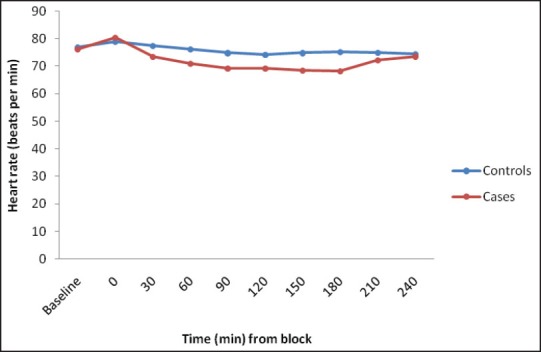
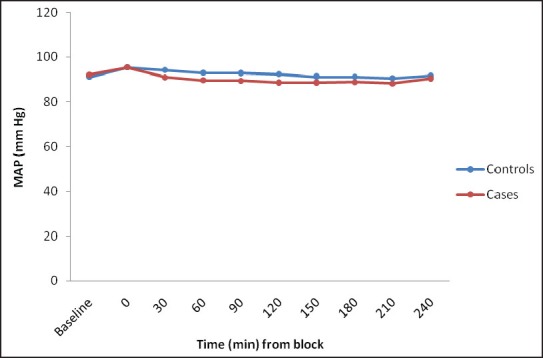
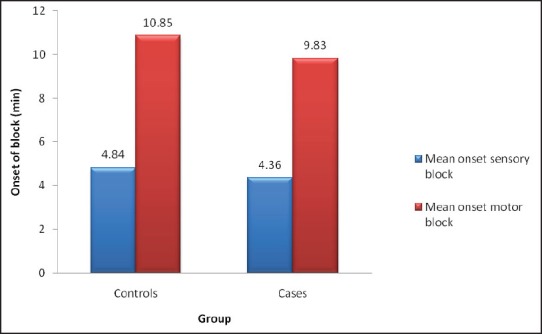
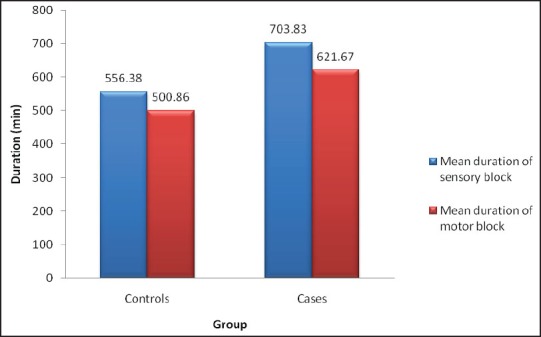
Results: The onset of sensorimotor block was earlier in Group II (4.36 ± 0.81 min for sensory block and 9.83 ± 1.12 min for motor block) than in Group I (4.84 ± 0.65 min for sensory block and 10.85 ± 0.79 min for motor block). The duration of both sensory and motor block were significantly prolonged by clonidine (P < 0.001). The duration of analgesia was also prolonged in patients receiving clonidine (613.10 ± 51.797 min vs. 878.33 ± 89.955 min). Although incidence of hypotension and bradycardia was higher in Group II when compared to Group I, it was not clinically significant.
Conclusions: Ropivacaine 0.75% is well-tolerated and provides effective surgical anesthesia as well as relief of postoperative pain. Clonidine as an adjuvant to ropivacaine significantly enhances the quality of supraclavicular brachial plexus block by faster onset, prolonged duration of sensory and motor block and improved postoperative analgesia, without associated adverse effects at the dose used.
Keywords: Clonidine; ropivacine; supraclavicular brachial plexus block.
Conflict of interest statement
Figures
References
-
- Murphy Damien B, McCartney Colin JL, Chan Vincent WS. Novel analgesic adjuvants for brachial plexus block: A systemic review. Anesth Analg. 2000;90:1122–8. - PubMed
-
- Akerman B, Hellberg IB, Trossvik C. Primary evaluation of the local anaesthetic properties of the amino amide agent ropivacaine (LEA 103) Acta Anaesthesiol Scand. 1988;32:571–8. - PubMed
-
- Gaumann D, Forster A, Griessen M, Habre W, Poinsot O, Della Santa D. Comparison between clonidine and epinephrine admixture to lidocaine in brachial plexus block. Anesth Analg. 1992;75:69–74. - PubMed
-
- Gaumann DM, Brunet PC, Jirounek P. Clonidine enhances the effects of lidocaine on C-fiber action potential. Anesth Analg. 1992;74:719–25. - PubMed
-
- Khasar SG, Green PG, Chou B, Levine JD. Peripheral nociceptive effects of alpha 2-adrenergic receptor agonists in the rat. Neuroscience. 1995;66:427–32. - PubMed
LinkOut - more resources
Full Text Sources
Other Literature Sources