


Effects of short-term antioxidant supplementation on oxidative stress and exercise performance in the heat and the cold
- PMID: 26330899
- PMCID: PMC4550212
Effects of short-term antioxidant supplementation on oxidative stress and exercise performance in the heat and the cold
Abstract
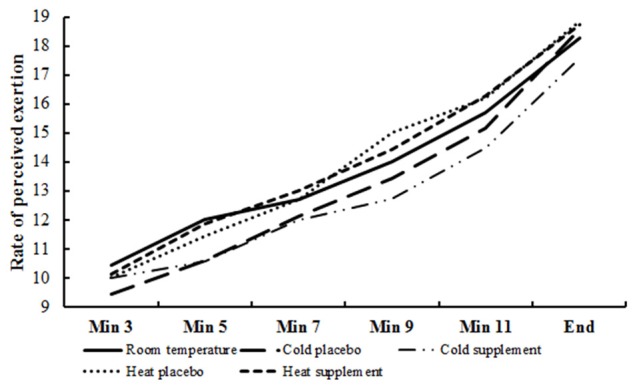
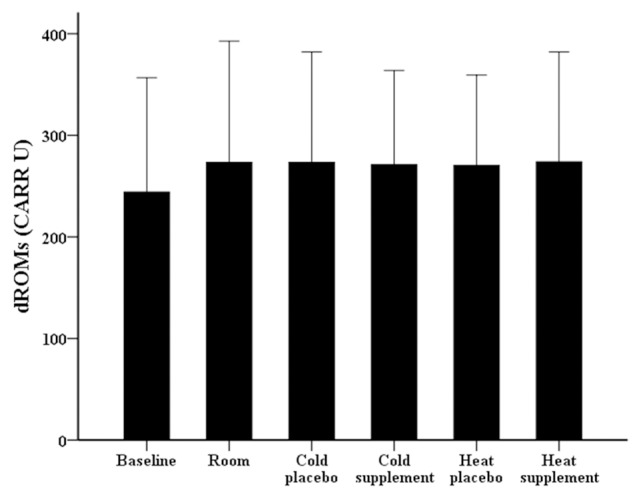
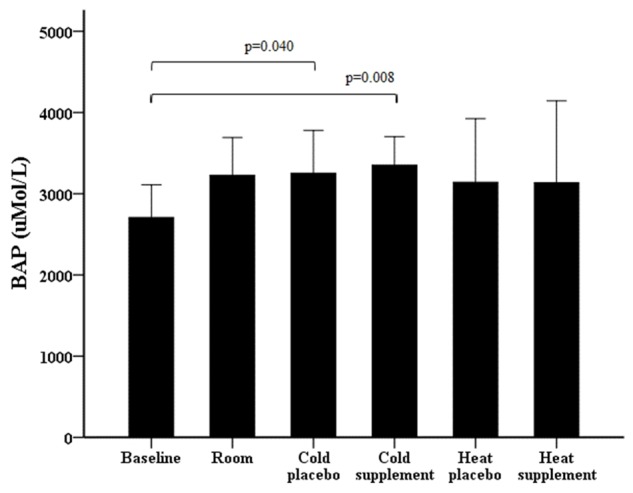
The effects of short-term as well as long-term antioxidant supplementation on exercise performance in the heat or the cold are unknown. Based on our recent studies we hypothesized that short-term supplementation with alpha-ketoglutaric acid (α-KG) and 5-hydroxymethylfurfural (5-HMF) would decrease oxidative stress but without significant impairment of maximal exercise performance in the heat or the cold. During a 5-week period young and welltrained participants performed 5 incremental treadmill tests to exhaustion under different temperature conditions (normal: 20°C, cold: +7°C, heat: +33°C) and with different nutritional supplements (placebo or α-KG and 5-HMF) prior to the tests applying a randomized cross over design. The first test was performed under normal temperature, the second and fourth under cold and the third and fifth test under heat conditions. Reactive oxygen metabolites and the biological antioxidant activity in serum were determined (Free Carpe Diem, Diacron International) before the first and after each exercise test. We demonstrated that reactive oxygen metabolites and maximal exercise performance remained unchanged in the cold as well in the heat with and without short-term antioxidant supplementation. Thus, short bouts of intense exercise in the heat or the cold seem not to produce significant oxidative stress in well-trained subjects and therefore pre-treatment with antioxidants may not have beneficial effects. However, future studies will focus on potentially favorable effects in sedentary or diseased subjects and/or on effects of more prolonged antioxidant supplementation when performing endurance exercise for a long duration under extreme temperature conditions.
Keywords: Antioxidants; biomarkers; cold; exercise performance; heat; oxidative stress.
Figures
References
-
- Aruoma OI. Free radicals and antioxidant strategies in sports. J Nutr Biochem. 1994;5:370–381.
-
- Balon TW, Nadler JL. Nitric oxide release is present from incubated skeletal muscle preparations. J Appl Physiol. 1994;77:2519–2521. - PubMed
-
- Martarelli D, Cocchioni M, Scuri S, Spataro A, Pompei P. Cold exposure increases exercise-induced oxidative stress. J Sports Med Phys Fitness. 2011;51:299–304. - PubMed
-
- McAnulty SR, McAnulty L, Pascoe DD, Gropper SS, Keith RE, Morrow JD, Gladden LB. Hyperthermia increases exercise-induced oxidative stress. Int J Sports Med. 2005;26:188–192. - PubMed
-
- Miller LE, McGinnis GR, Kliszczewicz B, Slivka D, Hailes W, Cuddy J, Dumke C, Ruby B, Quindry JC. Blood oxidative-stress markers during a high-altitude trek. Int J Sport Nutr Exerc Metab. 2013;23:65–72. - PubMed
LinkOut - more resources
Full Text Sources