Analysis of surface EMG activation in hand percussion playing depending on the grasping type and the tempo
- PMID: 26331139
- PMCID: PMC4548681
- DOI: 10.12965/jer.150216
Analysis of surface EMG activation in hand percussion playing depending on the grasping type and the tempo
Abstract
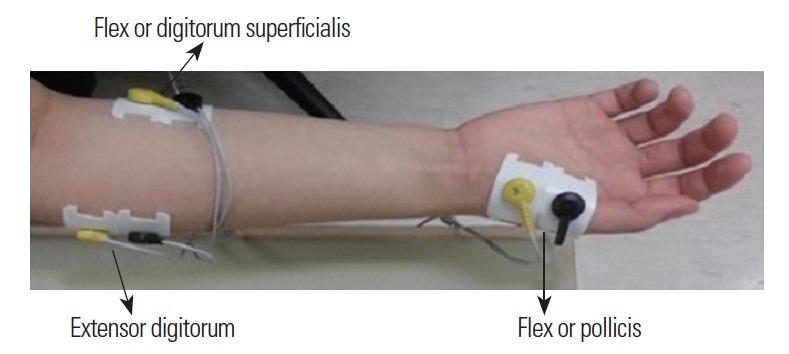
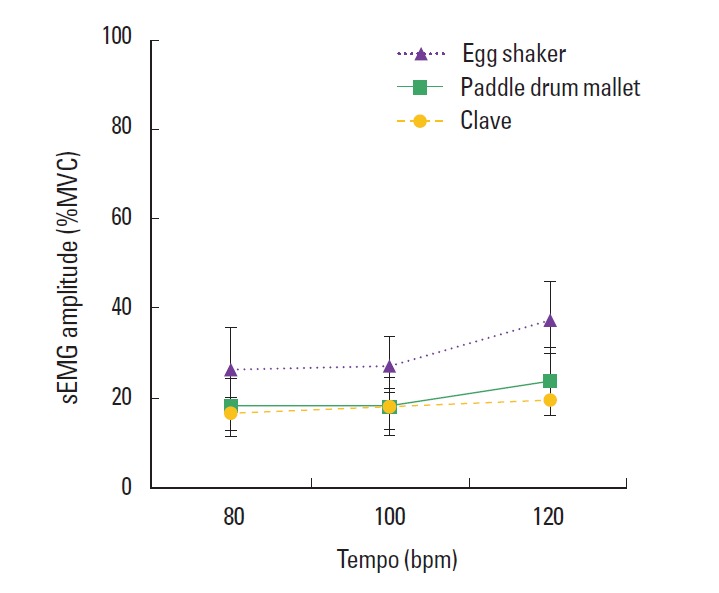
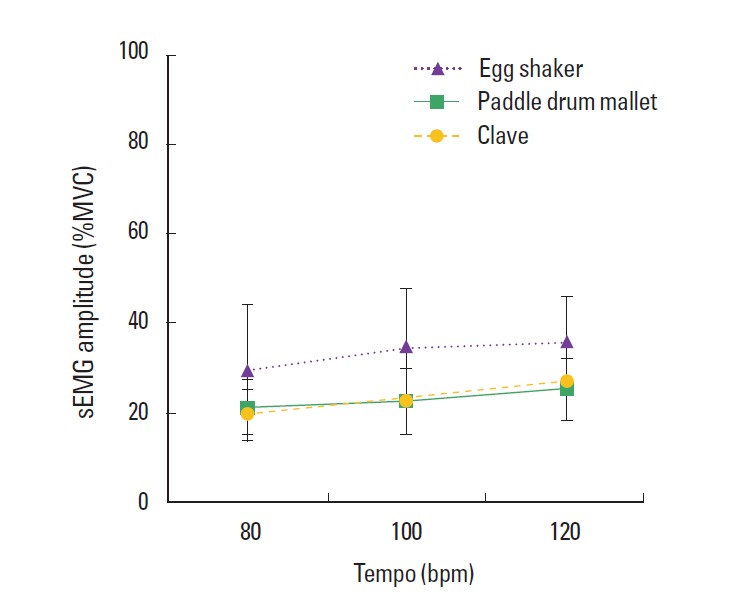
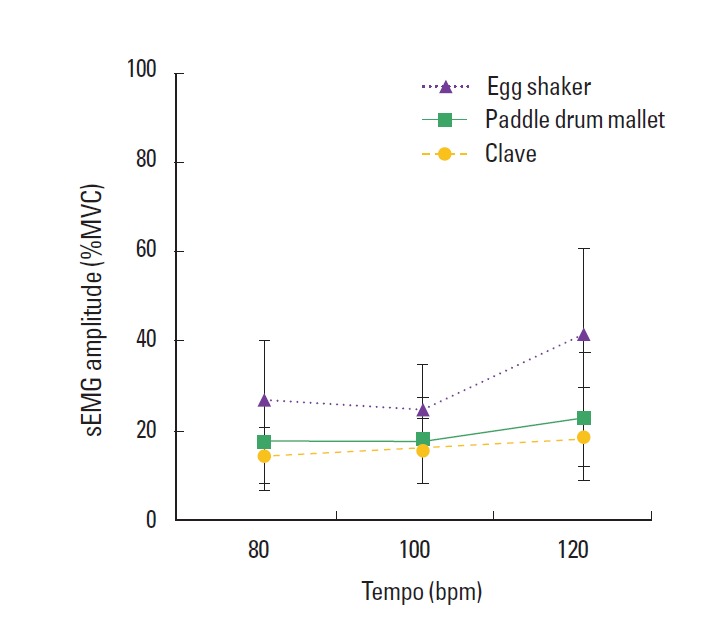
Although instrument playing-based training has been repeatedly reported to improve functional hand movements including grasping, the attempts to present quantitative information on physiological mechanism of grasping have been relatively insufficient to determine the type and the intensity of the exercises involved. This study aimed to examine the muscle activation during hand percussion playing depending on the grasping type and the playing tempo. A total of twelve healthy older adults with a mean age of 71.5 years participated in this study. Surface electrodes were placed on three grasping-related muscles: Flexor digitorum superficialis, extensor digitorum, and flexor pollicis brevis. Participants were instructed to play with the egg shaker, paddle drum mallet and clave involving different types of grasp at three different tempi (i.e., 80, 100, and 120 bpm) and sEMG data were collected during each playing. Significantly greater muscle activation was generated with the small sphere type of egg shaker, compared to the handle type of paddle drum mallet and the small cylinder type of clave. Playing at faster tempo also elicited significantly greater muscle activation than at slower tempo. With regard to the rise time of muscle activation, while tempo significantly affected the rise time, the time to peak muscle did not significantly change depending on the grasping type. This study confirmed that grasping pattern and the tempo of movement significantly influence the muscular activation of grasping involved in instrument playing. Based on these results, clinical implication for instrument selection and structured instrument playing would be suggested.
Keywords: Electromyography; Grasping; Instrument playing; Muscular contraction.
Figures
References
-
- Altenmüller E, Marco-Pallares J, Münte T, Schneider S. Neural reorganization underlies improvement in stroke-induced motor dysfunction by music-supported therapy. Annals N Y Acad Sci. 2009;1169(1):395–405. - PubMed
-
- Brochier T, Spinks RL, Umilta MA, Lemon RN. Patterns of muscle activity underlying object-specific grasp by the macaque monkey. J Neurophysiol. 2004;92:1770–1782. - PubMed
-
- Duque J, Masset D, Malchaire J. Evaluation of handgrip force from EMG measurements. Appl Ergon. 1995;26(1):61–66. - PubMed
-
- Fujii S, Kudo K, Shinya M, Ohtsuki T, Oda S. Wrist muscle activity during rapid unimanual tapping with a drumstick in drummers and nondrummers. Motor Control. 2009;13(3):237–250. - PubMed
LinkOut - more resources
Full Text Sources
Other Literature Sources