A Polymorphism in the Chitotriosidase Gene Associated with Risk of Mycetoma Due to Madurella mycetomatis Mycetoma--A Retrospective Study
- PMID: 26332238
- PMCID: PMC4558086
- DOI: 10.1371/journal.pntd.0004061
A Polymorphism in the Chitotriosidase Gene Associated with Risk of Mycetoma Due to Madurella mycetomatis Mycetoma--A Retrospective Study
Abstract
Background: Madurella mycetomatis is the most prevalent causative agent of eumycetoma in Sudan, an infection characterized by the formation of grains. Many patients are exposed to the causative agent, however only a small number develop infection. M. mycetomatis contains chitin in its cell wall, which can trigger the human immune system. Polymorphisms in the genes encoding for the chitin-degrading enzymes chitotriosidase and AMCase were described, resulting in altered chitinase activity. We investigated the association between 4 of these polymorphisms and the incidence of M. mycetomatis mycetoma in a Sudanese population.
Methodology: Polymorphisms studied in 112 eumycetoma patients and 103 matched controls included a 24-bp insertion in the chitotriosidase gene (rs3831317), resulting in impaired chitinase activity and single nucleotide polymorphism (SNP) in the AMCase gene (rs61756687), resulting in decreased AMCase activity. Also, a SNP (rs41282492) and a 10-bp insertion in the 5'UTR region of the AMCase gene (rs143789088) were studied, both resulting in increased AMCase activity. DNA was isolated from blood and genotypes were determined using PCR-RFLP.
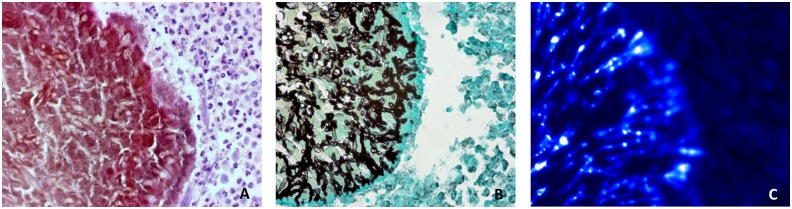
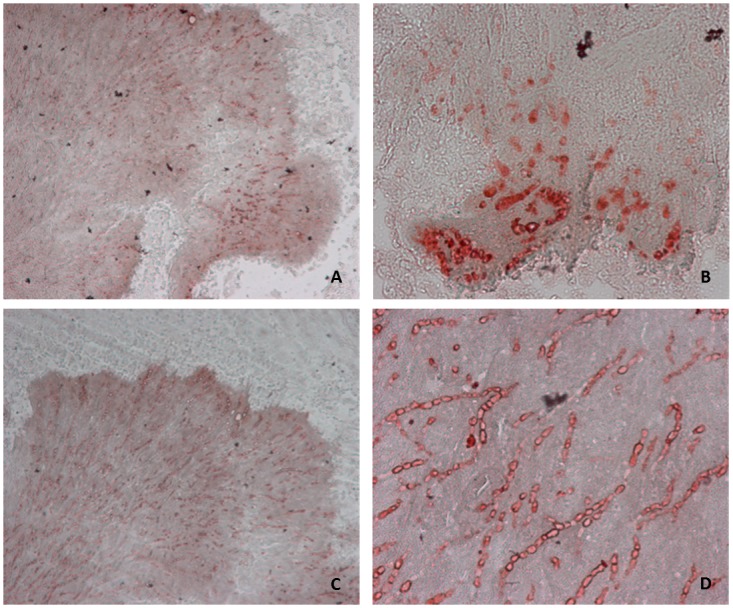
Principal findings: Histological staining proved the presence of chitin in the fungal grain. The polymorphism resulting in decreased chitotriosidase activity was associated with increased odds of eumycetoma (odds ratio 2.9; p = 0.004). No association was found for the polymorphisms in the genes for AMCase (all p>0.05).
Conclusion: Decreased chitotriosidase activity was associated with increased risk of M. mycetomatis mycetoma.
Conflict of interest statement
The authors have declared that no competing interests exist.
Figures
References
-
- Verwer PE, Ten Kate MT, Falcone FH, Morroll S, Verbrugh HA, Bakker-Woudenberg IA, et al. Evidence Supporting a Role for Mammalian Chitinases in Efficacy of Caspofungin against Experimental Aspergillosis in Immunocompromised Rats. PloS one. 2013;8(10):e75848 10.1371/journal.pone.0075848 - DOI - PMC - PubMed
-
- van de Sande WW, Fahal A, Verbrugh H, van Belkum A. Polymorphisms in genes involved in innate immunity predispose toward mycetoma susceptibility. Journal of immunology. 2007. September 1;179(5):3065–74. - PubMed
Publication types
MeSH terms
Substances
LinkOut - more resources
Full Text Sources
Other Literature Sources