


Prevalence of Heavy Drinking and Risky Sexual Behaviors in Adult Emergency Department Patients
- PMID: 26332359
- PMCID: PMC4917877
- DOI: 10.1111/acer.12842
Prevalence of Heavy Drinking and Risky Sexual Behaviors in Adult Emergency Department Patients
Abstract
Background: The study aim was to assess the prevalence and co-occurrence of alcohol and sexual risk behaviors among emergency department (ED) patients in community hospitals.
Methods: Systematic screening of ED patients (N = 6,486; 56.5% female) was conducted in 2 community hospitals in the northeast during times with high patient volume, generally between the hours of 10 AM to 8 PM, Monday through Saturday. Screening occurred from May 2011 through November 2013. Assessment included validated measures of alcohol use and sexual risk behavior.
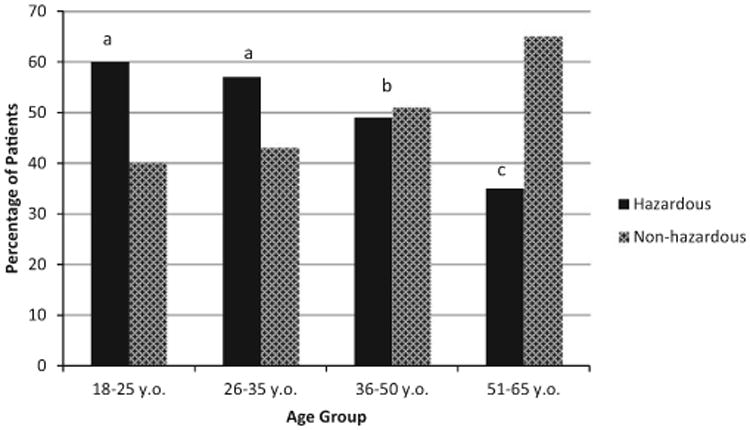
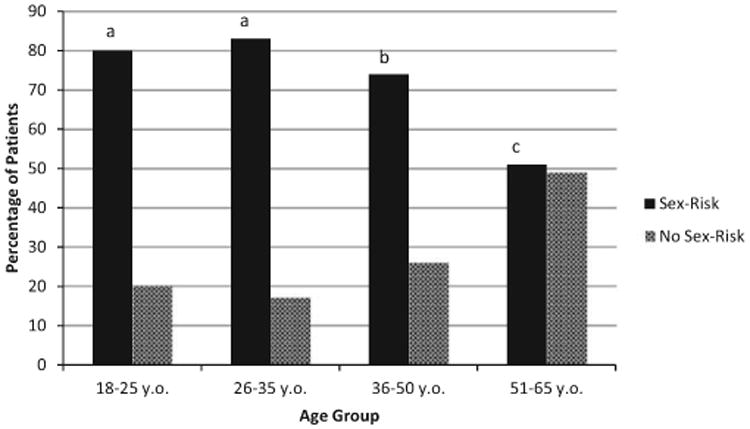
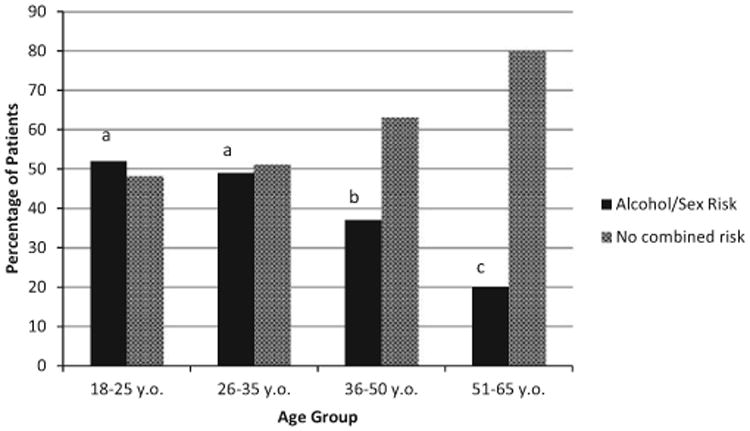
Results: Overall results identified high rates of alcohol use, sexual risk behaviors, and their co-occurrence in this sample of ED patients. Specifically, ED patients in between the ages of 18 and 35 were consistently highest in hazardous alcohol use (positive on the Alcohol Use Disorders Identification Test or endorsing heavy episodic drinking [HED]), sexual risk behaviors, and the co-occurrence of alcohol and sex-risk behaviors.
Conclusions: Findings show a high co-occurrence of hazardous drinking and unprotected sex among ED patients and highlight the role of HED as a factor associated with sexual risk behavior. Efforts to integrate universal screening for the co-occurrence of alcohol and sexual risk behavior in ED settings are warranted; brief interventions delivered to ED patients addressing the co-occurrence of alcohol and sexual risk behaviors have the potential to decrease the risk of sexually transmitted infections and HIV among a large number of patients.
Keywords: Alcohol; Emergency Department; Sex Risk.
Copyright © 2015 by the Research Society on Alcoholism.
Figures
References
-
- Alpert PL, Shuter J, Deshaw MG, Webber MP, Klein RS. Factors associated with unrecognized HIV-1 infection in an inner-city emergency department. Ann Emerg Med. 1996;28:159–164. - PubMed
-
- Baliunas D, Rehm J, Irving H, Shuper P. Alcohol consumption and risk of incident human immunodeficiency virus infection: a meta-analysis. Int J Public Health. 2010;55:159–166. - PubMed
-
- Bolton R, Vincke J, Mak R, Dennehy E. Alcohol and risky sex: in search of an elusive connection. Med Anthropol. 1992;14:323–363. - PubMed
-
- Branson BM, Handsfield HH, Lampe MA, Janssen RS, Taylor AW, Lyss SB, Clark JE. Revised recommendations for HIV testing of adults, adolescents, and pregnant women in health-care settings. [Accessed January 15, 2015];2006 Available at: http://www.cdc.gov/mmwr/preview/mmwrhtml/rr5514a1.htm. - PubMed
-
- Bryant KJ. Expanding research on the role of alcohol consumption and related risks in the prevention and treatment of HIV/AIDS. Subst Use Misuse. 2006;41:1465–1507. - PubMed
MeSH terms
Grants and funding
LinkOut - more resources
Full Text Sources
Other Literature Sources
Medical
