


Incidence and Characteristics of Incontinence-Associated Dermatitis in Community-Dwelling Persons With Fecal Incontinence
- PMID: 26336048
- PMCID: PMC5068913
- DOI: 10.1097/WON.0000000000000159
Incidence and Characteristics of Incontinence-Associated Dermatitis in Community-Dwelling Persons With Fecal Incontinence
Abstract
Purpose: Little is known about the incidence and characteristics of incontinence-associated dermatitis (IAD) in community-living individuals with fecal incontinence. The primary aim of this study was to describe the incidence and characteristics of self-reported IAD among community-living individuals with fecal incontinence. The study also examined whether IAD was associated with older age, sex, presence of urinary incontinence, or fecal incontinence severity.
Design: Secondary data analysis was performed using a prospective cohort design.
Subjects and setting: Data were drawn from community-living adults (n = 98) with fecal incontinence (76% female, 34% aged ≥65 years, 90% white) who participated in a study about dietary fiber supplementation and were free of IAD at the start. Thirty five percent also had urinary incontinence.
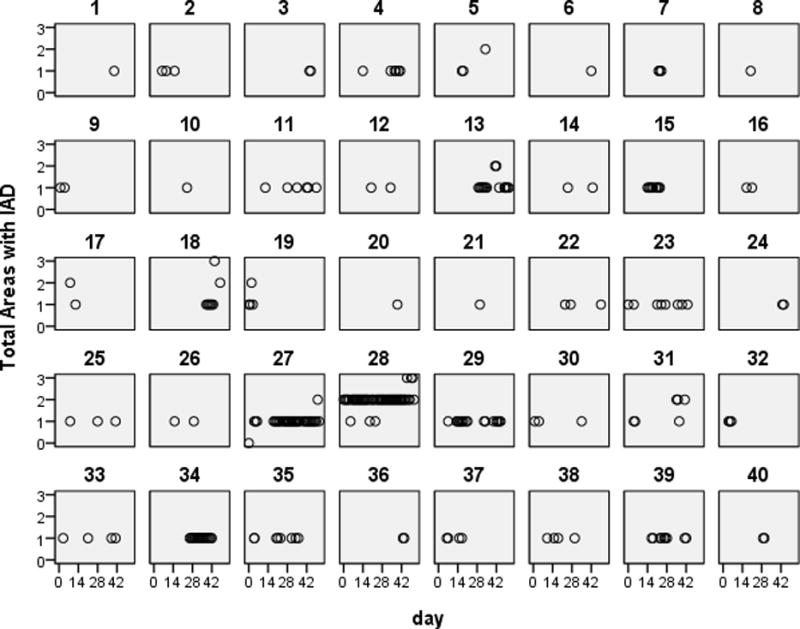
Methods: Subjects assessed their skin for IAD daily for 52 days, reporting types of IAD damage (redness, rash/fungal infection, and skin loss), location of IAD, and symptoms. They reported fecal incontinence on a diary for the first and last 14 study days.
Results: The incidence of IAD was 41% (40 of the 98). The fecal incontinence severity score for subjects developing IAD was 1.2 higher than those who never had IAD (P < .001). There was no significant association of IAD with age, sex, or dual fecal and urinary incontinence. Incontinence-associated dermatitis developed within 2 weeks and healed in approximately 1 week. The most common sign and symptom were redness (60% patients) and soreness (78% patients), respectively. Most subjects (85%) had IAD in one location.
Conclusions: Assessing for IAD in community-living patients with fecal incontinence is important as IAD is common and causes discomfort. The relatively mild severity of IAD offers WOC nurses the opportunity for improving patient outcomes by preventing and managing this problem.
Conflict of interest statement
Authors have no conflcits of interest.
Figures
References
-
- Gray M, Beeckman D, Bliss DZ, et al. Incontinence-associated dermatitis: A comprehensive review and update. J Wound Ostomy Continence Nurs. 2012;39(1):61–74. - PubMed
-
- Long MA, Reed LA, Dunning K, Ying J. Incontinence-associated dermatitis in a long-term acute care facility. J Wound Ostomy Continence Nurs. 2012;39(3):318–327. - PubMed
-
- Brown D. Perineal dermatitis risk factors: Clinical validation of a conceptual framework. Ostomy Wound Management. 1995;41(10):46–48. 50, 52–53. - PubMed
-
- Junkin J, Selekof JL. Prevalence of incontinence and associated skin injury in the acute care inpatient. J Wound Ostomy Continence Nurs. 2007;34(3):260–269. - PubMed
-
- Driver DS. Perineal dermatitis in critical care patients. Crit Care Nurse. 2007;27(4):42–46. - PubMed
Publication types
MeSH terms
Substances
Grants and funding
LinkOut - more resources
Full Text Sources
Medical
