Composition, taxonomy and functional diversity of the oropharynx microbiome in individuals with schizophrenia and controls
- PMID: 26336637
- PMCID: PMC4556144
- DOI: 10.7717/peerj.1140
Composition, taxonomy and functional diversity of the oropharynx microbiome in individuals with schizophrenia and controls
Abstract
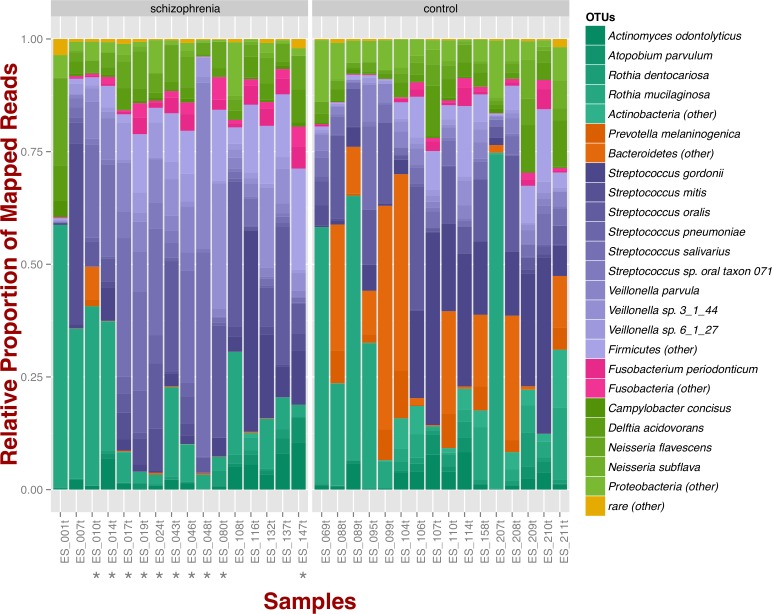
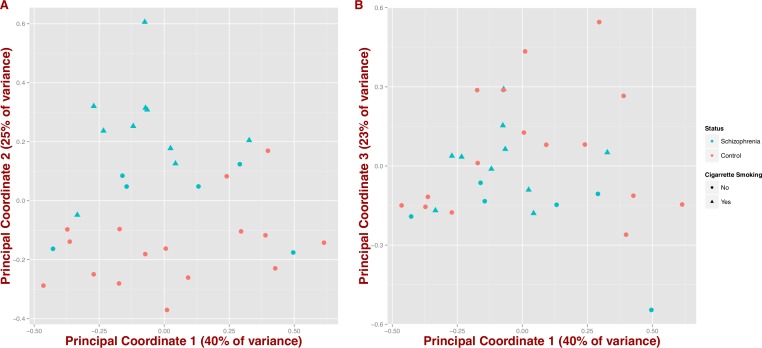
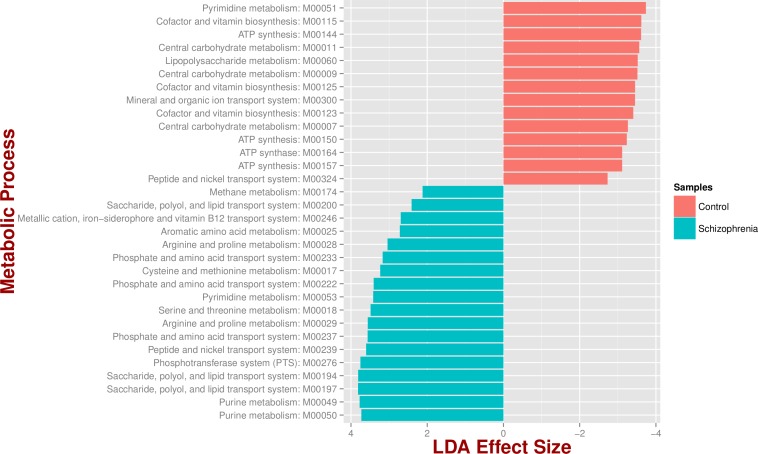
The role of the human microbiome in schizophrenia remains largely unexplored. The microbiome has been shown to alter brain development and modulate behavior and cognition in animals through gut-brain connections, and research in humans suggests that it may be a modulating factor in many disorders. This study reports findings from a shotgun metagenomic analysis of the oropharyngeal microbiome in 16 individuals with schizophrenia and 16 controls. High-level differences were evident at both the phylum and genus levels, with Proteobacteria, Firmicutes, Bacteroidetes, and Actinobacteria dominating both schizophrenia patients and controls, and Ascomycota being more abundant in schizophrenia patients than controls. Controls were richer in species but less even in their distributions, i.e., dominated by fewer species, as opposed to schizophrenia patients. Lactic acid bacteria were relatively more abundant in schizophrenia, including species of Lactobacilli and Bifidobacterium, which have been shown to modulate chronic inflammation. We also found Eubacterium halii, a lactate-utilizing species. Functionally, the microbiome of schizophrenia patients was characterized by an increased number of metabolic pathways related to metabolite transport systems including siderophores, glutamate, and vitamin B12. In contrast, carbohydrate and lipid pathways and energy metabolism were abundant in controls. These findings suggest that the oropharyngeal microbiome in individuals with schizophrenia is significantly different compared to controls, and that particular microbial species and metabolic pathways differentiate both groups. Confirmation of these findings in larger and more diverse samples, e.g., gut microbiome, will contribute to elucidating potential links between schizophrenia and the human microbiota.
Keywords: Biomarkers; Functional diversity; Lactic acid bacteria; Metagenomics; Microbial abundance; Microbial diversity; Microbiome; PathoScope; Schizophrenia; Shotgun sequencing.
Conflict of interest statement
Keith A. Crandall is an Academic Editor for PeerJ. Eduardo Castro-Nallar and Keith A. Crandall have a combination of ownership of, and employment in, Aperiomics, Inc. Jennifer R. Schroeder is an employee of Schroeder Statistical Consulting LLC.
Figures
References
-
- American Psychiatric Association . Diagnostic and statistical manual of mental disorders, text revision (DSM-IV-TR) Washington, D.C.: American Psychiatric Association; 2000.
-
- Andreassen O, Harbo H, Wang Y, Thompson W, Schork A, Mattingsdal M, Zuber V, Bettella F, Ripke S, Kelsoe J. Genetic pleiotropy between multiple sclerosis and schizophrenia but not bipolar disorder: differential involvement of immune-related gene loci. Molecular Psychiatry. 2014;10:207–214. doi: 10.1038/mp.2013.195. - DOI - PMC - PubMed
Grants and funding
LinkOut - more resources
Full Text Sources
Other Literature Sources